
Wondering if sun spots fade on their own? Learn what causes them, what can help, and when it’s time to have a spot checked.
A flat brown or tan spot shows up on the back of your hand, your cheek, or your chest after a summer of time outdoors, and months later, it’s still there. If you’ve been waiting for a sun spot to fade on its own, you’re not alone in wondering whether that’s realistic
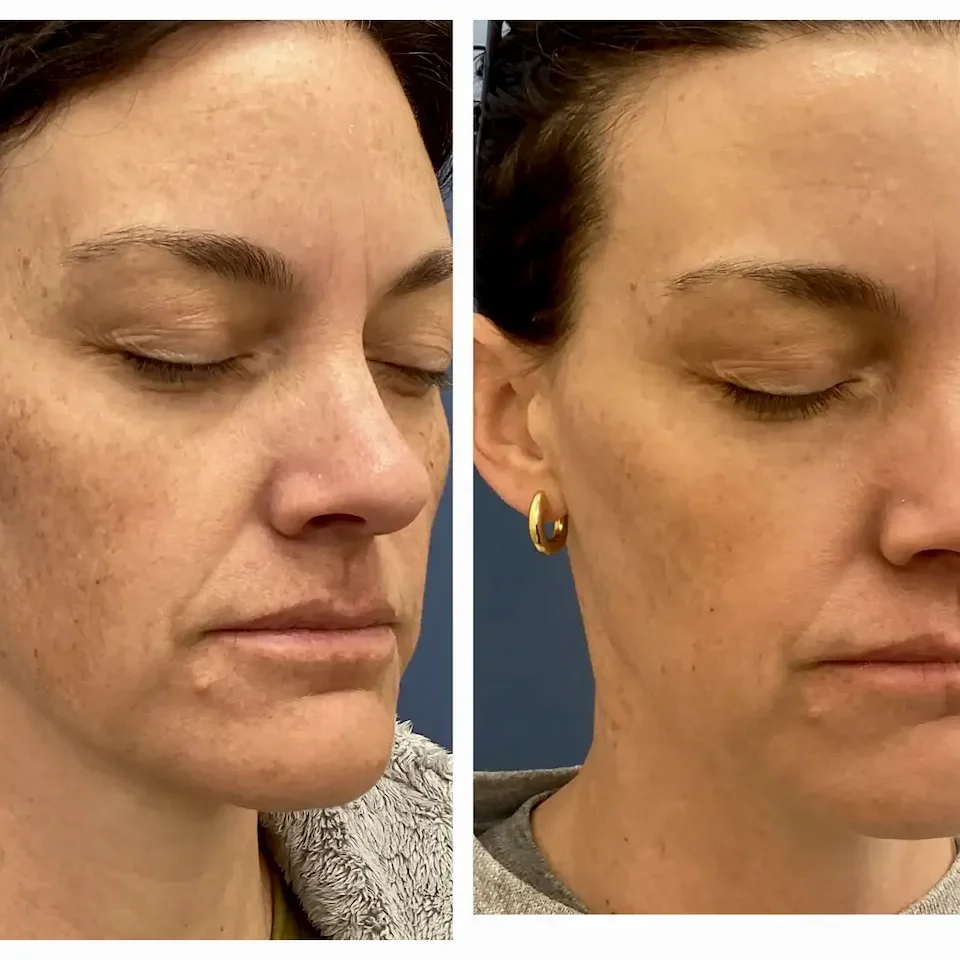
What Are Sun Spots, Exactly?
“Sun spots” is the common name for solar lentigines. You may also hear them called age spots or liver spots, though they have nothing to do with the liver. They typically appear as flat, tan-to-brown patches with defined edges, most often on skin that gets regular sun exposure: the face, backs of the hands, forearms, chest, and shoulders.
They’re different from freckles, which tend to lighten in the winter months when sun exposure drops. Sun spots form after years of cumulative ultraviolet exposure cause melanocytes, the pigment-producing cells in the skin, to cluster and overproduce pigment in one concentrated area. Once that pigment is deposited, it generally stays put until you break it up.
Why Sun Spots Don’t Fade on Their Own
A tan fades because the skin naturally turns over its surface cells. Sun spots are more stubborn because the excess pigment often sits deeper than a typical tan, and normal cell turnover isn’t usually enough to clear it out. Without some form of treatment, most sun spots persist indefinitely, and continued sun exposure or aging can make them more noticeable over time, not less.
That is why so many people search for an answer and come up short; no home remedy reliably makes an established sun spot disappear on its own. That doesn’t mean nothing can help. It just means the options that work tend to involve either a consistent skincare routine over time or an in-office treatment.
Can At-Home Products Help Fade Sun Spots?
Certain topical ingredients can gradually lighten milder sun spots with consistent use over several months. Retinoids can encourage skin cell turnover, vitamin C serums may help brighten overall tone, and gentle exfoliating acids can support the process. Some providers also prescribe a topical lightening agent for more targeted use.
These approaches can help, but results vary from person to person, and progress is usually gradual rather than dramatic. For spots that are darker, more established, or simply not responding to a home routine, an in-office treatment is often the more direct path.
When a Spot Needs a Closer Look, Not Just Fading
Most sun spots are harmless. But because they can sometimes resemble early changes associated with skin cancer or actinic keratosis, it’s worth having any spot evaluated if it doesn’t fit the usual pattern of a flat, evenly colored, stable mark. A few things worth mentioning at an appointment:
- The spot has changed in size, shape, or color
- It has become raised, scaly, or textured rather than flat
- It bleeds, itches, or doesn’t heal
- You’re simply not sure what it is
For patients in Troy and throughout St. Charles County, a skin cancer screening is a straightforward way to get peace of mind about any spot that’s giving you pause, sun spot or otherwise.
Professional Treatment Options for Sun Spots
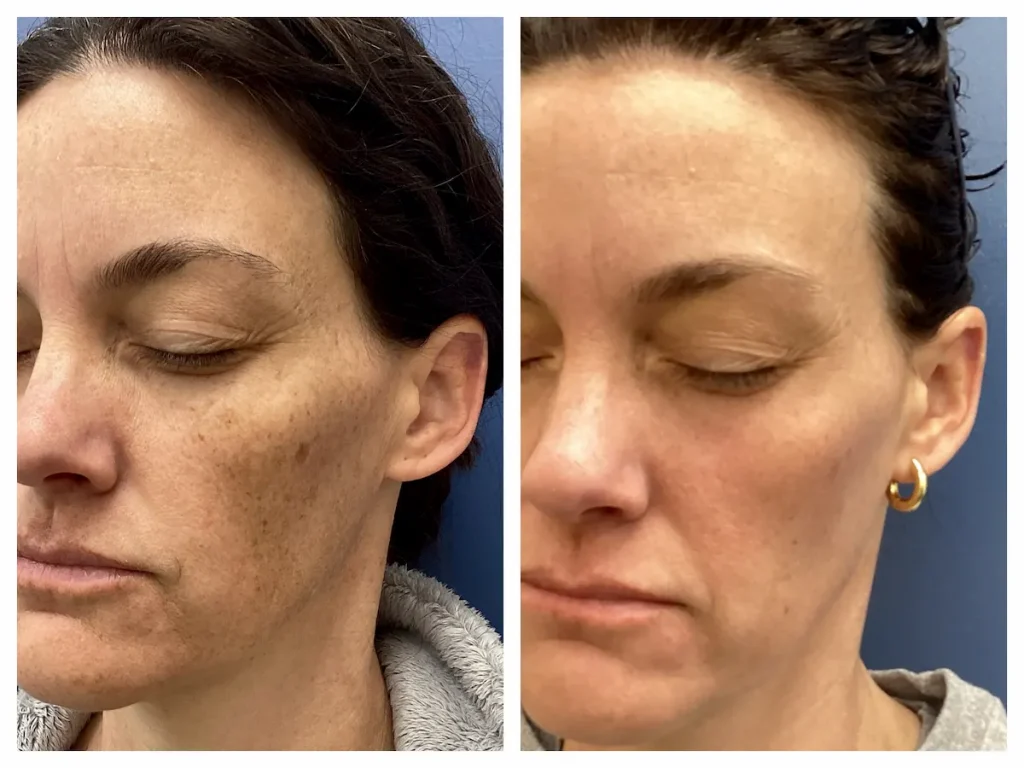
For sun spots evaluated and confirmed to be cosmetic, M22 IPL (Intense Pulsed Light) is one of the most direct ways to target them. IPL uses targeted light energy to break up concentrated pigment in the skin. Treated spots typically darken slightly over the next few days, then flake away as the skin naturally exfoliates, often revealing a more even tone underneath.
Because IPL works on pigment at the surface, it’s often well suited to sun spots on the face, chest, and hands. Depending on the number and depth of the spots, a provider may recommend more than one session for the best outcome.
Preventing New Sun Spots From Forming
Treating existing sun spots is only half the picture—protecting your skin going forward helps prevent new ones from forming and can help treated areas stay clearer longer.
- Apply a broad-spectrum sunscreen daily, even on cloudy days
- Reapply every two hours when outdoors, and after swimming or sweating
- Wear a wide-brimmed hat and UPF clothing for extended time outside
- Seek shade during peak UV hours, generally late morning through mid-afternoon
Consider Contacting Us Today
If a sun spot has been bothering you, or you’re not sure whether a spot is cosmetic or something that needs medical attention, a consultation is the simplest next step. Our team can take a look, talk through your options, and help you decide what makes sense.
Schedule a consultation through our online contact form or call us at (314) 834-1400.