
Home / Medical Dermatology / Skin Rashes
Skin Rash Treatment St. Louis
A rash can appear suddenly or develop over time, with redness, itching, scaling, bumps, or discomfort. Because many different conditions look alike, the right diagnosis is the first step to relief.
Double board-certified
Dermatology and Mohs micrographic surgery
Residency & Fellowship
Cleveland Clinic · Zitelli & Brodland
Physician-owned
Independent practice — never corporate
Established 2020
Serving Troy, Lincoln County, and beyond
What is a Skin Rash?
A skin rash is a visible change in the color, texture, or appearance of the skin. Rashes can affect a small, localized area or large portions of the body. They may be associated with itching, pain, burning, or tenderness, though some rashes cause little to no discomfort. Because many different conditions can cause similar-looking rashes, proper diagnosis is essential for effective treatment.
Common Symptoms
- Redness or discoloration
- Itching or irritation
- Raised bumps or welts
- Scaling or flaking skin
- Blistering or oozing
- Dry, cracked, or thickened skin
- Swelling, warmth, or burning sensations
Common Causes
Skin rashes can result from a wide range of triggers and conditions: allergic reactions, irritants such as chemicals, soaps, and detergents, infections (fungal, bacterial, or viral), inflammatory skin conditions, autoimmune disorders, environmental exposures, medications, and stress or illness. Often the appearance alone doesn’t reveal the cause — your history and an in-person exam do.
Common Types of Skin Rashes
These are some of the conditions we diagnose and treat most often. Each can look like the others at first glance — which is exactly why an evaluation matters.
Contact Dermatitis
Occurs when the skin reacts to an irritant or allergen — soaps and detergents, fragrances, nickel and other metals, plants such as poison ivy, or cleaning products. Symptoms often include redness, itching, and sometimes blistering. When the trigger isn’t obvious, patch testing can help pinpoint it.
Eczema (Atopic Dermatitis)
A chronic inflammatory skin condition associated with dry, itchy, sensitive skin. Eczema often begins in childhood but may persist into adulthood, tends to flare periodically, and commonly affects the face, hands, arms, and legs. Modern treatments can help keep flares controlled.
Psoriasis
A chronic autoimmune condition that causes rapid skin cell turnover, producing thick, scaly plaques — most often on the elbows, knees, scalp, and lower back. Psoriasis may also be associated with joint symptoms, which makes a medical evaluation especially worthwhile.
Hives, Infections & Other Rashes
Hives (raised, itchy welts from allergic reactions or medications), fungal, bacterial, and viral infections, and conditions like rosacea can all resemble one another. Each is treated differently — an accurate diagnosis is what makes treatment work.
How are Skin Rashes Treated?
Treatment depends on the underlying cause, severity, and duration of the rash — which is why diagnosis comes first. Your provider will examine the rash and review your history; when the cause isn’t clear, patch testing or a small biopsy may help identify it.
Topical Treatments
- Anti-inflammatory creams or ointments
- Antifungal or antibacterial medications
- Barrier-repair moisturizers
Oral Medications
- Antihistamines for itching
- Anti-inflammatory medications
- Antibiotics or antifungals when indicated
Lifestyle & Skincare Adjustments
- Avoiding known triggers
- Using gentle, fragrance-free products
- Improving moisture control and hydration
Your provider will discuss appropriate treatment options, the response you can expect, and strategies to prevent future flares.
Individualized careTreatment plans are individualized, and results vary. A consultation is required to diagnose your rash and determine the right approach for your skin.
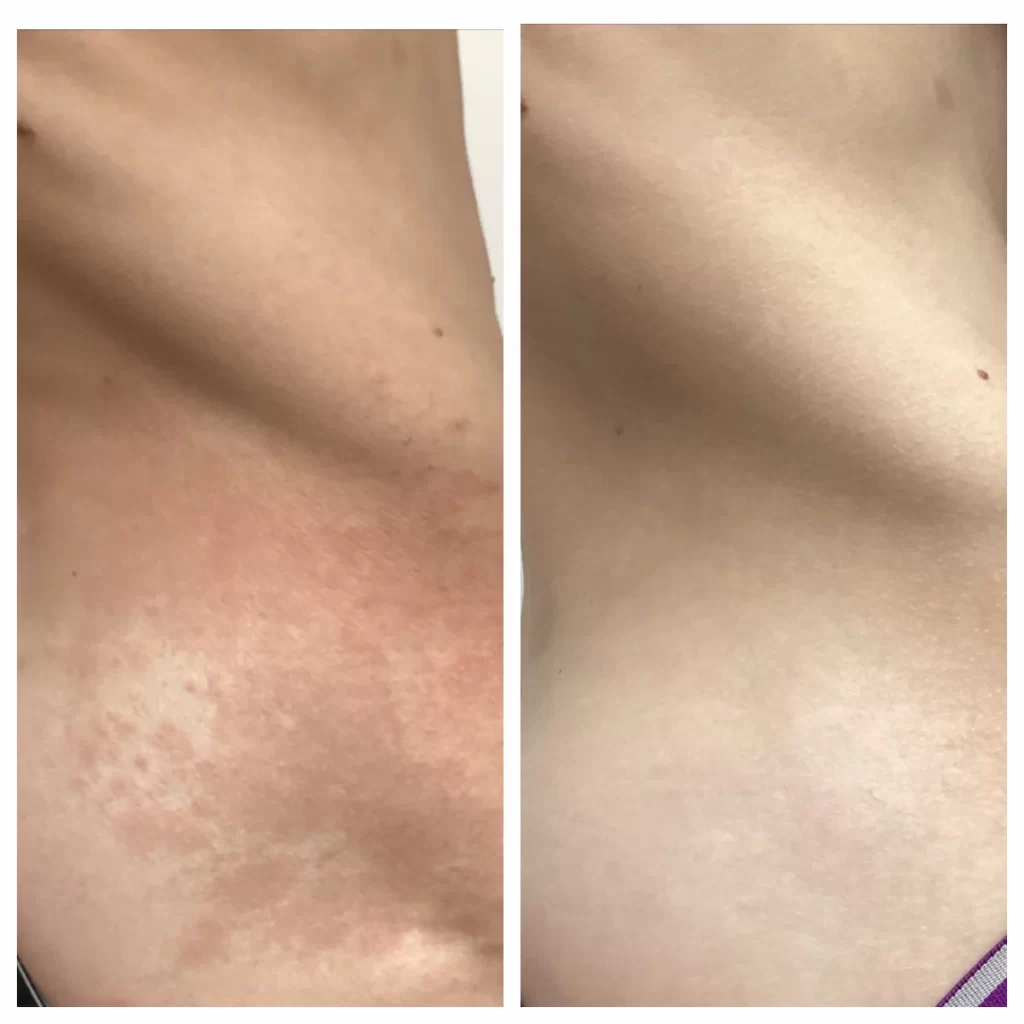
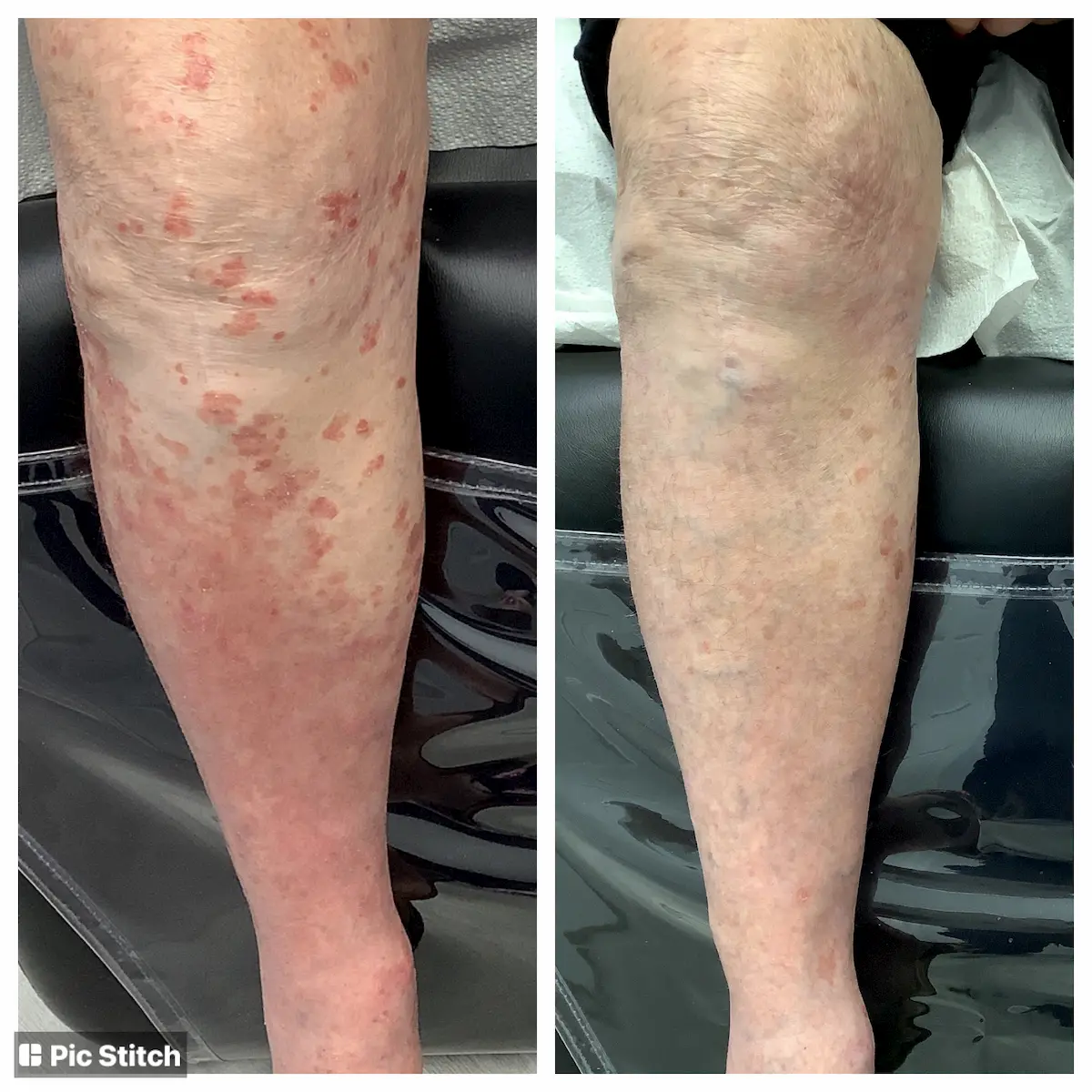
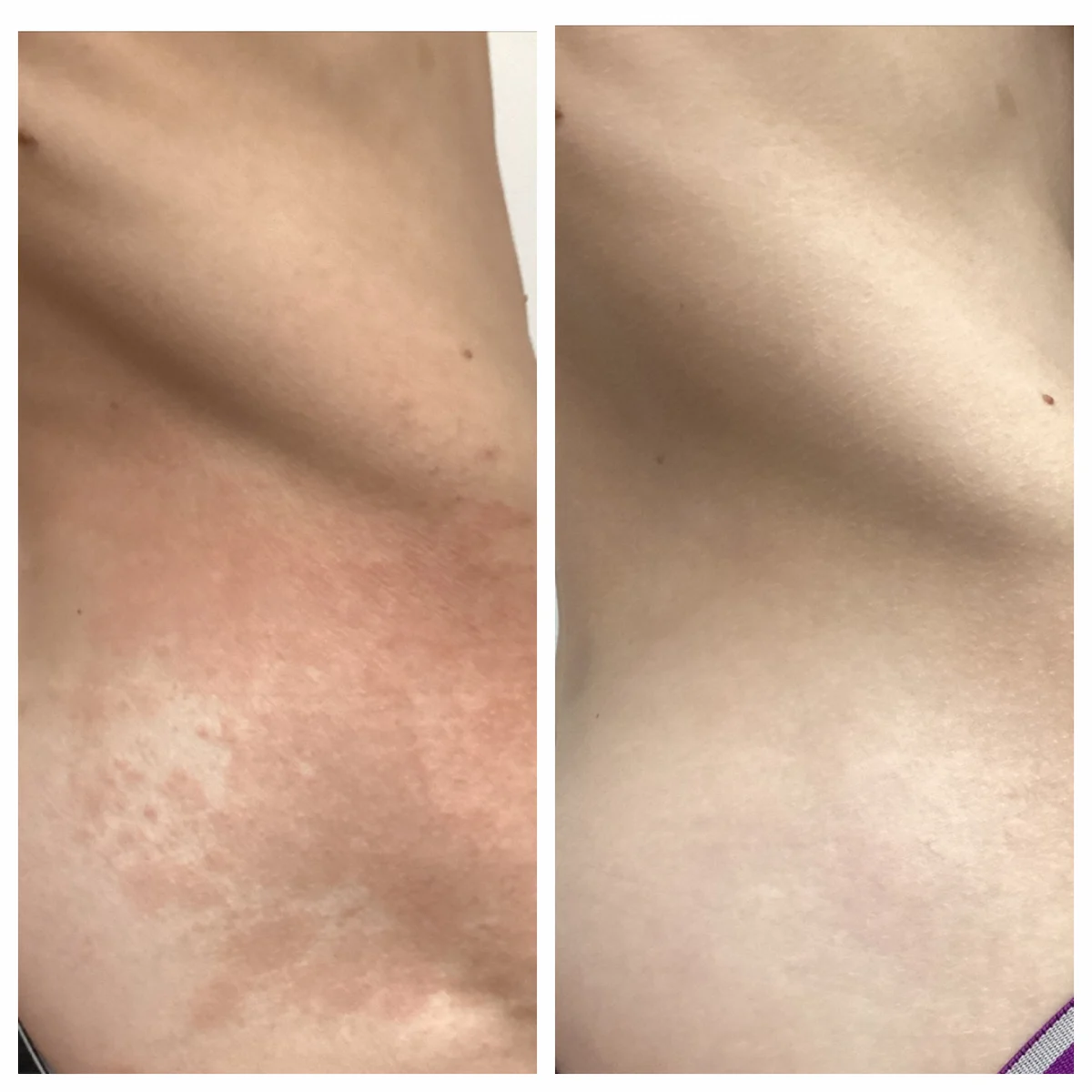
Rash Treatment Results
Documented before-and-after results from patients of this practice. Results vary by individual, and a consultation is required.
What Can You Expect?
You will consult with our board-certified dermatology team. The physician will listen to you, examine the rash, review your history and possible triggers, and recommend an individualized treatment plan — including what to use, what to avoid, and when to follow up.
Choose St. Louis Dermatology & Cosmetic Surgery
Rashes are rarely one-size-fits-all, and neither is good care. As a locally owned, physician-led practice, we take the time to get the diagnosis right the first time — careful exams, clear explanations, and a plan you can actually follow at home.
Schedule a Rash Evaluation in Troy, MO
If you’re experiencing a persistent or unexplained skin rash, an evaluation can identify the cause and guide treatment. From our office in Troy, we care for patients across Lincoln County and the surrounding area, including Old Monroe and St. Charles — and our second location in Chesterfield. Call (314) 834-1400 or request an appointment online.
Common questions
Skin rash FAQs.
When should I see a dermatologist about a rash?
Consider scheduling a visit if a rash persists beyond a week or two, keeps returning, spreads, is painful, or hasn’t improved with over-the-counter care. A rash accompanied by fever, rapid spreading, or widespread blistering warrants prompt medical attention. Most new patients are seen within the same week.
Is my rash contagious?
It depends on the cause. Rashes from fungal, bacterial, or viral infections can spread to others, while inflammatory conditions like eczema, psoriasis, and contact dermatitis are not contagious. Since these often look alike, a diagnosis answers the question reliably.
What is patch testing?
Patch testing helps identify the specific allergen behind contact dermatitis. Small amounts of common allergens are applied to your back under adhesive patches and checked over several days. Knowing your exact trigger lets you avoid it — often the most effective treatment there is.
Can a rash be cured, or only managed?
It depends on the diagnosis. Many rashes — like contact dermatitis or an infection — can resolve completely once the trigger is removed or the infection is treated. Chronic conditions such as eczema and psoriasis are managed rather than cured, but modern treatments can keep them well controlled. Results vary by individual.
Is rash treatment covered by insurance?
Evaluation and treatment of a rash is medical dermatology and is typically covered. We accept Medicare and most major private insurance plans. Call our Troy office at (314) 834-1400 with specific coverage questions.
Ready for answers about that rash?
Same-week appointments. Medicare accepted. Troy, MO — and Chesterfield now open.