
Home / Acne Scar Treatment / TCA CROSS
TCA CROSS for Acne Scars St. Louis
Deep, narrow acne scars are some of the hardest to treat, because surface treatments often can’t reach the base. TCA CROSS is a precise, spot-by-spot technique that places a high-strength acid directly into individual scars to rebuild them from the bottom up. At St. Louis Dermatology & Cosmetic Surgery in Troy, MO, it’s performed under the direction of Dr. Brandon T. Beal, a double board-certified dermatologist.
Double board-certified
Dermatology and Mohs micrographic surgery
Fellowship-trained
Advanced cosmetic and reconstructive training
Physician-owned
Independent practice, never corporate
Troy & Chesterfield
Second location now open
What Is TCA CROSS?
TCA CROSS stands for Trichloroacetic Acid, Chemical Reconstruction of Skin Scars. Unlike a traditional chemical peel, which treats the whole surface, TCA CROSS places a high concentration of acid precisely into the base of individual scars. That controlled stimulation triggers collagen remodeling, gradually filling and softening the scar over time. It’s designed specifically for deep, narrow scars, especially ice-pick scars and very narrow boxcar scars.
It’s one part of acne scar care, and is often combined with others. See the full picture on our acne scar treatment page.
Which Scars TCA CROSS Treats
Scar type matters, because not all acne scars respond to the same treatment. TCA CROSS is best for:
- Ice-pick scars (deep and narrow)
- Small, sharply defined boxcar scars
- Scars that didn’t improve with microneedling alone
It’s not the right tool for broad rolling scars, raised (hypertrophic or keloid) scars, or active inflammatory acne. Broad rolling scars usually respond better to subcision. Because most people have a mix of scar types, the best correction often combines TCA CROSS with subcision, microneedling, or laser resurfacing, which is decided at your consultation.
How TCA CROSS Works
Ice-pick scars extend deeply into the dermis, which is why surface treatments often can’t reach them. TCA CROSS works at the base of the scar instead:
1
Application
The skin is cleansed, and a fine applicator precisely delivers high-strength TCA into the base of each scar. A brief “frosting” reaction confirms the treatment has taken.
2
Healing
Over the next several days, each treated spot forms a small scab and heals. Beneath the surface, collagen remodeling begins to rebuild the scar from the base.
3
Gradual change
Over multiple sessions, the scar gradually becomes shallower and less noticeable. TCA CROSS doesn’t erase scars, but it can meaningfully soften their depth and visibility.
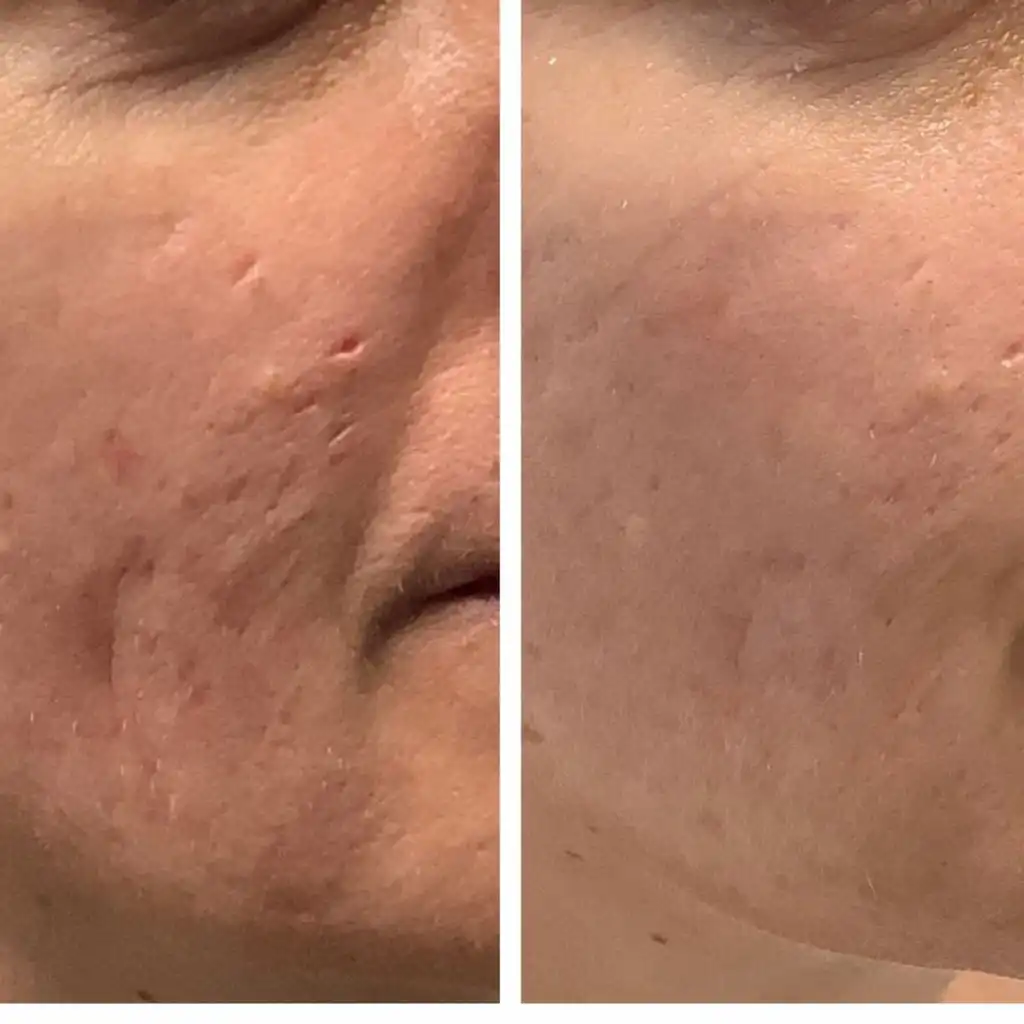
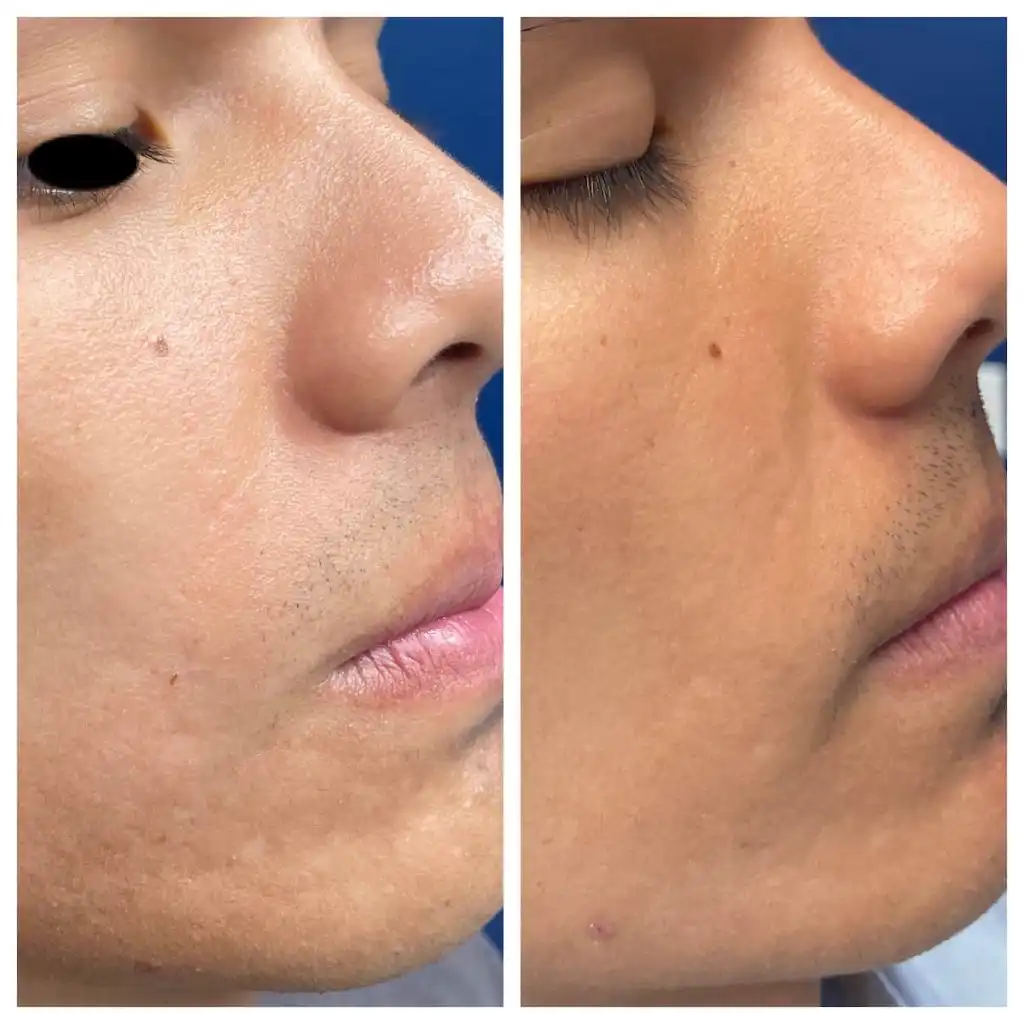
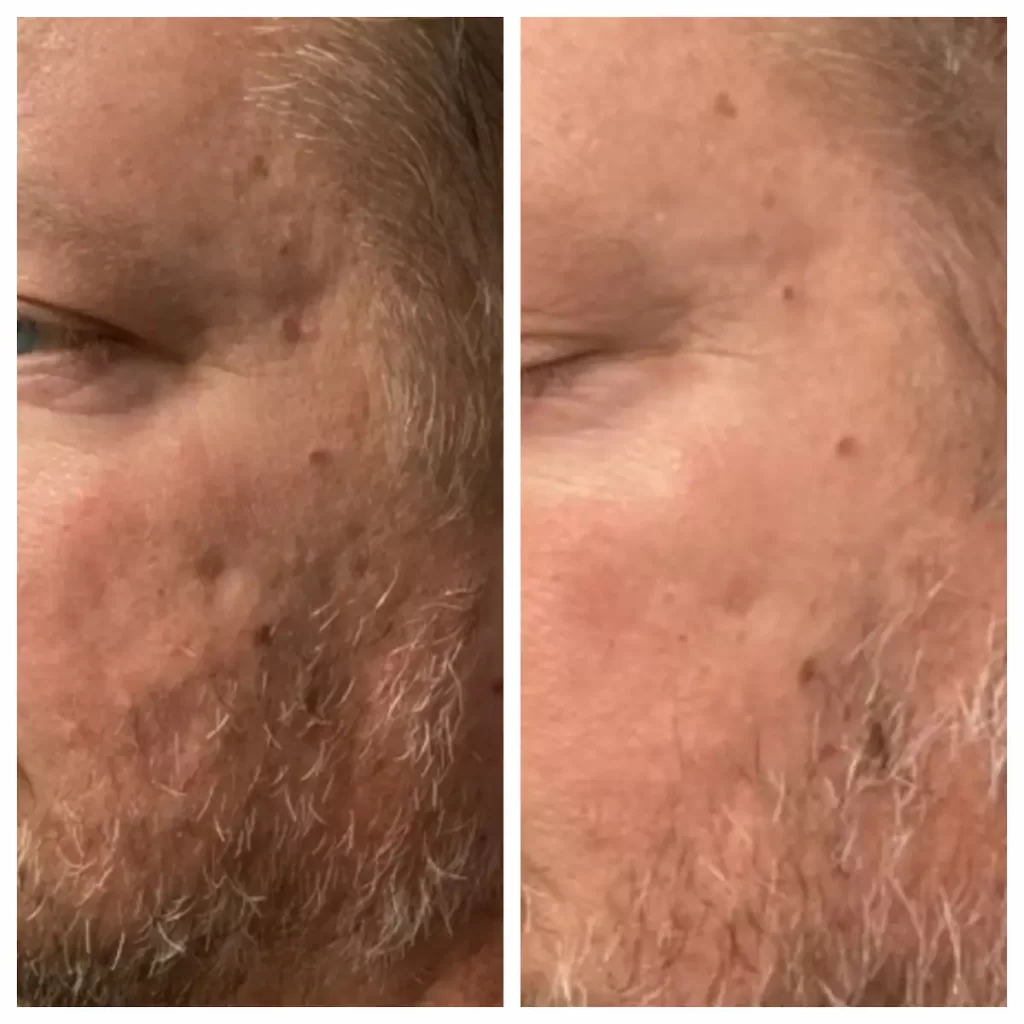
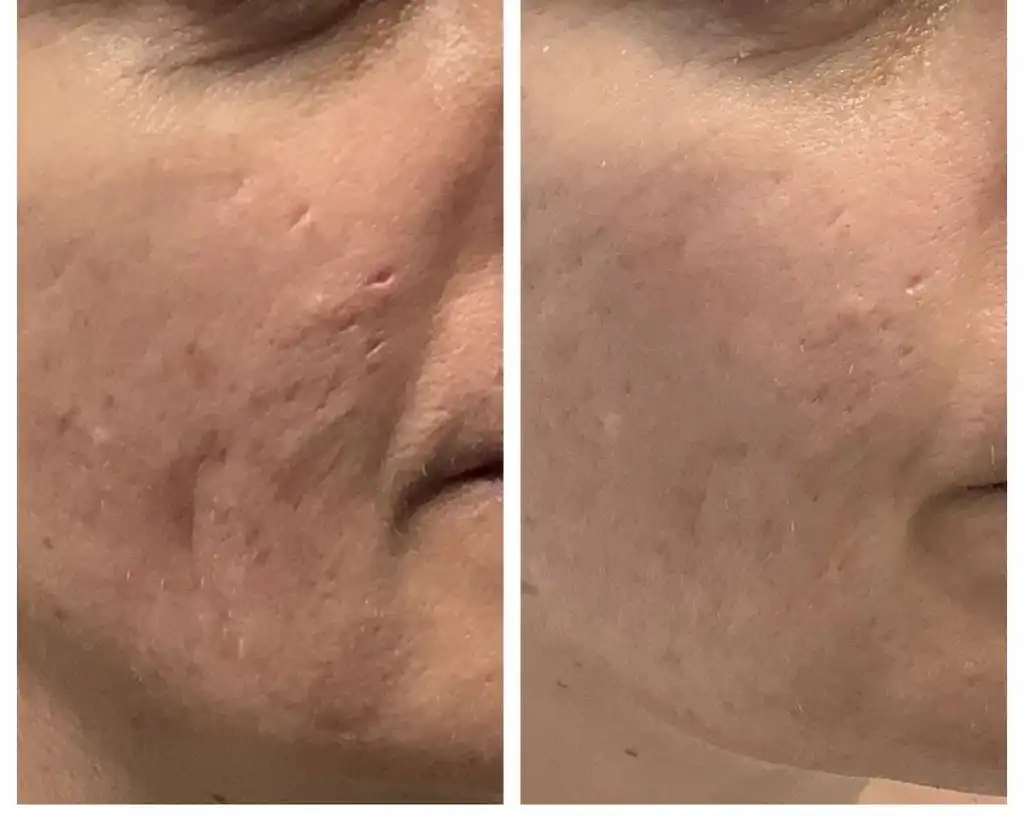
Acne Scar Before and After Photos
Every photo is from one of Dr. Beal’s patients. Results vary, and most reflect a combination of treatments.
Sessions, Candidacy & Safety
TCA CROSS is usually done as a series, most patients need two to four treatments spaced about four to six weeks apart, with the number depending on scar depth, density, skin type, and how you respond. You may be a good candidate if you have deep ice-pick scars, have completed acne treatment and aren’t actively breaking out, have realistic expectations, and are willing to commit to a series if needed.
When performed by a trained dermatology professional, TCA CROSS is generally safe and controlled. Possible risks include temporary hyperpigmentation, hypopigmentation (rare), prolonged redness, and, uncommonly, scarring. Careful patient selection and technique matter, particularly for deeper skin tones, which is why conservative planning guides every treatment here.
Results vary. A consultation is required to determine whether TCA CROSS is appropriate for you, and treatment plans are individualized. TCA CROSS can soften the depth and appearance of acne scars; it does not erase them, results develop gradually over multiple sessions, and differ from person to person.
Schedule a TCA CROSS Consultation in Troy, MO
If deep acne scars are affecting your confidence, targeted treatment may help soften them. We welcome patients from across the region, including Moscow Mills and Wentzville, at our Troy office, and our second location in Chesterfield. Call (314) 834-1400 or request a consultation online.
Common questions
TCA CROSS FAQs.
What scars is TCA CROSS best for?
It’s designed for deep, narrow scars, especially ice-pick scars and very narrow boxcar scars, that surface treatments can’t reach. It’s not used for broad rolling scars (those respond better to subcision) or raised scars. Most people have a mix, so a combination plan is common.
How many sessions will I need?
Most patients need two to four treatments, spaced about four to six weeks apart. The exact number depends on the depth and density of your scars, your skin type, and how you respond. Your plan is set at your consultation.
What does recovery look like?
Each treated scar forms a small scab that heals over several days, while collagen rebuilding continues beneath the surface. It’s a focal, spot-by-spot treatment rather than full-face resurfacing, so day-to-day downtime is generally limited. Your provider will give you aftercare guidance.
Is TCA CROSS safe for darker skin tones?
It can be, but careful patient selection and technique are especially important for deeper skin tones, where there’s a higher chance of temporary pigment changes. A consultation is essential to assess your skin and determine whether TCA CROSS is the right approach for you.
Will it completely remove my scars?
The honest answer is no, TCA CROSS softens the depth and appearance of scars rather than erasing them. With a well-matched plan, often combined with other treatments, many patients see meaningful improvement. We’ll set realistic expectations for your specific scars at your consultation.
Targeted care for deep scars.
TCA CROSS for ice-pick and narrow acne scars, often combined with subcision, microneedling, and resurfacing, under a double board-certified dermatologist. Troy, MO, and Chesterfield now open.