
Home / Medical Dermatology / Mole Removal
Mole Removal St. Louis
Have a mole you’d like removed, but worried about being left with a scar? We offer non-surgical and surgical mole removal, tailored to each mole and each patient’s skin.
Double board-certified
Dermatology and Mohs micrographic surgery
Residency & Fellowship
Cleveland Clinic · Zitelli & Brodland
Physician-owned
Independent practice — never corporate
Established 2020
Serving Troy, Lincoln County, and beyond
What is a Mole?
Moles are benign (noncancerous) growths of a specific type of skin cells called melanocytes. Moles are typically slightly darker than your skin, but their color can vary from lighter than your normal skin to dark brown. Moles most often occur on the face, chest, back, and proximal extremities, but they can occur anywhere on the body. If you are concerned about a mole, please schedule an appointment so our fellowship-trained dermatologist can examine it.
Noncancerous moles do not need to be removed. Moles are typically removed when they become irritated — for example, in a location that catches on clothing or jewelry — or for cosmetic reasons, if you simply do not like how a mole looks. Large moles in prominent areas such as the face naturally draw the eye, which is why facial mole removal is one of the most common requests we see.
Evaluation Comes First
Every mole removal starts with an examination to make sure the mole is not cancerous. If there is any concern, a biopsy will be recommended and the mole will be sampled so a pathologist can examine it microscopically and determine whether further treatment is needed. If you have many moles or a history of atypical moles, a full-body skin cancer screening may also be recommended.
How is a Mole Removed?
The right technique depends on the mole’s size, depth, and location — and on whether it needs to be tested. Your provider will recommend the approach most likely to leave the least visible trace on your skin.
1
Evaluation & Biopsy
Your provider examines the mole — and any others you’d like checked — to confirm it is benign. If a mole looks concerning, a biopsy is performed and sent to pathology before any cosmetic removal is planned. This step protects you: a mole should never be removed cosmetically until it has been confirmed safe to do so.
2
Non-Surgical Mole Removal
Most moles can be removed without surgery. The area is sterilized and numbed with local anesthesia, then a laser or electrosurgical device selectively treats the mole. The spot typically heals in 1–2 weeks with daily petroleum ointment for the first week. Most patients need only one treatment, though some benefit from a second treatment 4–6 weeks later.
3
Surgical Mole Removal
Surgical removal excises the entire mole and can be a good choice for larger moles or those requiring complete removal. It is a minor outpatient procedure performed in our office under local anesthesia: the area is numbed and sterilized, the mole is excised, and the skin is closed with dissolvable sutures. Plan to take it easy for one week afterward — no heavy lifting or vigorous exercise.
4
Healing & Follow-Up
Good aftercare protects your result. You’ll receive simple wound-care instructions, and protecting the healing spot from the sun helps it blend with the surrounding skin as it matures. If a treated mole shows signs of regrowth — which can occasionally happen, particularly after non-surgical removal — a follow-up visit lets your provider examine it and recommend a touch-up treatment if appropriate.
Individualized careTreatment plans are individualized, and results vary. A consultation is required to determine which approach is right for your mole and your skin.
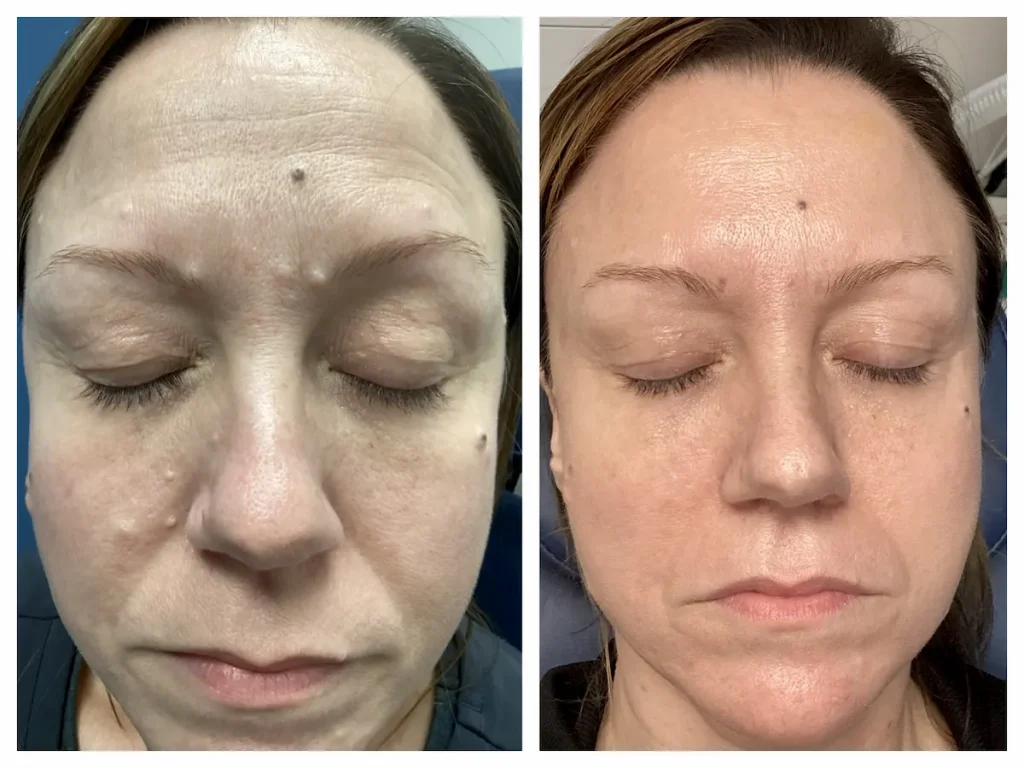
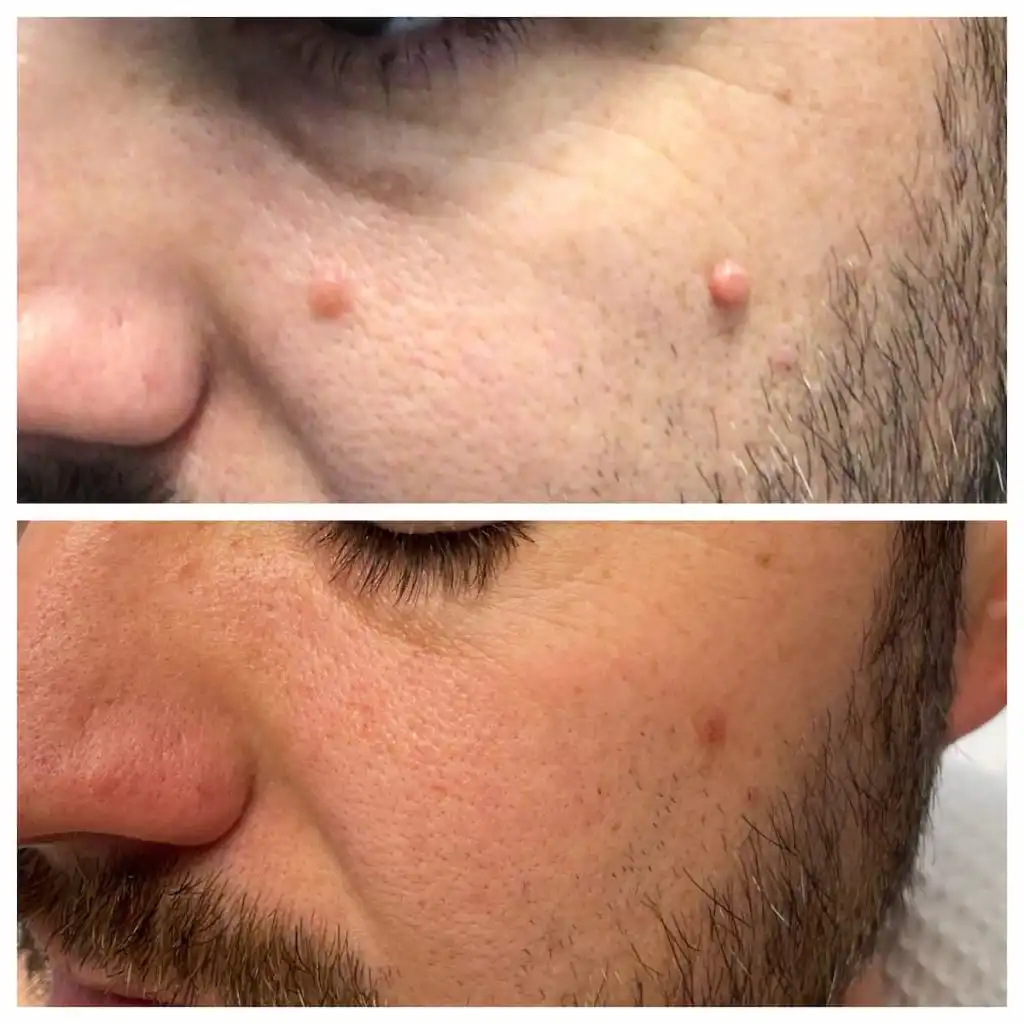
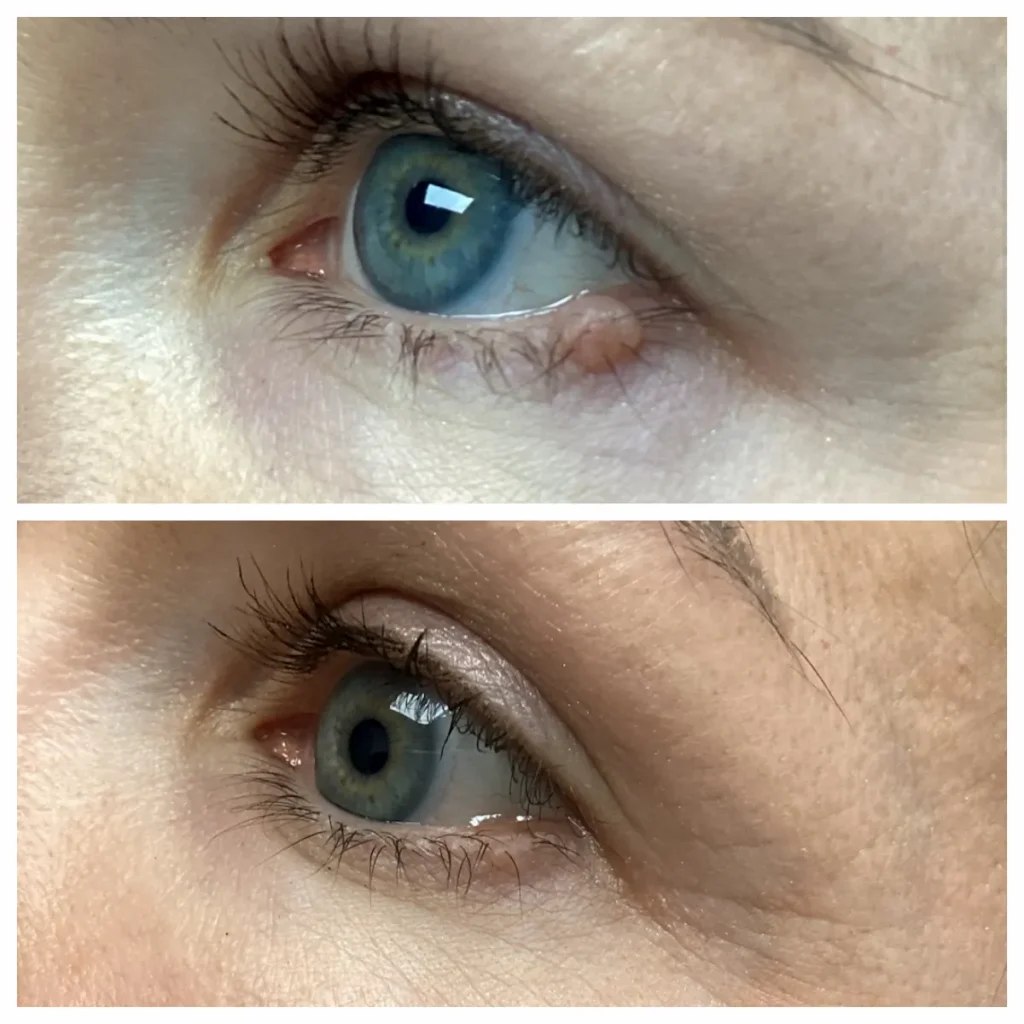
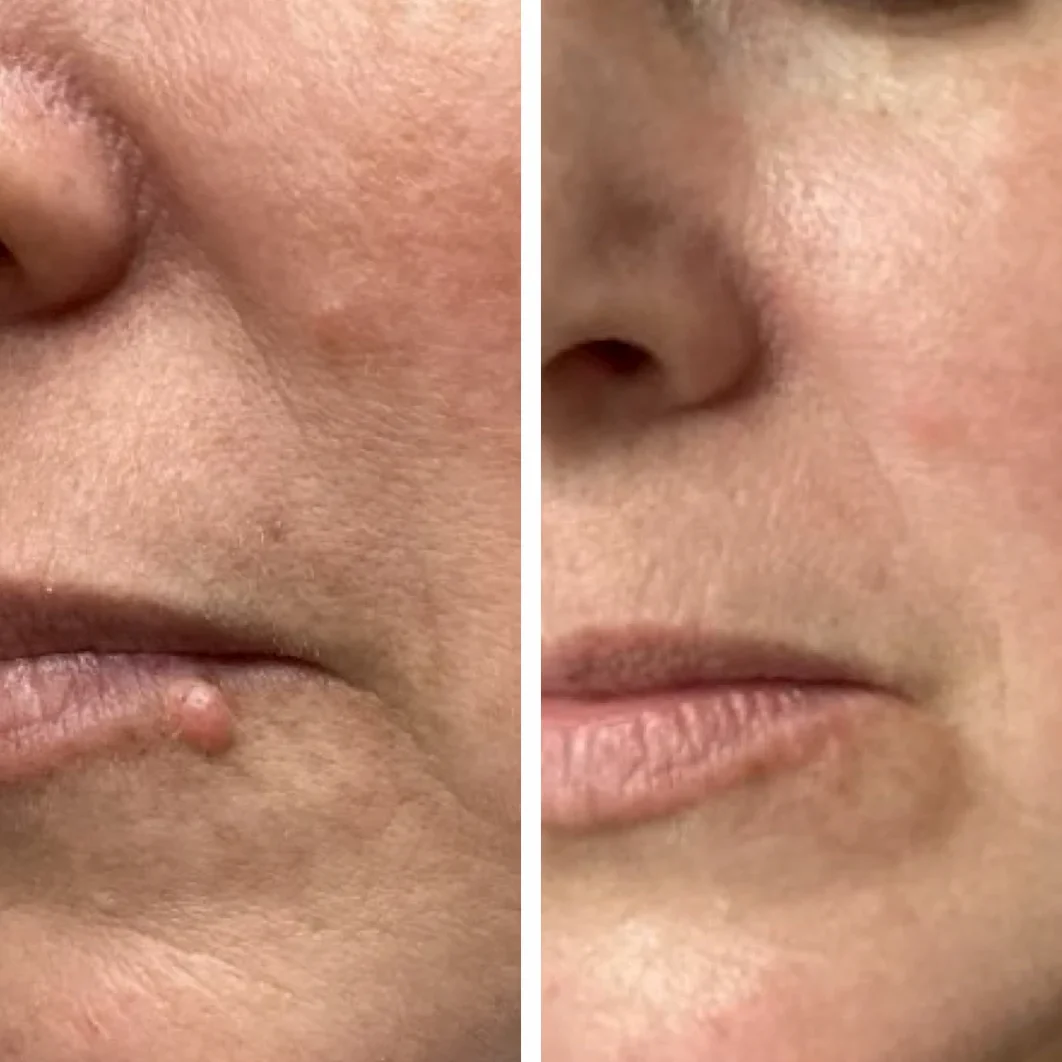
Mole Removal Before and After Photos
Every photo is from a patient of this practice.
What Can You Expect?
You will consult with our board-certified dermatology team. The physician will listen to you, examine your mole, and recommend an individualized treatment plan — including whether non-surgical or surgical removal is the better fit for your goals.
Choose St. Louis Dermatology & Cosmetic Surgery
Cosmetic mole removal — especially on the face — rewards experience. Dr. Brandon T. Beal is double board-certified in dermatology and Mohs micrographic surgery, fellowship-trained in facial plastic and reconstructive surgery, and has performed hundreds of facial cosmetic mole removals. The procedure is tailored to each patient and each mole.
Schedule a Mole Removal Consultation in Troy, MO
From our office in Troy, we provide mole evaluation and removal for patients across Lincoln County and the surrounding area, including Warrenton and Lake St. Louis — and our second location in Chesterfield. Call (314) 834-1400 or request an appointment online to get started.
Common questions
Mole removal FAQs.
Will mole removal leave a scar?
Every technique we use is chosen to minimize visible scarring — that’s the main reason patients seek us out for facial moles. Non-surgical removal often heals with little visible trace, and surgical removal uses careful closure techniques to keep any mark as fine as possible. No procedure can guarantee a completely scar-free result, and results vary, but minimizing the trace left behind is the central goal of how we plan each removal.
Is mole removal covered by insurance?
It depends on the reason for removal. Evaluation of a concerning mole, biopsies, and medically necessary removals are typically covered — we accept Medicare and most major private insurance plans. Removal of a benign mole for cosmetic reasons is not covered by insurance and is considered cosmetic. Call our Troy office at (314) 834-1400 with specific coverage questions.
Will my mole be checked for skin cancer?
Yes. Every removal starts with an examination by our dermatology team, and any mole with concerning features is biopsied and reviewed by a pathologist before cosmetic removal is planned. If you have many moles or a history of atypical moles, we may also recommend a full-body skin exam.
How long does it take to heal?
Non-surgical removal typically heals in 1–2 weeks, with daily petroleum ointment for the first week. Surgical removal uses dissolvable sutures, and we recommend avoiding heavy lifting and vigorous exercise for one week. The treated spot continues to blend with the surrounding skin over the following months, and protecting it from the sun helps that process.
Can a mole grow back after removal?
Occasionally, yes — particularly after non-surgical removal, since some mole cells can remain beneath the surface. Most patients need only one treatment, and a second treatment 4–6 weeks later can address any regrowth. Any mole that returns after removal should be examined by your provider.
Ready to say goodbye to that mole?
Same-week appointments. Medicare accepted. Troy, MO — and Chesterfield now open.