
Home / Cosmetic Surgery / Otoplasty
Ear Repair (Otoplasty) St. Louis
Torn earlobes, stretched gauges, defects after skin cancer removal, or ears you’ve simply never liked — otoplasty restores the ear’s natural form and function, in-office under local anesthesia, performed by Dr. Brandon T. Beal, fellowship-trained in facial plastic & reconstructive surgery.
Double board-certified
Dermatology and Mohs micrographic surgery
Fellowship-trained
Facial plastic & reconstructive surgery — Zitelli & Brodland
Accredited surgical facility
Procedures performed in our Troy, MO office
Physician-owned
Independent practice — never corporate
What is Otoplasty?
The ear is a complex structure of skin, cartilage, and muscle. Some ear deformities are present from birth; others develop after piercing, injury, or surgery. Otoplasty is a surgical procedure that restores the form and function of the ear — performed in our office under local anesthesia to correct deformities, minimize defects, and reduce scars.
The earlobe is small, yet it can significantly impact your appearance — a torn or misshapen lobe is something many people quietly hide behind their hair for years. The fix is usually simpler than they expect: a short in-office procedure that re-creates the ear’s natural shape and lets you wear your hair, and eventually your earrings, however you like.
Ear Procedures We Perform
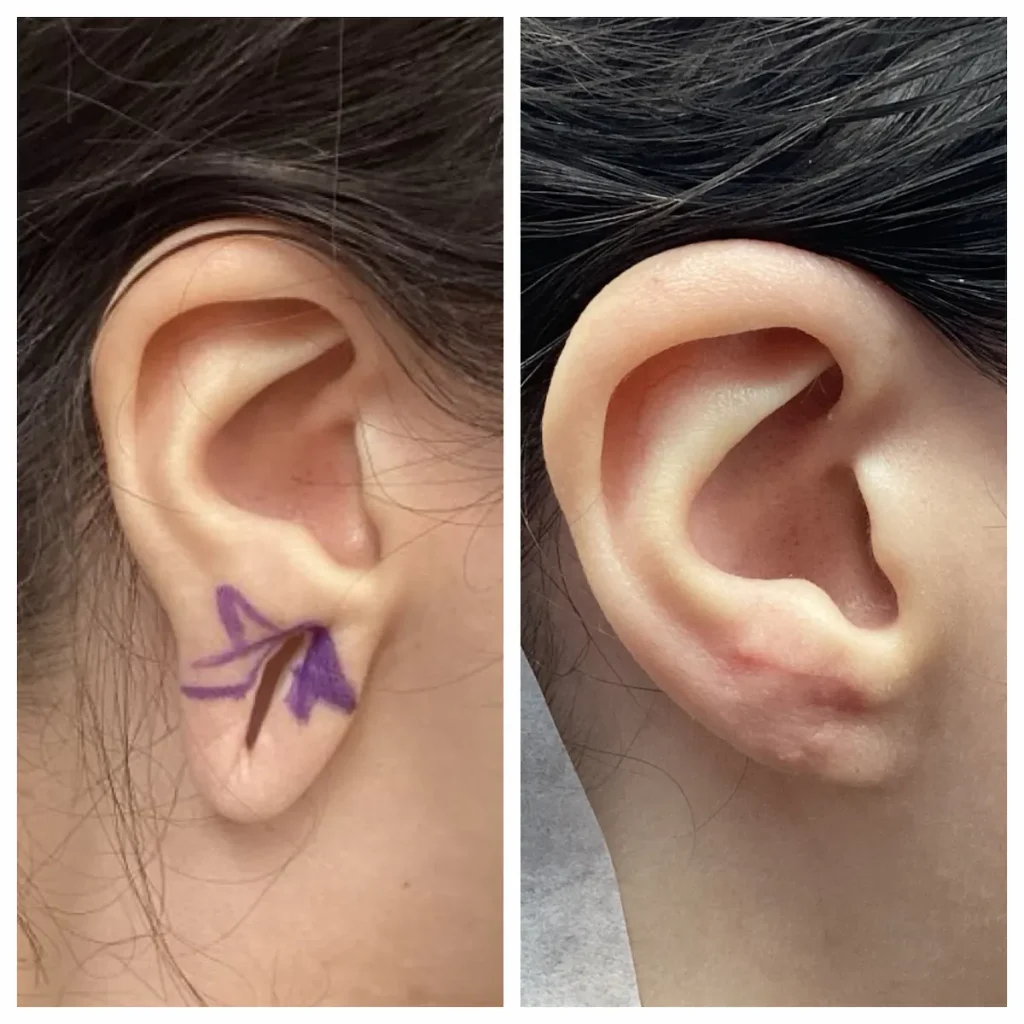
Torn Earlobe Repair
A single tear from a snagged earring, a split that has pulled all the way through, or multiple tears across both ears — each is repaired in-office under local anesthesia, rebuilding a natural lobe edge. Once fully healed, many patients can pierce again.
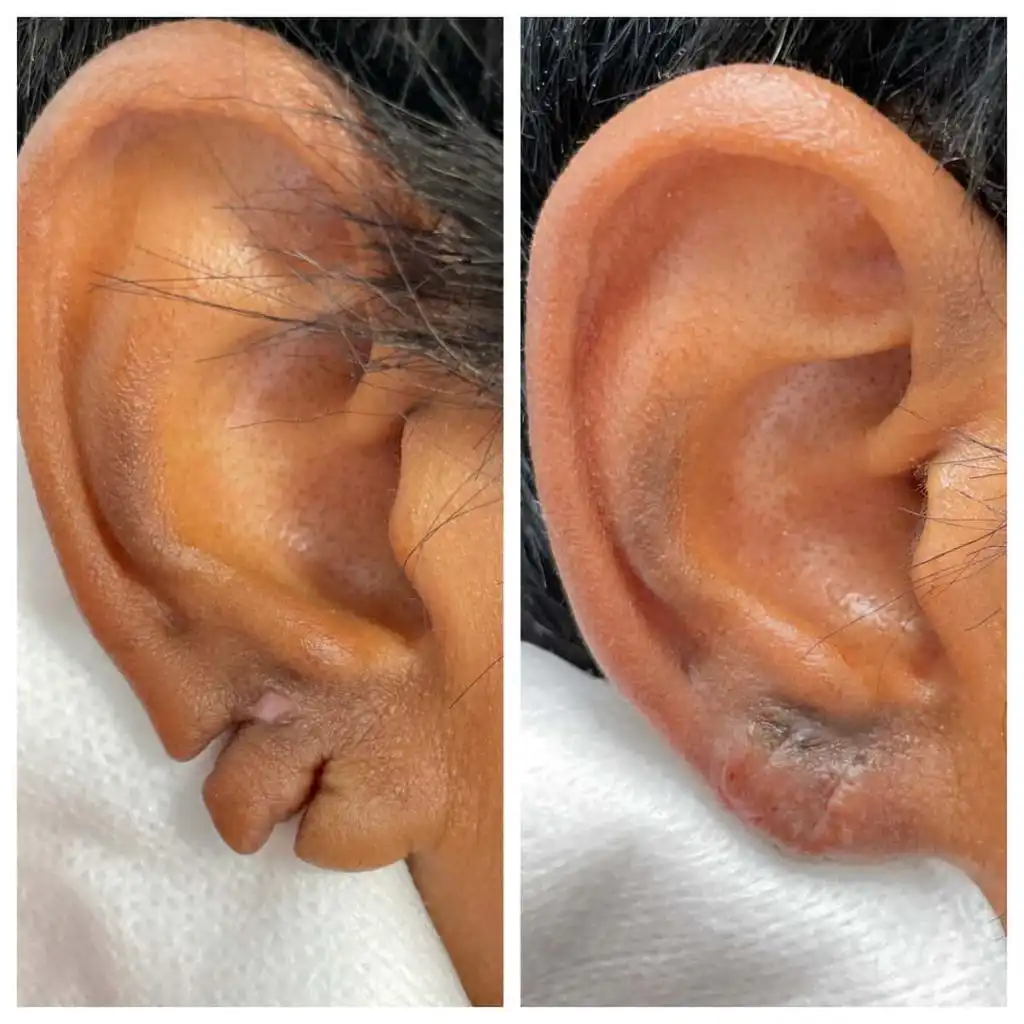
Earlobe Gauge Reconstruction
Stretched or gauged lobes don’t shrink back on their own. Reconstruction removes the stretched tissue and rebuilds a normally shaped, proportioned earlobe — whether the stretch was modest or substantial. A common request before career changes, military service, or simply a new chapter.
Ear Reconstruction After Skin Cancer
The ear is a common site for skin cancer, and defects after Mohs surgery call for careful reconstruction of its intricate contours. This is the daily territory of Dr. Beal’s facial reconstructive training — restoring both the shape and the function of the ear.
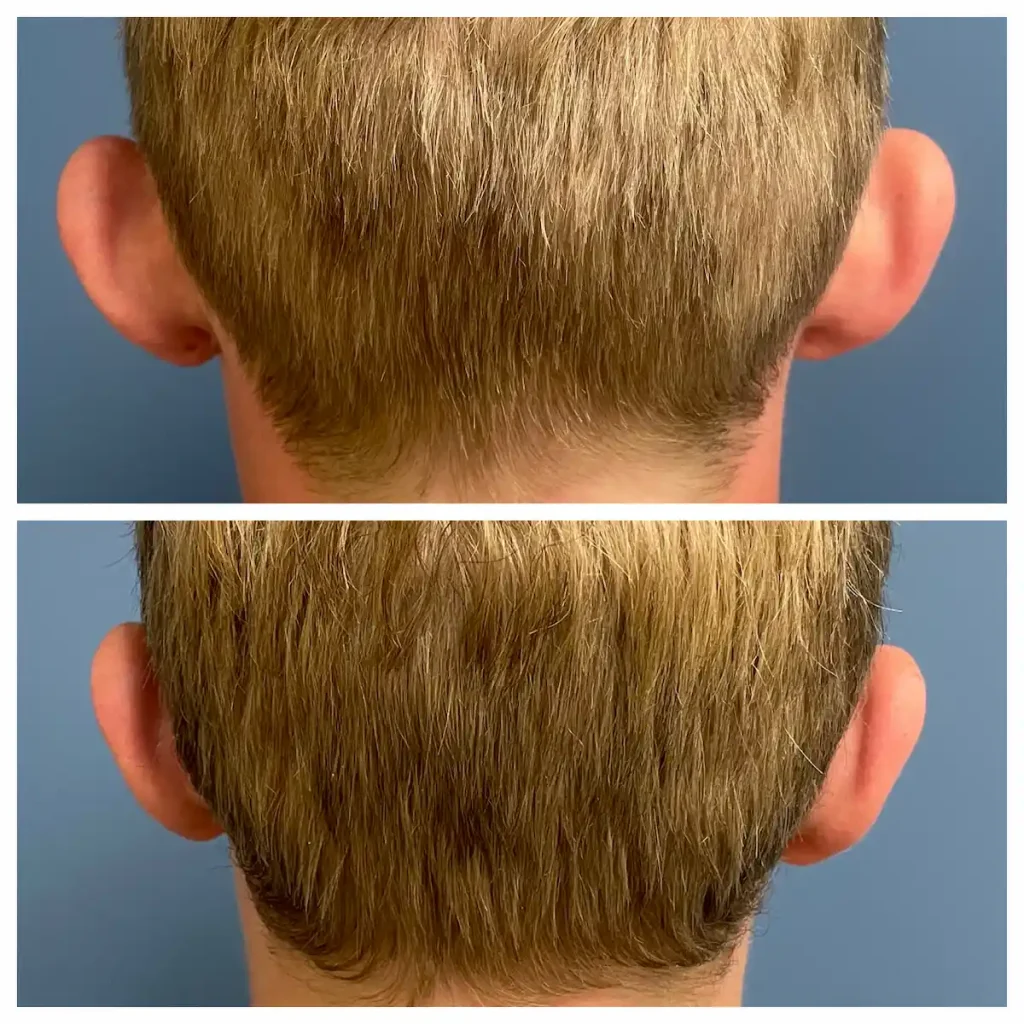
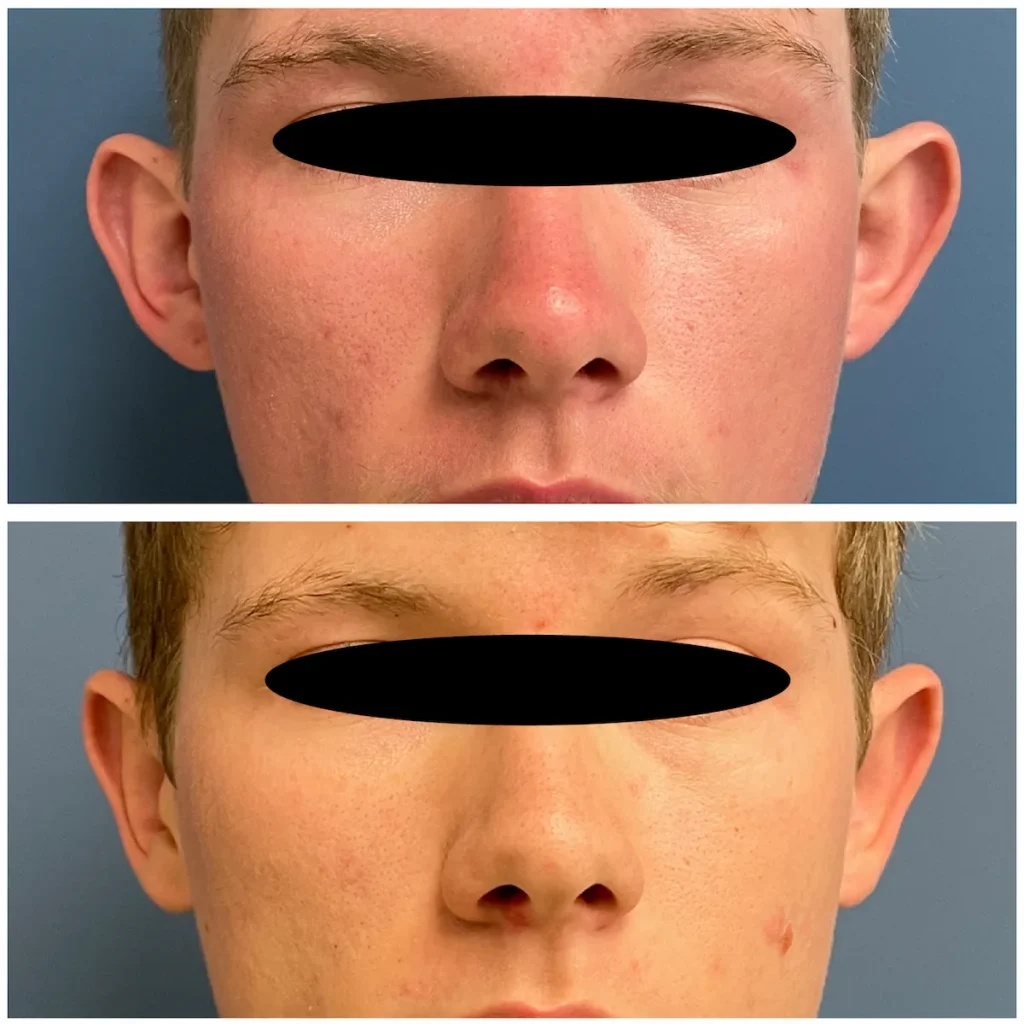
Ear Reshaping
Misshapen or prominent ears, and lobes distorted by injury or prior surgery, can be reshaped to bring balance and proportion back to the face. Keloid scars on the ear — a frequent companion of piercings — are also evaluated and treated here.
What Can You Expect?
Before any procedure, you’ll consult with Dr. Beal — he will listen to you, perform a thorough evaluation, and provide an individualized plan for your needs. The surgery itself is performed in the clinic under local anesthesia. Afterward you may have bandages on your ears; if so, you’ll be told exactly how long to keep them on, and if not, you’ll clean the area and apply Vaseline daily. Aftercare is simple, and our team follows up directly.
Individualized careEvery surgical plan is individualized, and results vary. A consultation is required to determine the right repair for your ear.
Ear Repair Before and After Photos
Every photo is from a patient of this practice, treated by Dr. Beal.
Why a Facial Reconstructive Surgeon for Your Ears
The ear’s folds and contours are some of the most intricate anatomy on the face — which is why ear reconstruction is a core part of facial plastic & reconstructive surgery training. Dr. Beal’s fellowship at Zitelli & Brodland included exactly this work: rebuilding ears after skin cancer removal so they look and function naturally. Whether your repair is a single torn lobe or a complex reconstruction, it’s the same anatomic precision applied at the right scale.
Schedule an Ear Repair Consultation
A consultation is the right first step — a quick evaluation and a clear plan, usually simpler than you’d expect. We welcome patients from across the St. Louis region, including Moscow Mills and St. Charles, at our Troy office — and our second location in Chesterfield. Call (314) 834-1400 or request a consultation online.
Common questions
Ear repair FAQs.
Can I get my ears pierced again after a repair?
In many cases, yes — once the repair has fully healed, the lobe can usually be re-pierced, typically positioned slightly away from the repair line. Dr. Beal will advise the right timing for your ear at your follow-up.
My lobes are gauged — can they really look normal again?
Gauge reconstruction removes the stretched tissue and rebuilds the lobe to a natural shape and proportion. The approach depends on how much the lobe was stretched — more substantial stretching requires a more involved reconstruction — but a normal-looking earlobe is an achievable goal for most patients. Results vary by individual.
Does ear repair hurt?
The procedure is performed under local anesthesia, so the ear is numb throughout. Afterward, discomfort is typically mild, and aftercare is simple — keeping the area clean and applying Vaseline daily, or following bandage instructions if bandages are used.
What are the risks?
All procedures carry some risk, though complications from ear reshaping are less likely when performed by a trained facial plastic and reconstructive surgeon. The most common include possible infection, bruising, and changes in sensation. Dr. Beal will do all he can to ensure your ears are symmetrical and natural-looking, though perfect symmetry is not always possible in every case — an honest conversation about expectations is part of every consultation.
Is ear repair covered by insurance? What does it cost?
Cosmetic earlobe repair and gauge reconstruction typically aren’t covered by insurance, while reconstruction after skin cancer removal generally is. Cost depends on the complexity of the repair — a single tear is simpler than multiple tears or gauge reconstruction — and is quoted at your consultation, with flexible financing options available.
Stop hiding your ears.
Torn lobes, gauges, and reconstruction — repaired in-office under local anesthesia. Troy, MO — and Chesterfield now open.