
Home / Acne Scar Treatment / Subcision
Acne Scar Subcision St. Louis
Subcision is a minor, in-office procedure that treats depressed acne scars by releasing the fibrous bands tethering the skin from beneath, allowing it to lift and fill in as new collagen forms. It’s particularly effective for rolling and boxcar scars. At St. Louis Dermatology & Cosmetic Surgery in Troy, MO, subcision is performed under the direction of Dr. Brandon T. Beal, a double board-certified dermatologist.
Double board-certified
Dermatology and Mohs micrographic surgery
Fellowship-trained
Advanced cosmetic and reconstructive training
Physician-owned
Independent practice, never corporate
Troy & Chesterfield
Second location now open
What Is Subcision?
Subcision is a minor in-office procedure used to treat depressed acne scars, those that look pitted or indented because fibrous bands beneath the skin pull them downward. By releasing those bands, the skin is freed to lift toward the surface, and the body’s natural healing fills the space with new collagen over time. It’s performed under local anesthesia, with no incision and no stitches.
It’s one part of acne scar care, and works best alongside others. See the full picture on our acne scar treatment page.
How Subcision Works
Through a tiny entry point in the skin, a fine needle is passed just beneath the scar and moved in a controlled, fan-like motion to break the fibrous bands tethering it to the deeper layers. Once those bands are released, the skin is no longer pulled down, and as the area heals it stimulates new collagen that helps fill and smooth the depression. To build on the result, subcision is often combined with dermal fillers, laser resurfacing, or microneedling.
Which Scars Subcision Treats
Subcision is particularly effective for depressed, tethered scars:
- Rolling scars — shallow, wave-like depressions caused by bands pulling the skin from beneath
- Boxcar scars — wider depressions with sharply defined edges, like shallow craters
It’s less suited to ice-pick scars, which are narrow and deep, like enlarged pores; those are better treated with TCA CROSS. It also isn’t used for raised (hypertrophic) or keloid scars. A consultation determines whether subcision fits your scars, and whether to combine it with other treatments.
Your Subcision Visit
1
Consultation
Your provider examines your scars to confirm they’re suited to subcision and may recommend complementary treatments for the best result.
2
The procedure
The area is cleansed and numbed with local anesthetic for comfort. The needle is then used to release the tethering bands. Most treatments take about 20 to 45 minutes, depending on the number of scars.
3
Recovery
Mild swelling, bruising, or tenderness is normal and usually settles within a week. Cold compresses help, and most patients return to regular activities within two to three days.
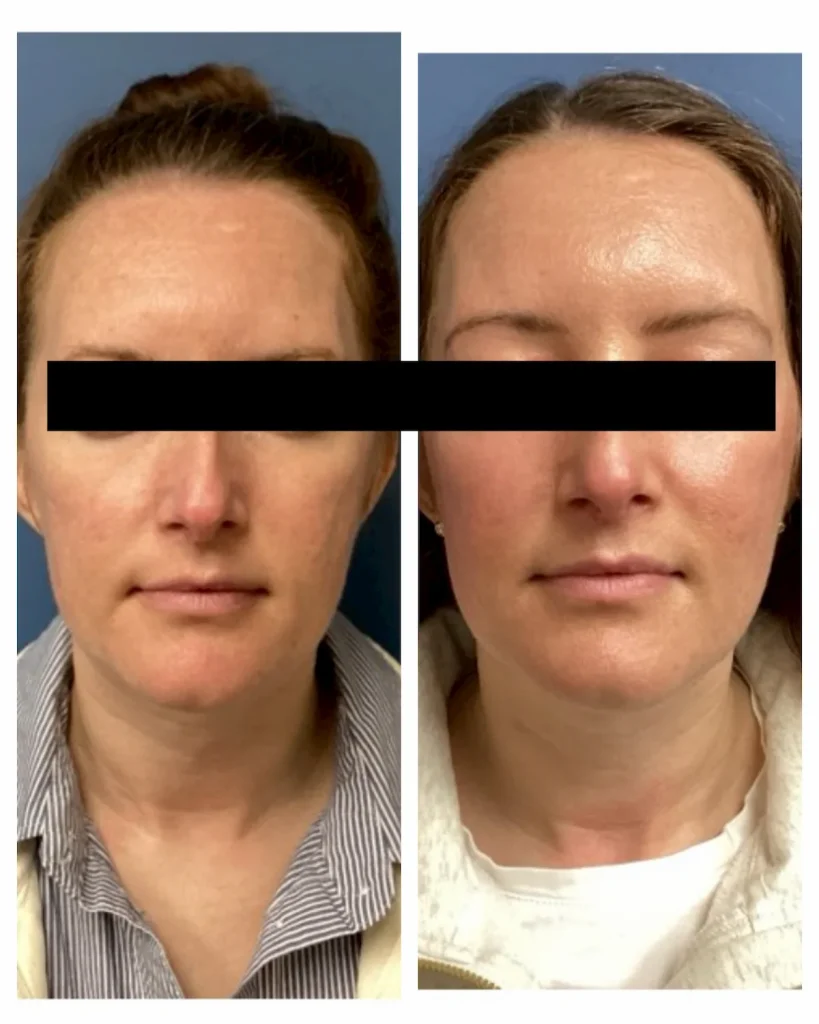
Subcision Before and After Photos
Every photo is from one of Dr. Beal’s patients. Results vary, and most reflect a combination of treatments.
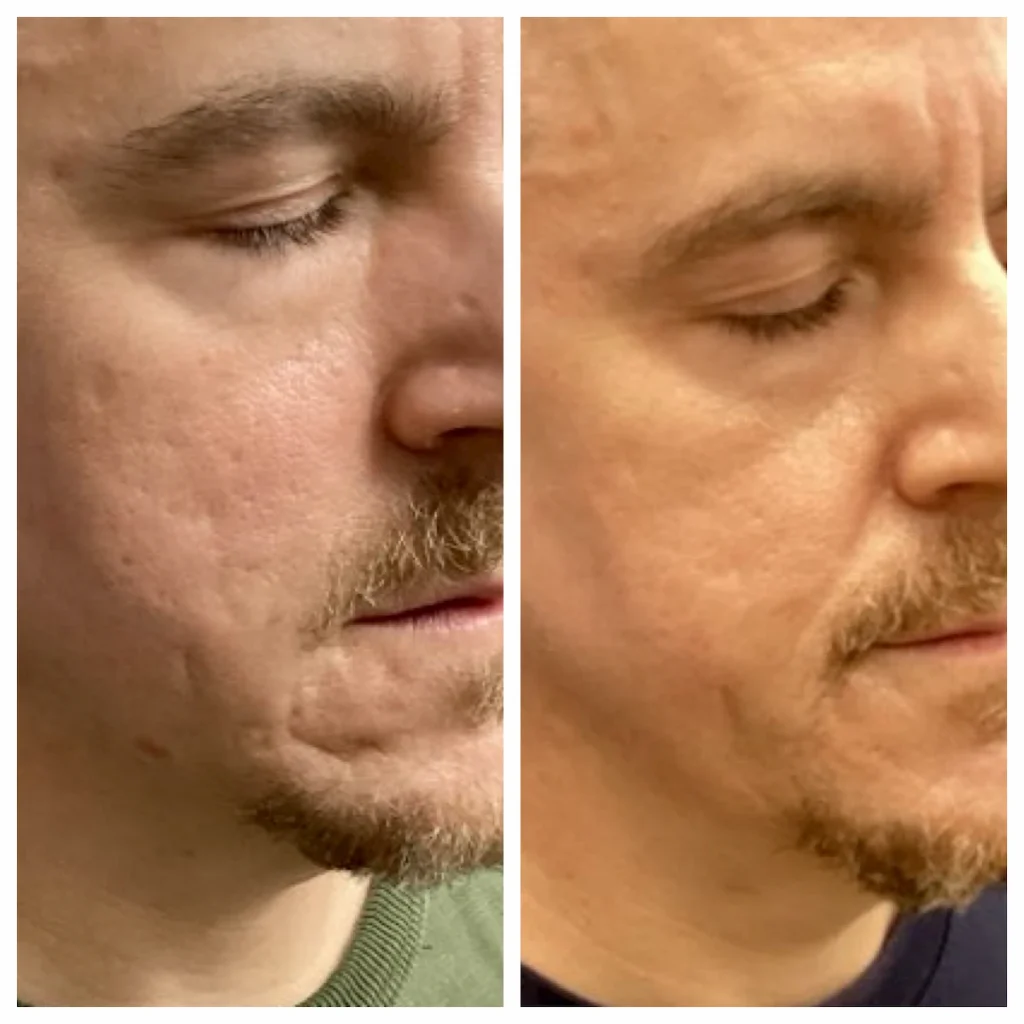
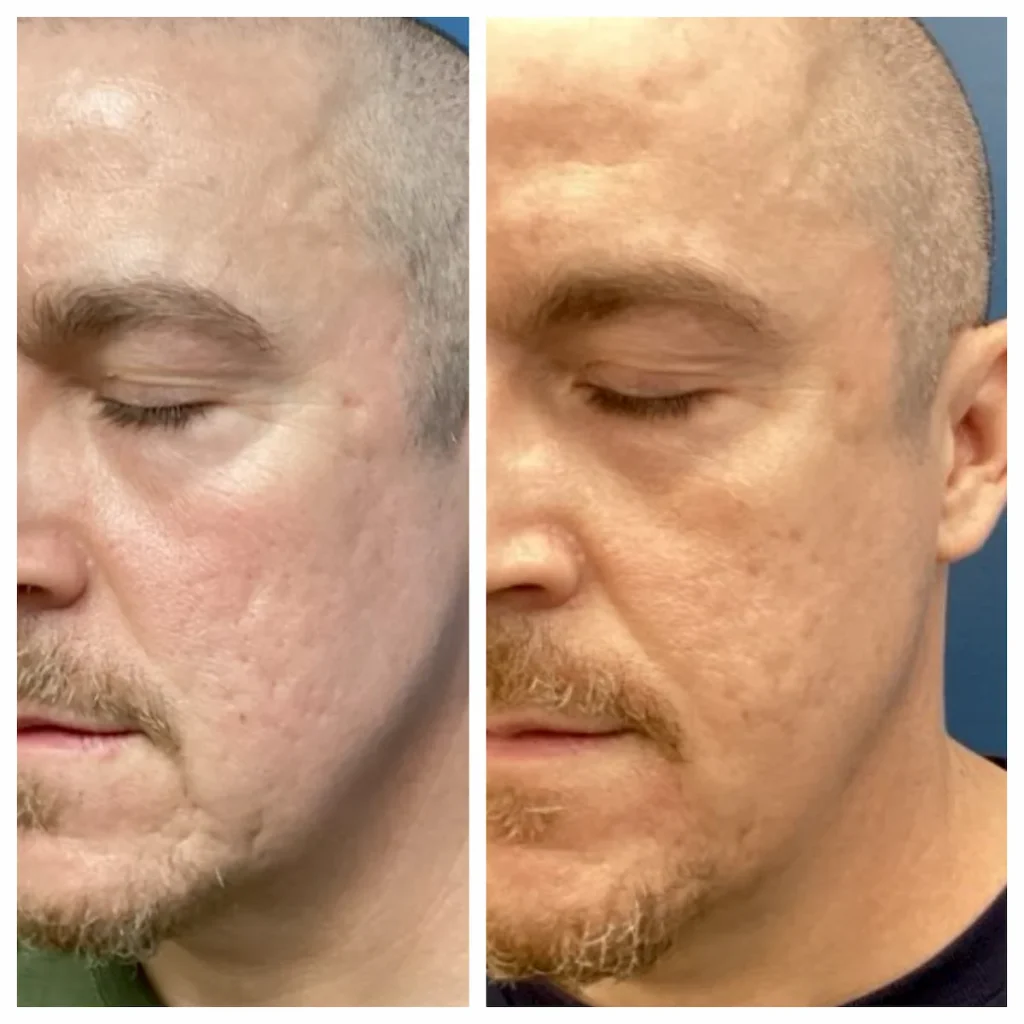
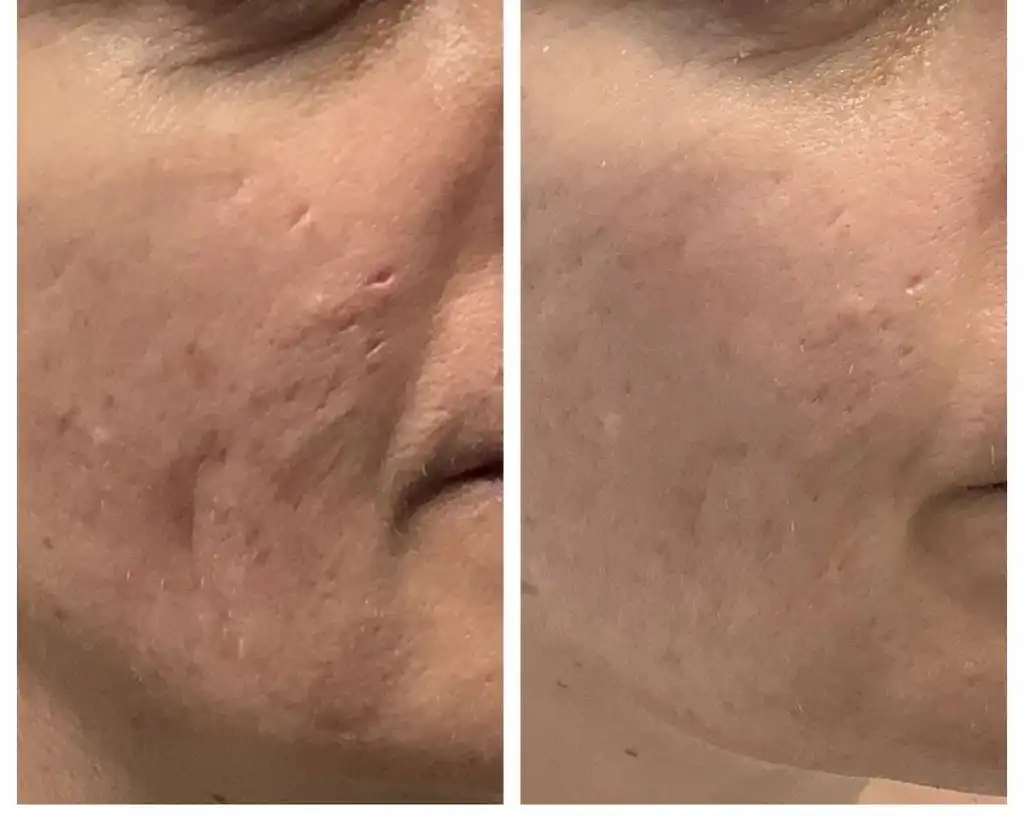
Results, Candidacy & Risks
Results from subcision develop gradually rather than immediately, with improvement in texture over a few weeks to months as collagen forms. Most people need a series of treatments, typically two to four, depending on scar severity, and results are often longer-lasting when combined with fillers or laser. Good candidates have depressed, tethered scars, good skin elasticity, no active acne or infection in the area, and realistic expectations.
As with any procedure that breaks the skin, subcision carries some risk. The most common effects are bruising and swelling, which usually resolve within a week. Less common are infection (minimized with proper aftercare), temporary darkening of the skin (post-inflammatory hyperpigmentation), which is more likely in deeper skin tones, and, rarely, a scar band reattaching so that additional treatment is needed.
Results vary. A consultation is required to determine whether subcision is appropriate for you, and treatment plans are individualized. Subcision can improve the appearance of depressed acne scars; results develop gradually, usually over multiple sessions, and differ from person to person.
Schedule a Subcision Consultation in Troy, MO
If you have rolling or boxcar acne scars and want to know whether subcision is right for you, a consultation is the next step. We welcome patients from across the region, including O’Fallon and St. Charles, at our Troy office, and our second location in Chesterfield. Call (314) 834-1400 or request a consultation online.
Common questions
Subcision FAQs.
Does subcision hurt?
The area is numbed with local anesthetic first, so the procedure itself is generally well tolerated. Afterward you can expect some bruising, swelling, or tenderness for a few days, which cold compresses help manage.
How many treatments will I need?
Most people need a series, typically two to four sessions, depending on how severe the scars are. Because results build as collagen forms, improvement continues between and after treatments. Your plan is set at your consultation.
Are subcision results permanent?
Once released, the fibrous bands generally don’t reattach, so improvement tends to be lasting. That said, results vary from person to person, scars continue to improve as collagen forms, and in rare cases a band can reattach and need further treatment. Combining subcision with filler or laser often helps results last.
Will subcision work on my ice-pick scars?
Subcision is best for rolling and boxcar scars rather than ice-pick scars, which are narrow and deep. Those usually respond better to TCA CROSS. Many people have a mix of scar types, so a combination plan is common, your consultation is where we sort that out.
Is there much downtime?
Downtime is minimal. Bruising and swelling are the main effects and usually settle within a week, with most patients back to normal activities in two to three days. Your provider will give you simple aftercare to support healing.
Smoother skin, scar by scar.
Subcision for rolling and boxcar acne scars, often combined with TCA CROSS, resurfacing, and microneedling, under a double board-certified dermatologist. Troy, MO, and Chesterfield now open.