
Home / Hyperpigmentation
Hyperpigmentation Treatment St. Louis
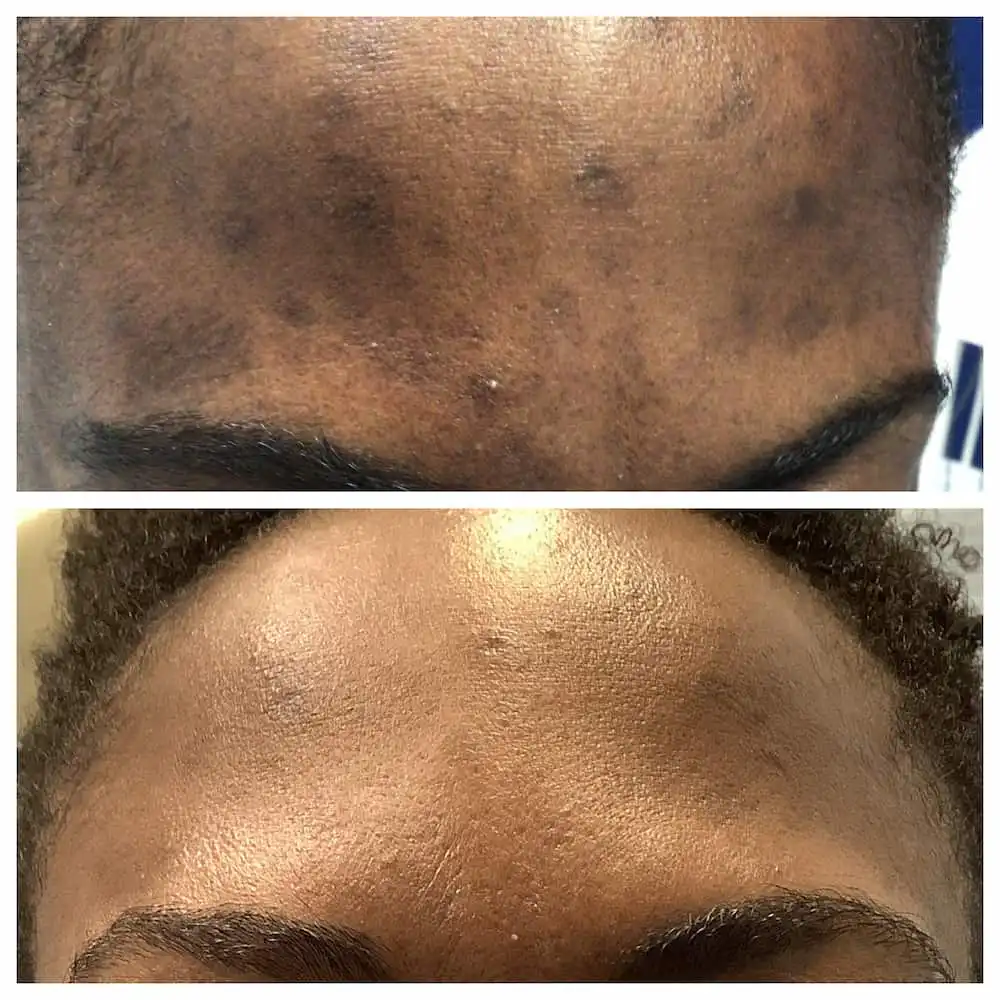
Hyperpigmentation is darkened skin caused by excess melanin, the pigment that gives skin its color. It can show up as melasma, post-inflammatory marks after acne, sun spots, or freckles, and it affects all skin tones. At St. Louis Dermatology & Cosmetic Surgery in Troy, MO, hyperpigmentation is treated under the direction of Dr. Brandon T. Beal, a double board-certified dermatologist, with approaches chosen carefully for your skin type.
Double board-certified
Dermatology and Mohs micrographic surgery
Fellowship-trained
Advanced cosmetic and reconstructive training
Physician-owned
Independent practice, never corporate
Troy & Chesterfield
Second location now open
Common Types of Hyperpigmentation
Melasma
Often called the “mask of pregnancy,” melasma is linked to hormonal changes, especially during pregnancy or with hormonal contraceptives. It tends to appear as symmetrical, blotchy patches on the forehead, cheeks, and upper lip. Melasma is manageable but prone to return, so it’s treated with maintenance in mind.
Post-inflammatory hyperpigmentation (PIH)
PIH develops after the skin is injured or inflamed, by acne, eczema, or trauma. It’s more common in darker skin tones because of their higher melanin content.
Sun spots (solar lentigines)
Flat brown spots on sun-exposed areas like the face, hands, shoulders, and arms, most common in older adults from cumulative sun exposure.
Freckles (ephelides)
Small brown spots that are largely genetic but darken with sun exposure.
What Causes It
- Sun exposure — UV rays stimulate melanin, often leading to dark spots
- Hormonal changes — particularly during pregnancy or menopause
- Skin injuries — acne, cuts, or burns can leave darker marks behind
- Certain medications — some drugs, including certain chemotherapy agents, antibiotics, and anti-seizure medications, can cause it as a side effect
- Medical conditions — some systemic conditions, such as Addison’s disease, can cause skin darkening
Treatment Options
Treatment is personalized to the type of pigmentation and your skin, and often combines more than one approach:
- Topical treatments — hydroquinone to lighten dark patches, retinoids to speed cell turnover, and vitamin C to brighten; medical-grade options like kojic acid, azelaic acid, and arbutin may also be used
- Chemical peels — exfoliate the surface for a brighter, more even tone, with the peel matched to your skin
- Laser therapy — targets melanin deposits; the approach is chosen carefully for your skin tone to reduce the risk of side effects
- Microneedling — stimulates collagen and can help improve pigmentation alongside overall texture
A careful, skin-type-aware plan matters here, because some pigment treatments carry a higher risk of side effects in darker skin. That’s exactly the kind of judgment your consultation is for.
Results vary. A consultation is required to determine which treatments are appropriate for you, and treatment plans are individualized. These treatments can improve the appearance of hyperpigmentation; some types, such as melasma, are prone to recurrence and may need ongoing maintenance.
Prevention
Not all hyperpigmentation can be prevented, but a few habits lower the risk: wear a broad-spectrum SPF 30 or higher every day, avoid picking at acne or wounds (which can trigger PIH), use brightening, antioxidant ingredients like vitamin C, and limit sun exposure with hats and protective clothing. Daily sun protection is the single most effective step, and it also keeps your treatment results from fading.
Schedule a Hyperpigmentation Consultation in Troy, MO
If dark spots or uneven tone are bothering you, an evaluation is the first step toward a plan suited to your skin. We welcome patients from across the region, including O’Fallon and St. Charles, at our Troy office, and our second location in Chesterfield. Call (314) 834-1400 or request a consultation online.
Common questions
Hyperpigmentation FAQs.
How long does it take to see results?
It varies by the type of pigmentation and the treatment used, but most patients notice improvement over weeks to months. Pigment fades gradually, and consistent sun protection is essential to hold onto the results.
Is hyperpigmentation permanent?
Many cases improve with treatment, but some types, melasma in particular, are prone to coming back and may need ongoing maintenance. Setting realistic expectations is part of the plan we build at your consultation.
Are treatments safe for darker skin tones?
They can be, but skin tone genuinely matters here, some pigment treatments carry a higher risk of side effects, including further pigment change, in deeper skin. The approach is chosen carefully for your skin type, which is why an in-person evaluation is important rather than a one-size-fits-all treatment.
Are the treatments painful?
Most hyperpigmentation treatments are minimally invasive with little discomfort. Your provider will explain what to expect for whichever approach fits your skin and pigmentation.
Can men develop hyperpigmentation?
Yes. Hyperpigmentation affects people of all genders and skin tones, and treatment is tailored to the individual either way.
More even, brighter skin.
Hyperpigmentation treatment, topicals, peels, laser, and microneedling, chosen carefully for your skin tone, under a double board-certified dermatologist. Troy, MO, and Chesterfield now open.