
Home / Medical Dermatology / Facial & Nose Vein Treatment
Facial & Nose Vein Treatment St. Louis
Visible blood vessels on the nose and face are common and treatable. At St. Louis Dermatology & Cosmetic Surgery in Troy, MO, facial vessels are treated with the method best matched to each patient, electrosurgery, laser, or sclerotherapy, under the direction of Dr. Brandon T. Beal, a double board-certified dermatologist.
Double board-certified
Dermatology and Mohs micrographic surgery
Fellowship-trained
Advanced cosmetic and reconstructive training
Physician-owned
Independent practice, never corporate
Troy & Chesterfield
Second location now open
Visible Vessels on the Nose & Face
Enlarged blood vessels along the sides of the nose, the nasal rim, and the cheeks are very common. They often become more noticeable in our 30s and 40s and can be more prominent in people with fair skin or a history of sun exposure. While they’re usually harmless, many patients find them distracting and ask about treatment. The right approach depends on the size, depth, and location of the vessel, which is why every plan starts with an in-person evaluation.
Electrosurgery
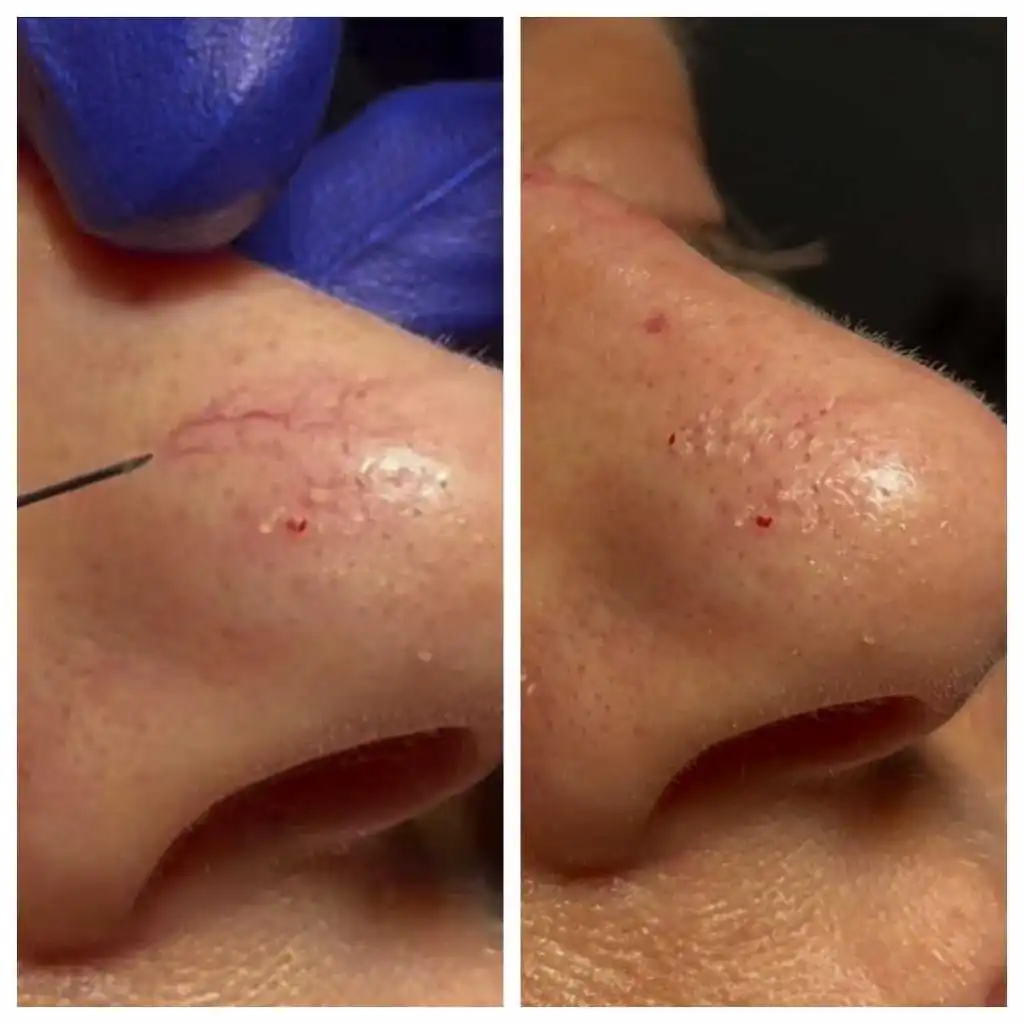
Often the preferred approach for enlarged vessels on and around the nose, using precise, controlled energy to treat individual vessels one at a time.
Laser & intense pulsed light
Can help with redness and clusters of small vessels across the cheeks and nose. See our laser treatments for related options.
Sclerotherapy
A solution is injected into a vessel to close it. It’s most commonly used for spider and varicose veins on the legs, and is an option for certain facial vessels depending on the individual.
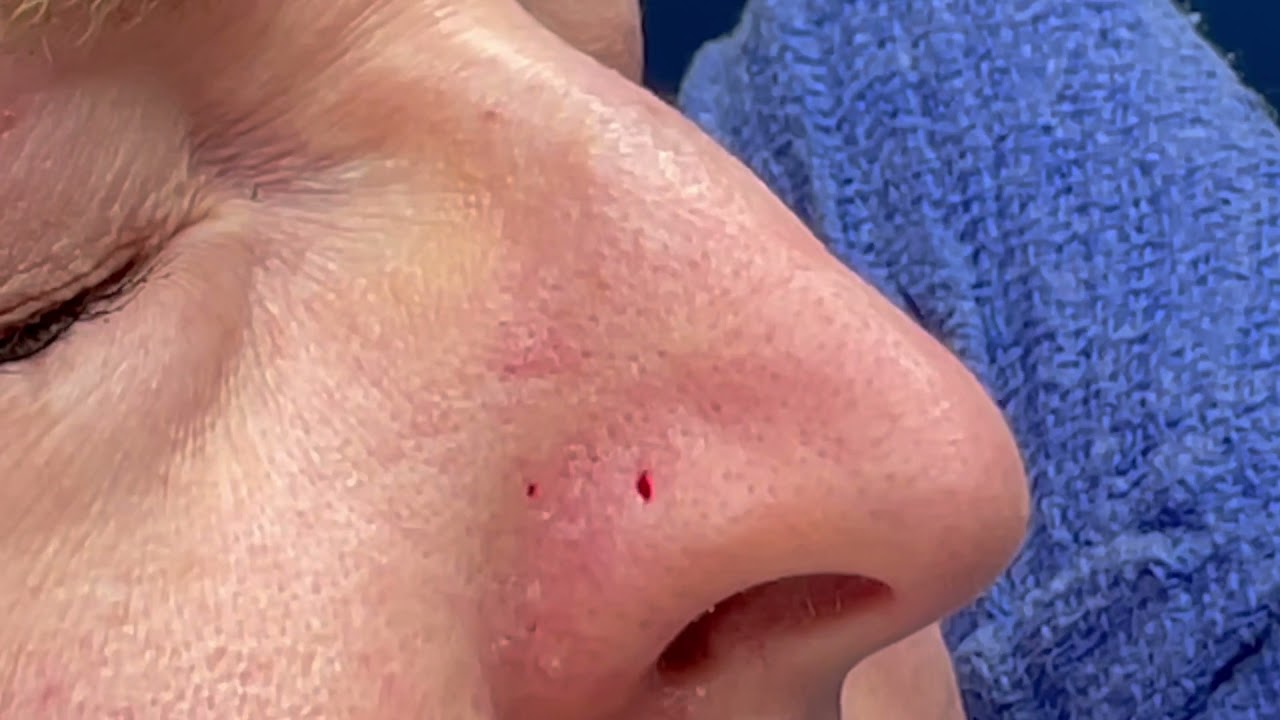
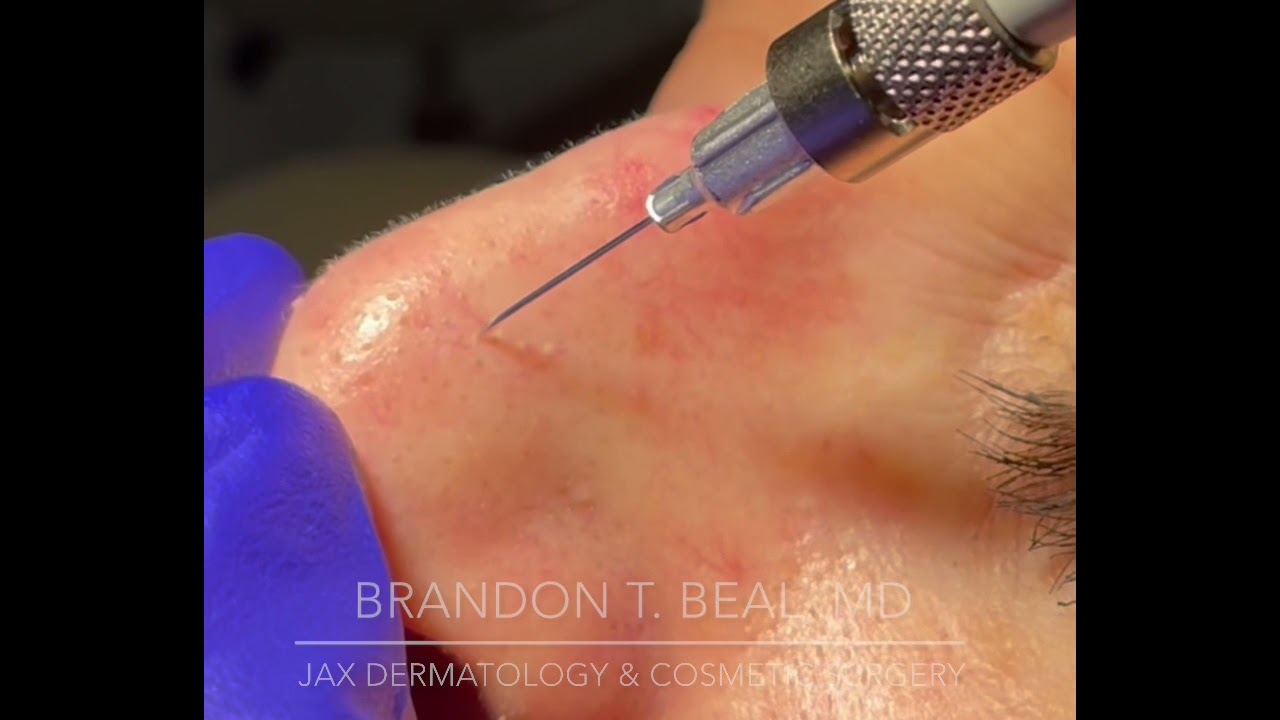
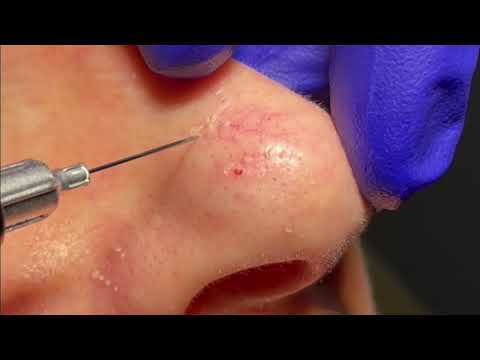
Watch Dr. Beal Treat Facial Vessels
These short videos show Dr. Beal performing in-office vein treatments, offering a clear look at how the treatments are performed and what to expect during a visit.
Your Vein Treatment Visit
1
Consultation
Dr. Beal examines the area, listens to your concerns, and recommends the approach best suited to the vessels being treated.
2
Treatment
Depending on the size and depth of the vessel, the area may be numbed with ice, a topical cream, or a small injection, and the vessel is then treated. Most visits take 15–30 minutes.
3
Results
Treated vessels can look more prominent for 48–72 hours, then gradually fade over 7–10 days. It often takes 1–2 treatments, with larger vessels sometimes needing more.
A Note on Leg Veins
Sclerotherapy is most commonly associated with spider and varicose veins on the legs, which can be linked to aching, heaviness, or self-consciousness. The treatment involves injecting a solution into the vein with a fine needle to help reduce its appearance. If recommended, you may be asked to wear compression stockings and avoid strenuous activity for a couple of weeks, while light activity such as walking is encouraged to support healing. A follow-up is typically scheduled a few weeks later to assess healing and whether further treatment would help.
Results vary. A consultation is required to determine which treatment is appropriate for you, and treatment plans are individualized. Treatment can reduce the appearance of visible vessels; results develop over time and differ from person to person. Sclerotherapy is not recommended during pregnancy or breastfeeding, and patients with a history of blood clots require careful medical evaluation first.
Schedule a Vein Treatment Consultation in Troy, MO
The first step is an evaluation of the vessels you’d like treated and an honest plan for improving their appearance. We welcome patients from across the region, including O’Fallon and St. Charles, at our Troy office, and at our second location in Chesterfield. Call (314) 834-1400 or request a consultation online.
Common questions
Vein treatment FAQs.
Which treatment is right for my facial vessels?
It depends on the size, depth, and location of the vessel. Electrosurgery often works well for enlarged vessels on and around the nose, while laser or intense pulsed light can help with redness and clusters of small vessels. Your consultation is where Dr. Beal identifies the vessel type and matches the method.
Does it hurt, and is there downtime?
The area can be numbed with ice, a topical cream, or a small injection depending on the vessel. Most treatments take only 15–30 minutes. Treated vessels may look more prominent for a couple of days before gradually fading, and most people return to their day right away.
How many treatments will I need?
It often takes 1–2 treatments to see meaningful improvement, with larger vessels sometimes needing more. The number depends on the size and number of vessels treated and is set together at your consultation.
Is vein treatment safe?
All procedures carry some risk. Serious complications are uncommon when treatment is performed by a qualified, experienced physician. The most common side effects are temporary and minor, such as swelling, warmth, or discomfort at the treatment site. Sclerotherapy is not recommended during pregnancy or breastfeeding, and a history of blood clots requires careful evaluation first.
Clearer skin, fewer visible vessels.
Facial and nose vein treatment matched to you, electrosurgery, laser, or sclerotherapy, under a double board-certified dermatologist. Troy, MO, and Chesterfield now open.