
A pimple that won’t go away after several weeks may not be acne at all. Consider contacting us today to learn more.
Most pimples follow a predictable script: they appear, peak, and fade within a week or two. So when a blemish lingers for a month or more, resists every product in your cabinet, or keeps coming back in the exact same spot, it is reasonable to wonder whether it is really a pimple at all. At our Troy, MO practice, a stubborn “pimple” is one of the most common reasons patients come in, and the answer is not always acne.
When It Really Is Acne
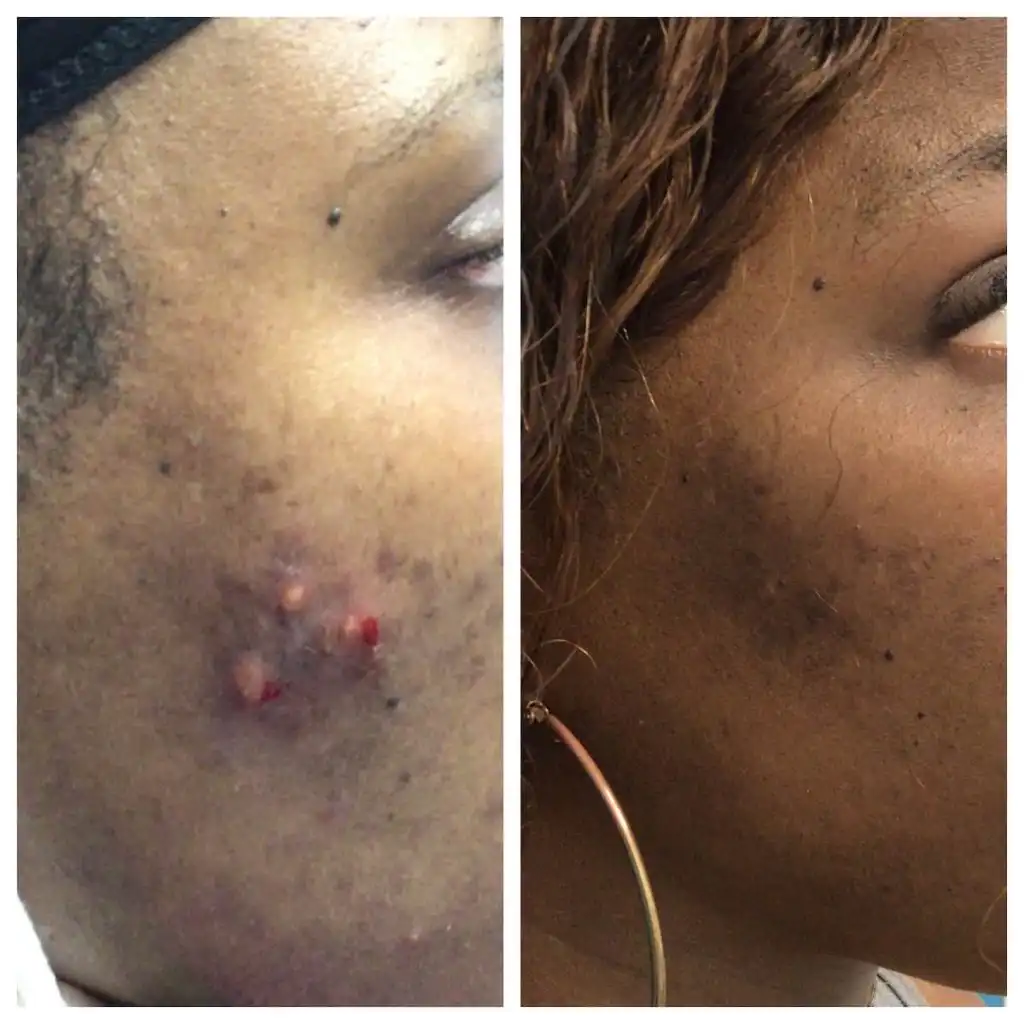
Some acne lesions simply take longer to clear. Deep nodules and cysts form well below the surface, where the inflammation is walled off from the outside. Because there is no open channel to the skin’s surface, these bumps cannot be “popped,” and they may linger for weeks. They are usually firm and tender, and located in classic acne zones such as the jawline, chin, back, or shoulders.
Recurring breakouts in the same spot can also be acne. A pore damaged by repeated inflammation may keep clogging, producing a pimple that seems to never fully leave. Hormonal acne, in particular, tends to flare in the same locations along the lower face.
If this sounds familiar, professional acne treatment can address what over-the-counter products often cannot, including prescription medications and in-office options for deep, stubborn lesions.
When It May Be a Cyst
An epidermoid cyst is a small sac beneath the skin that fills with keratin, the same protein found in skin and hair. It can sit quietly for years, then become inflamed and swell into a red, tender bump that looks remarkably like a large pimple. Two clues set it apart: it tends to return to the same spot no matter how many times it calms down, and it often has a small central opening or blackhead-like punctum. Because the sac itself remains under the skin, the only lasting fix is cyst removal, a quick in-office procedure.
When It Could Be Something More Serious
This is the possibility that makes a persistent bump worth taking seriously. Basal cell carcinoma, the most common form of skin cancer, frequently begins as a small, pearly or flesh-colored bump that is easy to mistake for a pimple. Unlike a pimple, it does not resolve. It may bleed easily, scab over, appear to heal, and then break down again in a repeating cycle. It most often appears on sun-exposed areas such as the face, ears, neck, and scalp.
A few signs suggest a bump deserves a professional look rather than more spot treatment: it has been present for more than four to six weeks without improving; it bleeds with little or no provocation; it has a shiny or translucent quality; it keeps scabbing and reopening; or it is slowly growing. None of these automatically means skin cancer, but each is a reason for an evaluation. Regular skin cancer screenings are the most reliable way to catch these growths early, when treatment is simplest.
Other Look-Alikes
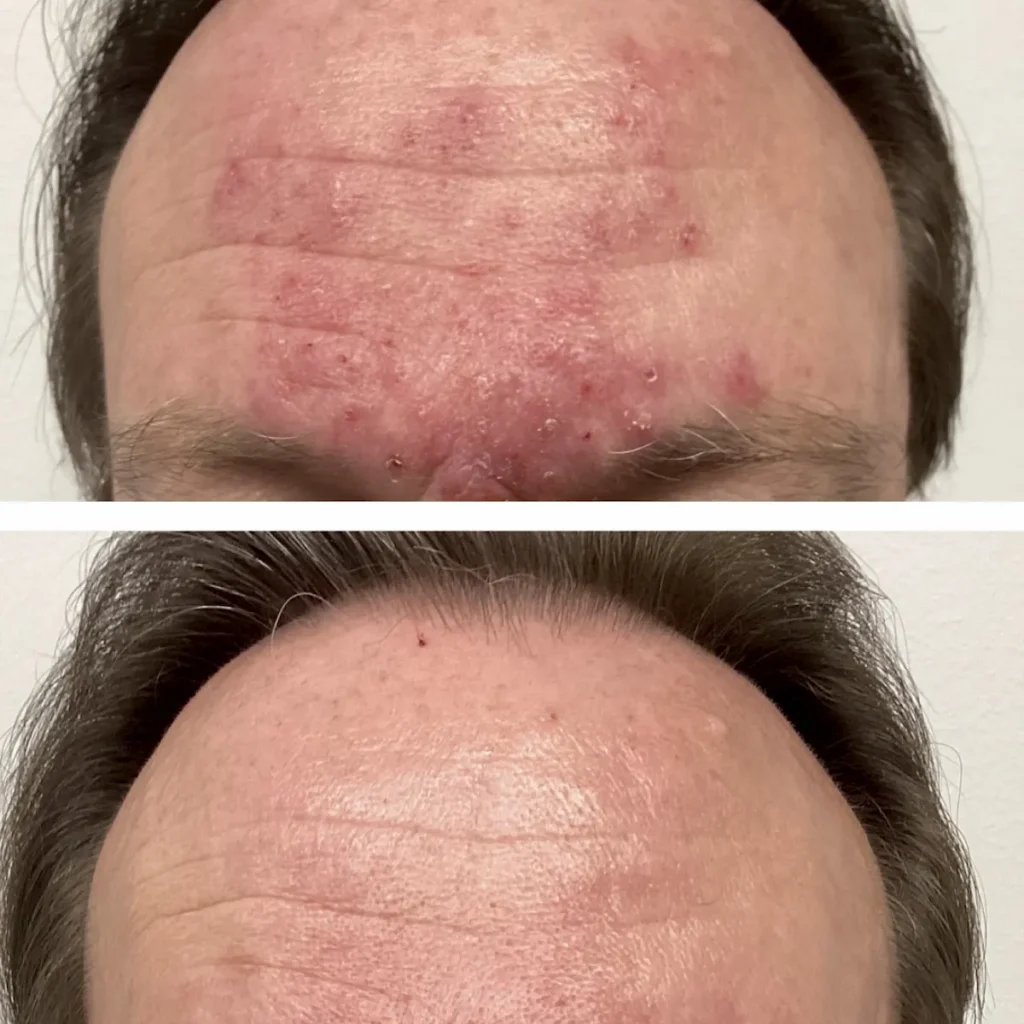
Several other conditions can masquerade as a stubborn pimple. Folliculitis, an inflamed or infected hair follicle, produces small red bumps that can persist wherever there is friction or shaving. Rosacea can cause acne-like bumps on the cheeks and nose, often accompanied by flushing and visible redness, and it does not respond to typical acne treatments. Keratosis pilaris creates rough, small bumps on the upper arms and thighs that are often mistaken for breakouts.
Why Guessing Is the Wrong Strategy
Each of these conditions calls for a different treatment, and some, like basal cell carcinoma, become harder to treat the longer they wait. Continuing to apply acne products to a bump that is not acne wastes months and can irritate the skin without addressing the cause. A dermatologist can usually distinguish among these possibilities quickly, often with a dermatoscope, and can perform a simple biopsy if there is any doubt.
Dr. Brandon T. Beal, a double board-certified, fellowship-trained dermatologist, carefully evaluates persistent bumps to identify the underlying cause before recommending a plan. Results vary, and a consultation is required to determine the right approach for your skin.
Consider Contacting St. Louis Dermatology & Cosmetic Surgery Today
A pimple that behaves like a pimple will clear within a few weeks. One that lingers past a month, bleeds, keeps returning, or slowly grows deserves a professional evaluation, if only for peace of mind. St. Louis Dermatology & Cosmetic Surgery welcomes patients from Troy, Winfield, Lincoln County, and the surrounding communities. Call (314) 834-1400 or request an appointment online to have your skin checked.