
Have you noticed a waxy, raised spot on your skin? It might be a seborrheic keratosis. Consider contacting us today to learn more.
If you’ve noticed a new spot on your skin that looks waxy, slightly raised, and almost “stuck on” rather than flat, it’s likely a seborrheic keratosis. These growths are extremely common, especially as we get older, but a new or unfamiliar spot is always worth understanding before you decide whether to leave it alone or have it looked at.
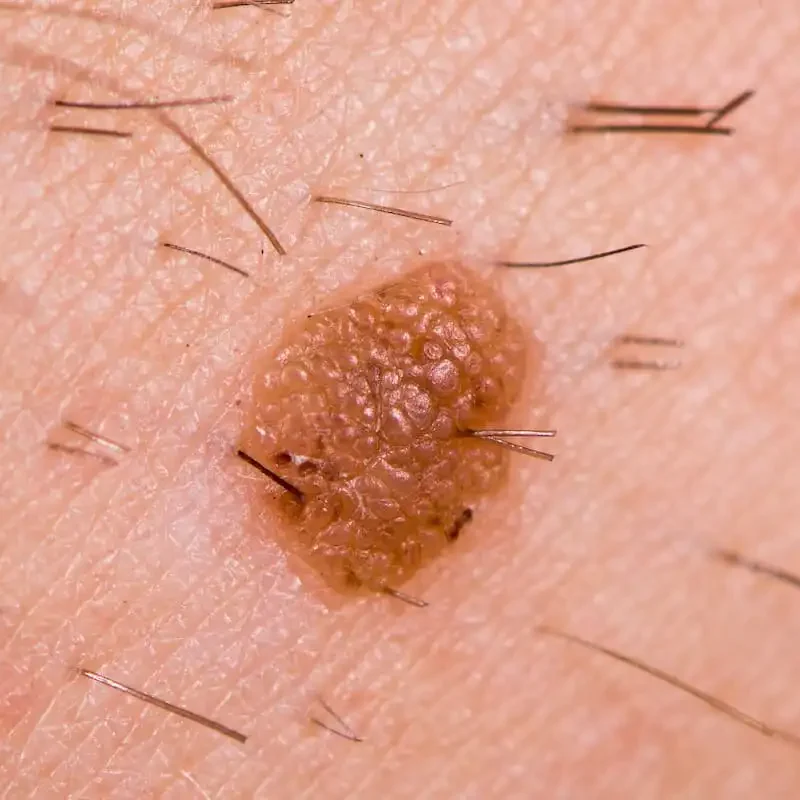
What Is a Seborrheic Keratosis?
A seborrheic keratosis is a common, benign (non-cancerous) skin growth. They tend to have a waxy, warty, or slightly scaly texture and a “stuck-on” appearance, as if someone pressed a bit of wax or clay onto the skin. Color can range from light tan to brown or black, and size can vary from a small dot to over an inch across. They most often appear on the chest, back, shoulders, scalp, and face, and you may have several at once rather than just one.
What Causes Them?
The exact cause isn’t fully understood, but seborrheic keratoses are strongly linked to age and genetics. They tend to run in families and become more common after age 40 or 50.
How They’re Different from Moles, Warts, or Skin Cancer
Because seborrheic keratoses can vary so much in size and color, people sometimes mistake them for moles, warts, or, less commonly, something more concerning like melanoma. A few general differences:
- They typically have a waxy or “pasted on” texture, rather than the smoother surface of a typical mole.
- The border is usually well defined, even if the shape is irregular.
- Multiple seborrheic keratoses often appear over time, rather than a single new spot.
That said, texture and appearance alone aren’t a reliable way to self-diagnose. A single new or changing spot, especially one that looks different from your other skin growths, is exactly the kind of thing a provider should evaluate in person.
When to Get a Seborrheic Keratosis Checked
Most seborrheic keratoses are harmless and don’t require any treatment. Still, it’s worth scheduling an evaluation if:
- A spot appears suddenly or changes quickly in size, shape, or color
- It becomes itchy, tender, or starts to bleed
- It catches on clothing or jewelry and becomes irritated
- You simply aren’t sure what it is or want confirmation it’s benign
A quick evaluation can rule out anything that needs closer attention and give you peace of mind about the rest.
Removal Options, If You Want Them Gone
Because seborrheic keratoses are benign, removal is usually optional and based on comfort or preference rather than medical necessity. Some people choose to have them removed because clothing irritates them, they itch, or they simply bother them cosmetically. Common in-office removal methods include cryotherapy (freezing), shave removal, or laser treatment, depending on the size, location, and number of spots.
Keeping an Eye on Your Skin Overall
Seborrheic keratoses themselves aren’t preventable, since they’re tied to age and genetics rather than lifestyle. But because new or changing spots can sometimes signal something other than a seborrheic keratosis, an annual skin cancer screening is a simple way to keep track of everything on your skin, not just the spots that catch your attention.
Consider Contacting St. Louis Dermatology and Cosmetic Surgery Today
If you have a spot you’d like evaluated, whether it turns out to be a seborrheic keratosis or something else, our team can take a look and help you decide on next steps. Schedule with us today by either visiting our online contact form or calling (314) 834-1400