
Tired of sun spots? Explore effective treatment options from St. Louis Dermatology & Cosmetic Surgery in Troy, Missouri.
If you’ve ever noticed small brown spots appearing on your cheeks, forehead, or around your temples after years of outdoor activity, you’re not alone. Those “sun spots” (also called solar lentigines) are one of the most common signs of sun damage, especially here in Missouri, where bright summers and outdoor lifestyles make UV exposure nearly unavoidable.
The good news? Modern dermatology offers safe, effective ways to fade and prevent sun spots, restoring smoother, more even-toned skin.
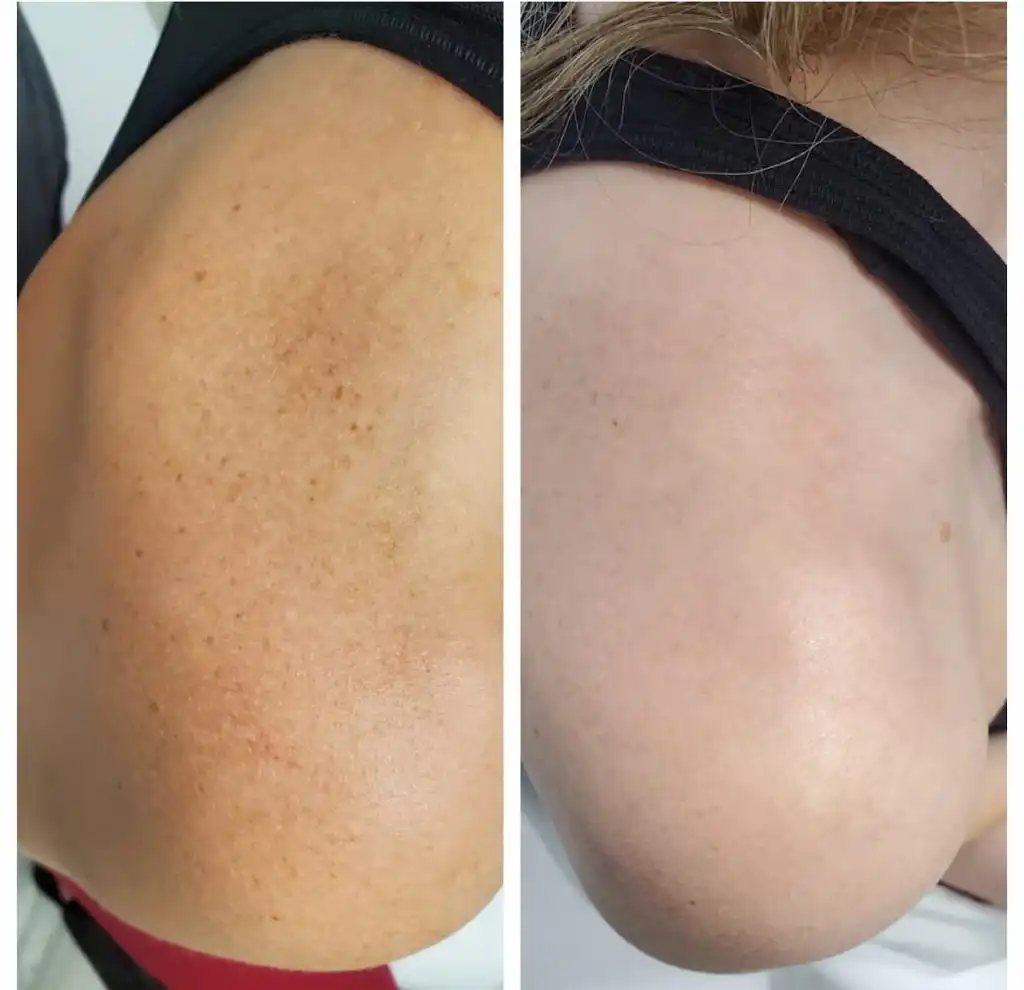
🌤 What Are Sun Spots?
Sun spots are flat, brown or tan areas of pigmentation that form when melanin — the pigment that gives skin its color — becomes overproduced after repeated UV exposure.
They often appear in areas that receive the most sun over time, including:
- The face (especially cheeks, temples, and forehead)
- The backs of hands
- The chest and shoulders
- The forearms
While sun spots are noncancerous, they indicate cumulative UV damage — a sign that your skin’s natural repair mechanisms are slowing down due to sun exposure and age.
🔍 Can Sun Spots Go Away on Their Own?
Unfortunately, sun spots won’t disappear naturally once they develop. While topical creams may help fade discoloration over time, true sun spots are embedded within deeper layers of skin.
That’s why most patients benefit from professional treatments that target melanin at the source — either by breaking up pigment clusters, exfoliating damaged skin, or stimulating collagen and cell turnover.
💡 Treatments for Sun Spots on the Face
At St. Louis Dermatology & Cosmetic Surgery, we offer several proven, dermatologist-recommended treatments that safely fade and remove sun spots — often with minimal downtime.
Here’s a breakdown of the most effective options:
1. Laser Treatments
Laser therapy is one of the most precise and effective ways to fade sun spots.
How it works:
Targeted light energy is delivered to the pigmented areas, heating and fragmenting the melanin so your body can naturally clear it away.
Popular options include:
- IPL (Intense Pulsed Light): Ideal for multiple small sun spots or diffuse pigmentation
- Fractional Laser Resurfacing: Treats deeper pigment and improves texture and fine lines simultaneously
Benefits:
- Noticeable results after 1–3 sessions
- Minimal downtime
- Stimulates collagen and improves skin tone
Best for: Patients seeking visible, even skin tone improvement and long-term results.
2. Chemical Peels
Chemical peels use controlled exfoliation to remove dull, discolored outer layers of the skin and reveal new, brighter skin beneath.
How it works:
A medical-grade solution (such as glycolic acid or TCA) is applied to the skin, triggering exfoliation and renewal over several days.
Benefits:
- Evens out pigmentation
- Refines texture and smoothness
- Enhances the effectiveness of at-home skincare
Best for: Patients with mild-to-moderate sun spots or overall uneven tone.
3. Microneedling with PRP
Microneedling creates micro-injuries in the skin to stimulate natural collagen production and cell turnover, helping fade discoloration and improve tone.
When combined with PRP (platelet-rich plasma) or growth factors, the treatment boosts healing and accelerates pigment breakdown.
Benefits:
- Improves sun damage, fine lines, and texture
- Minimal downtime
- Natural collagen stimulation
Best for: Patients who prefer a non-laser approach to rejuvenation.
🧴 Daily Skincare & Prevention Tips
Even after professional treatment, maintaining results requires consistent sun protection and at-home care.
Dermatologist-Recommended Habits:
- Wear SPF 30+ daily, year-round — even on cloudy days.
- Choose broad-spectrum sunscreens that block UVA and UVB rays.
- Reapply sunscreen every 2 hours when outdoors.
- Add antioxidants (Vitamin C, green tea, niacinamide) to your morning routine to protect against free radical damage.
- Wear hats and seek shade during peak sun hours (10 AM – 4 PM).
💡 Remember: The best treatment for sun spots is prevention. Protecting your skin today helps preserve youthful, even-toned skin for years to come.

🩺 When to See a Dermatologist
While most sun spots are harmless, it’s essential to have any new or changing brown spots evaluated by a board-certified dermatologist.
Schedule an exam if you notice:
- Rapidly changing size, color, or shape
- Irregular borders
- Spots that itch, bleed, or don’t heal
These could signal early skin cancer — and early detection is key to successful treatment.
Clearer, Healthier Skin Starts Here
Whether your sun spots are recent or long-standing, practical solutions exist — and professional care can make all the difference.
At St. Louis Dermatology & Cosmetic Surgery in Troy, MO, we combine medical precision with cosmetic artistry to help patients safely fade sun damage and restore naturally radiant skin. Contact us today by filling out our contact form or by calling (314) 834-1400.
GET IN TOUCH