
Learn how actinic keratosis relates to skin cancer risk, warning signs to watch for, and treatment options. Schedule a skin exam in Troy, MO.
If a dermatologist has told you that a rough, scaly spot on your skin is an actinic keratosis, you may wonder what that means for your health. Actinic keratoses are common, especially in adults with years of sun exposure, and most never become cancer. Still, they are considered precancerous, and understanding how they relate to skin cancer risk can help you make informed decisions about treatment and prevention.
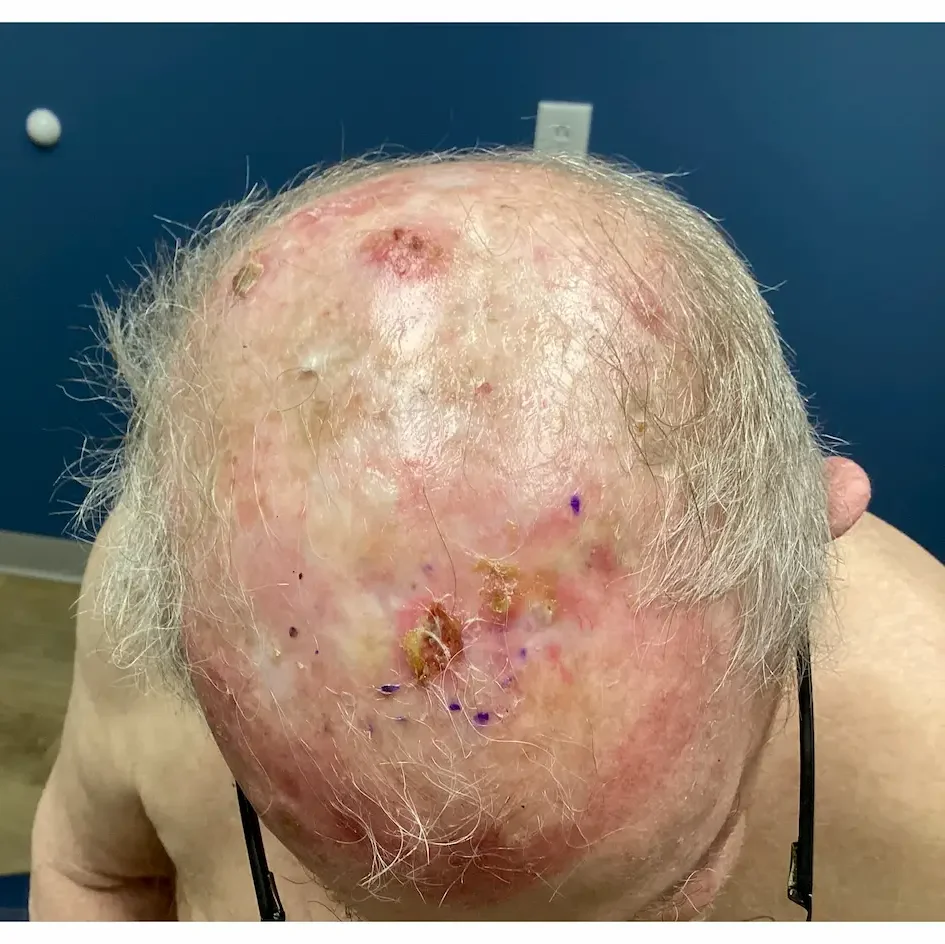
What is an Actinic Keratosis?
An actinic keratosis (sometimes called a solar keratosis) is a rough, dry, or scaly patch that develops on skin damaged by ultraviolet (UV) light over many years. These spots often feel like sandpaper before they are easy to see. They can be pink, red, tan, or skin-colored, and they commonly appear on the face, ears, scalp, lips, neck, forearms, and backs of the hands.
Actinic keratoses may come and go, and they can range from a single spot to many patches across a sun-exposed area. They are one of the most common reasons adults visit a dermatologist.
How Actinic Keratosis Relates to Skin Cancer
Actinic keratoses are considered precancerous because, in some cases, they can progress to squamous cell carcinoma, a common type of skin cancer. Most individual actinic keratoses do not become cancer, and some even fade on their own. However, no reliable way currently exists to predict which spots will progress, which is why dermatologists often recommend treating them.
Consider the broader picture. Actinic keratoses are a visible sign of cumulative sun damage. When someone has several, it often means the surrounding skin has absorbed significant UV exposure over time. That same exposure may raise the overall risk of other skin cancers, including basal cell carcinoma and melanoma. In other words, actinic keratoses are both a spot-by-spot concern and a signal that your skin may benefit from closer monitoring.
Who Is More Likely to Develop Actinic Keratoses?
Anyone can develop actinic keratoses, but they are more common in people who have:
- Fair skin, light-colored eyes, or red or blond hair
- A history of frequent sunburns or tanning bed use
- Spent many years working or playing outdoors
- Age over 40, since sun damage builds over time
- A weakened immune system, such as after an organ transplant
- A personal history of actinic keratoses or skin cancer
For many people in our area, time outdoors is part of everyday life, whether working, gardening, hunting, or spending weekends on the water. Those hours add up, even on cloudy days.
Signs a Spot Should Be Checked
Actinic keratoses usually stay small and flat, but certain changes are worth having a dermatologist evaluate:
- A spot that becomes thicker, firmer, or raised
- Tenderness or pain when touched
- Bleeding, crusting, or a sore that does not heal
- Rapid growth or a change in color
- A spot that returns after treatment
These changes do not necessarily mean a spot is cancerous, but they are a good reason to schedule an exam. When needed, a dermatologist may perform a quick biopsy to determine exactly what a spot is.
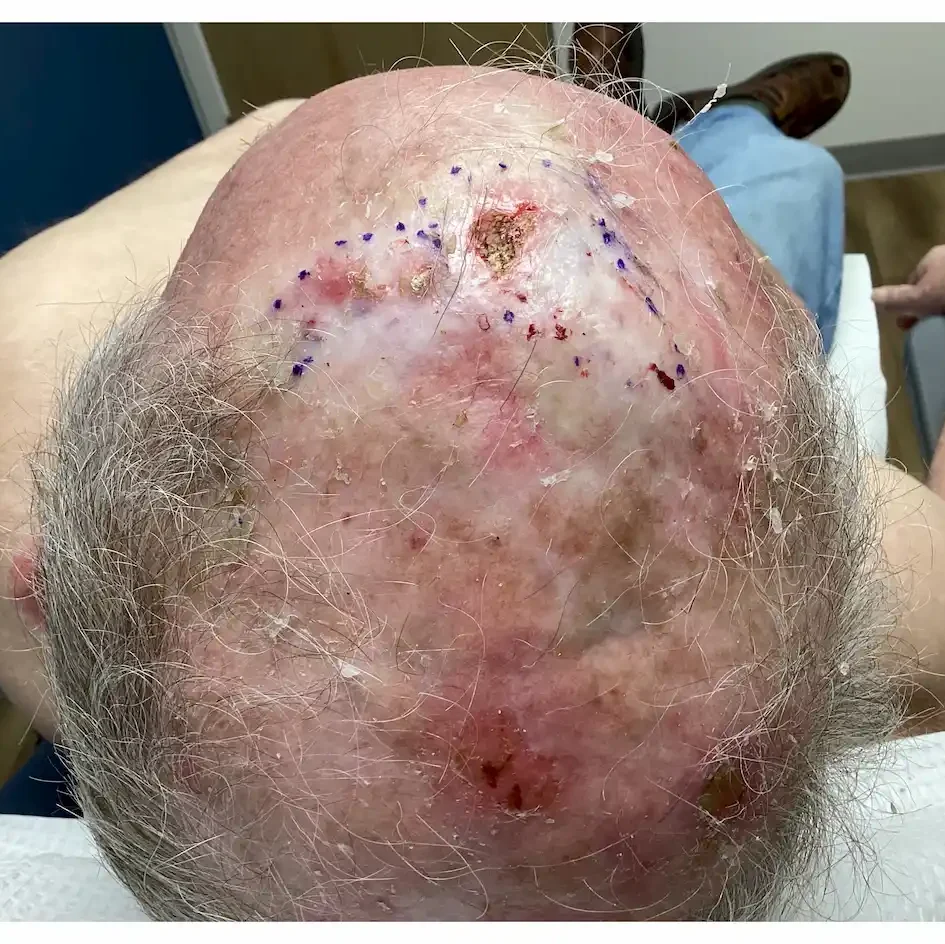
Treatment Options for Actinic Keratosis
Treatment depends on how many spots you have, where they are located, and your overall skin health. Treatment plans are individualized, and options generally fall into two groups.
Treating Individual Spots
When there are only a few spots, a dermatologist may treat them directly. Cryotherapy, which freezes the spot with liquid nitrogen, is one of the most common approaches. Dermatologists may remove thicker or unusual spots by scraping (curettage) and evaluating them under a microscope.
Treating a Wider Area of Sun Damage
When many spots are present, or when the surrounding skin shows signs of sun damage, treating the whole area may be more effective. Options can include prescription creams that target damaged cells and photodynamic therapy, which uses a light-activated solution to treat both visible spots and early changes that may not be visible yet. Treating a wider area can help address damage before new spots appear.
Lowering Your Risk Going Forward
Daily sun protection is one of the most helpful steps you can take. Consider these habits:
- Use a broad-spectrum sunscreen with SPF 30 or higher every day, and reapply when outdoors
- Wear wide-brimmed hats, sunglasses, and sun-protective clothing
- Seek shade during midday hours when UV levels are highest
- Avoid tanning beds
- Schedule regular skin checks with a dermatologist
If you have had actinic keratoses before, routine skin cancer screenings can help your dermatologist track changes over time and treat new spots early.
St. Louis Dermatology & Cosmetic Surgery cares for patients in Troy and nearby communities like Old Monroe and Wright City. Dr. Brandon T. Beal leads our practice and is double board-certified and fellowship-trained in Mohs surgery and dermatologic oncology.
Consider Scheduling With Us Today
If you have rough, scaly patches or a spot that has changed, our team can help you understand what it is and which options may fit your needs.
Call our Troy, MO office at (314) 834-1400 or request an appointment online. A consultation is required to determine the right treatment plan for you. Results vary.