
Explore seborrheic keratosis removal options, recovery tips, and what to expect at your visit. Consider contacting St. Louis Dermatology today.
Seborrheic keratoses are among the most common skin growths dermatologists see, especially after age 40. They are noncancerous and usually harmless, but many people choose to have them removed because they itch, catch on clothing, become irritated, or simply bother them cosmetically. If you are considering removal, here is what to know about your options, the recovery process, and what to expect at your visit.
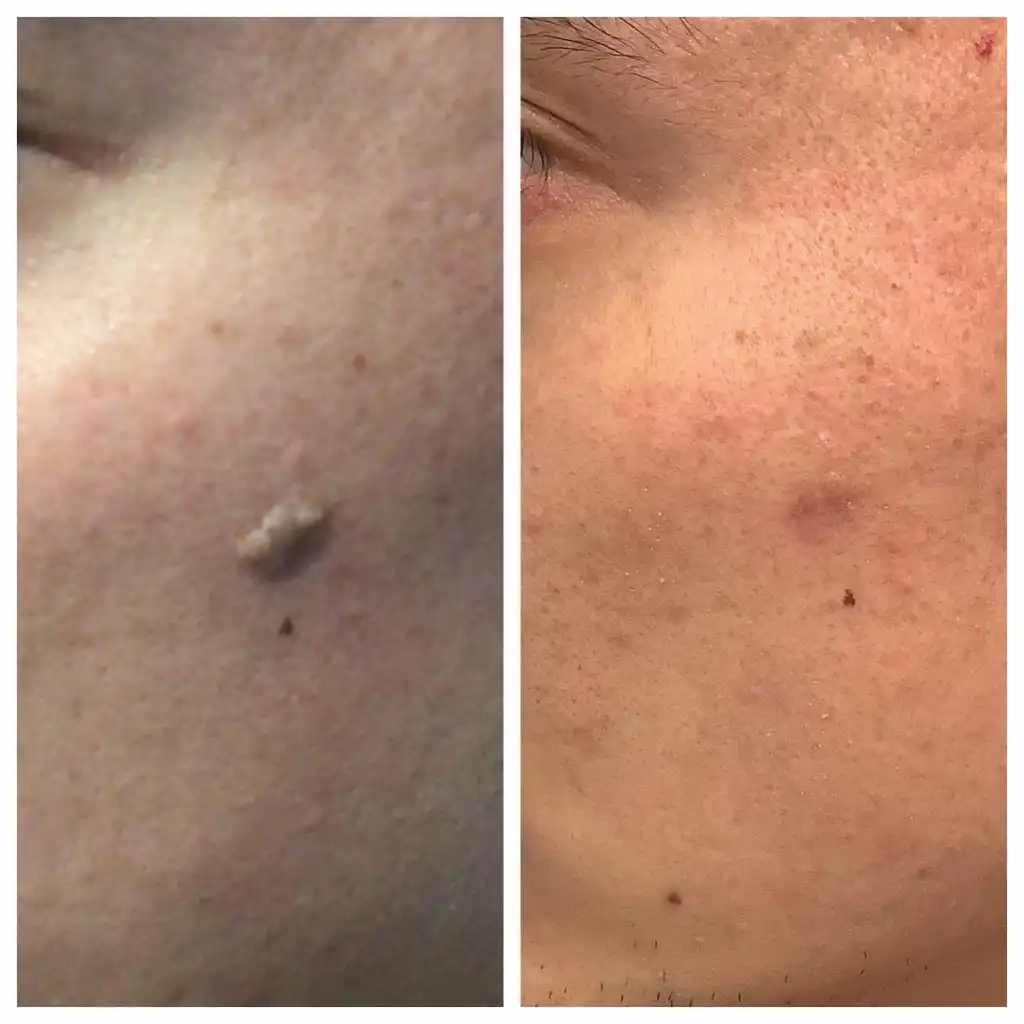
What is a Seborrheic Keratosis?
A seborrheic keratosis is a benign growth that develops on the skin’s outer layer. These spots are often tan, brown, or black, with a waxy, slightly raised surface that can look as if it has been “stuck on” the skin. They commonly appear on the chest, back, face, scalp, and shoulders, and many people develop more than one over time.
Seborrheic keratoses are not contagious, and they do not turn into skin cancer. Removal is not medically required in most cases, but it is a common and reasonable choice when a spot is uncomfortable or unwanted.
Why People Choose Removal
Common reasons patients request seborrheic keratosis removal include:
- Itching or irritation, especially in areas that rub against clothing or jewelry
- Spots that catch on waistbands, bra straps, or collars and occasionally bleed
- Growths in visible areas like the face or neck
- Larger or darker spots that affect confidence
- A desire to have a new or changing spot evaluated and removed for peace of mind
Before Removal: Confirming the Diagnosis
Before any removal, a dermatologist will examine the spot to confirm it is a seborrheic keratosis. Most can be identified with a visual exam, sometimes with a magnifying tool called a dermatoscope. Because some skin cancers, including melanoma, can occasionally resemble a seborrheic keratosis, your dermatologist may recommend sending tissue to a lab if anything about the spot looks unusual. This is one of the most important reasons not to remove these growths at home.
Seborrheic Keratosis Removal Options
The right approach depends on the size, thickness, location, and number of spots, as well as your skin tone. Treatment plans are individualized, and your dermatologist may recommend one method or a combination.
Cryotherapy (Freezing)
Cryotherapy uses liquid nitrogen to freeze the growth. The treated spot typically blisters or forms a crust and falls off within one to three weeks. It is quick and often well suited for thinner spots. In some people, especially those with darker skin tones, the treated area may heal lighter than the surrounding skin.
Curettage
With curettage, the area is numbed, and the growth is gently scraped away with a small instrument. This method is often used for thicker spots, and it allows the removed tissue to be examined under a microscope if needed.
Electrodessication
Electrodessication uses a controlled electrical current to treat the growth. It may be used alone for smaller spots or combined with curettage to remove thicker growths and control minor bleeding.
Shave Removal
For raised growths, a dermatologist may numb the area and shave the spot off flush with the surrounding skin. Like curettage, this allows the tissue to be sent for evaluation when appropriate.
Recovery: What To Expect
Most seborrheic keratosis removal procedures are performed in the office, and many people return to normal activities the same day. Healing time varies, but common recovery steps include:
- Keeping the area clean and gently washing it once or twice daily
- Applying petroleum jelly and a bandage as directed to support healing
- Avoiding picking at scabs or crusts as they form and fall off
- Protecting the area from the sun, since new skin is sensitive to UV exposure
Treated skin often looks pink at first and gradually blends in over several weeks to a few months. Some people notice a lighter or darker area where the spot was removed, and scarring is uncommon but possible. Results vary by individual and by method used.
Will Seborrheic Keratoses Come Back?
Once a seborrheic keratosis is fully removed, it usually does not return in the same spot. However, many people develop new seborrheic keratoses over time, since the tendency to form them is often related to age and genetics. Regular skin checks can help you keep track of new growths and catch any spot that looks different from the others.
When to See a Dermatologist
Schedule an evaluation if a spot is new, changing in size, shape, or color, bleeding without injury, or looks different from your other growths. A dermatologist can confirm what it is and talk through whether removal makes sense for you. You can see examples of seborrheic keratosis removal before and after, and if it has been a while since your last full skin check, learn more about skin cancer screenings.
St. Louis Dermatology & Cosmetic Surgery cares for patients in Troy and nearby communities like Winfield and Warrenton. Dr. Brandon T. Beal leads our practice and is double board-certified and fellowship-trained, with advanced training in dermatologic surgery.
Schedule a Seborrheic Keratosis Evaluation
If a seborrheic keratosis is bothering you, our team can help you understand your options.
Call our Troy, MO office at (314) 834-1400 or request an appointment online. A consultation is required to determine which removal method may be appropriate for you. Results vary.