
Learn what rhinophyma is, its early signs and causes, and treatment options that may help. Schedule a consultation in Troy, MO today.
If the skin on your nose has slowly become thicker, redder, or bumpier over time, you may be noticing signs of rhinophyma. This skin condition is most often linked to rosacea, and while it can feel discouraging, it is treatable. Knowing what to look for and when to see a dermatologist can make a meaningful difference in your options.
What is Rhinophyma?
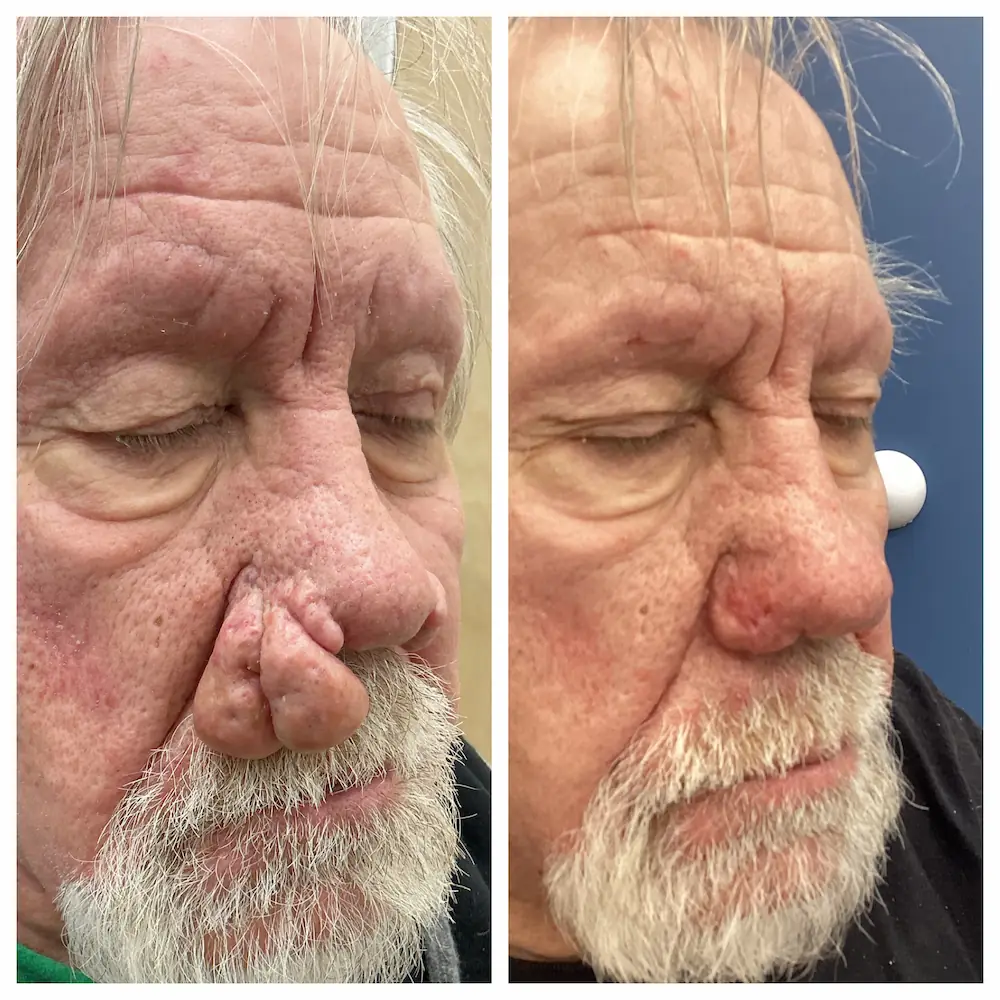
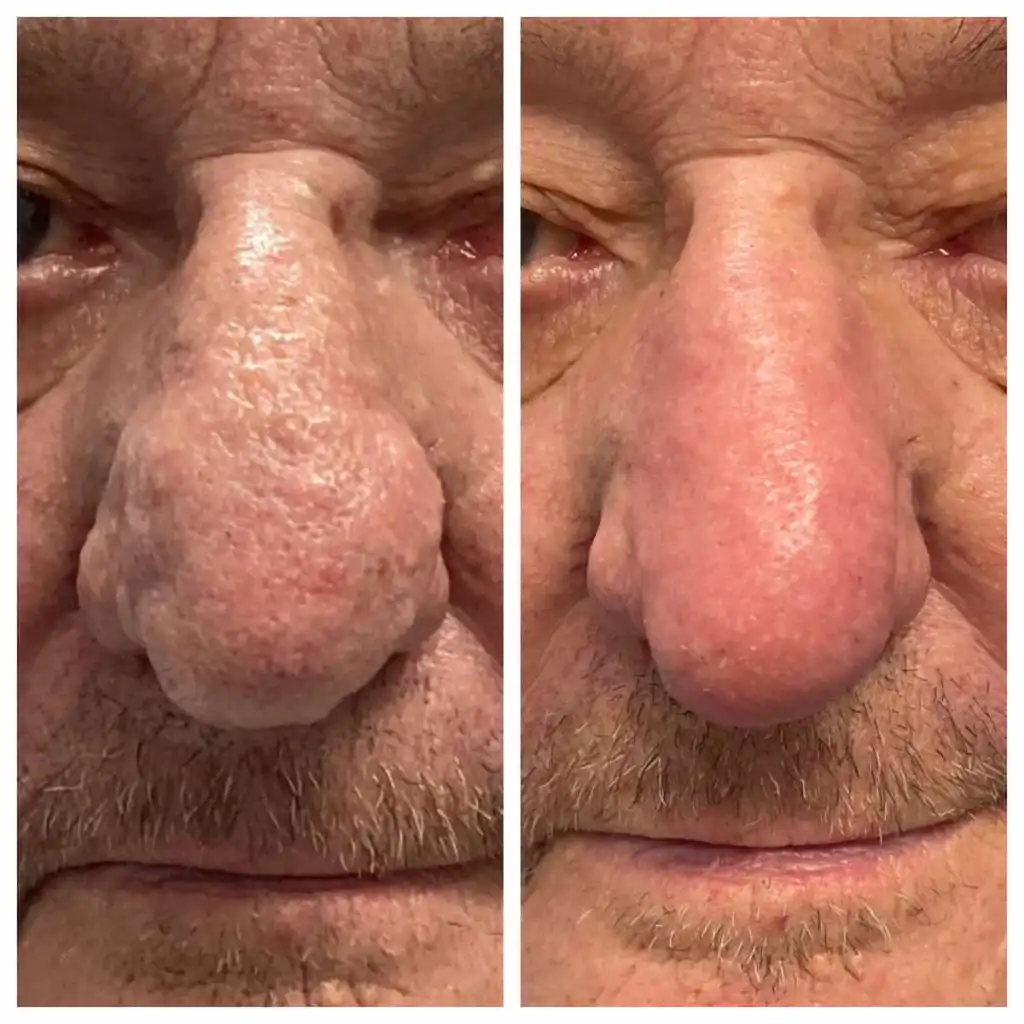
Rhinophyma is a condition in which the skin of the nose gradually thickens and enlarges. It happens when the oil glands (sebaceous glands) and surrounding connective tissue overgrow, giving the nose a swollen, bulbous, or uneven appearance. Dermatologists generally consider it a form of phymatous rosacea, a subtype of rosacea that involves skin thickening.
Rhinophyma develops slowly, often over several years. It is far more common in men than in women and usually appears in middle age or later. Not everyone with rosacea develops rhinophyma, and many people with rosacea never experience skin thickening.
Early Signs of Rhinophyma
Early changes can be subtle and are easy to mistake for ordinary redness or large pores. Common early signs include:
- Persistent redness across the nose that does not fade
- Small, visible blood vessels on or around the nose
- Enlarged pores and increasingly oily skin
- A rough, bumpy, or waxy texture
- Gradual thickening or firmness of the skin
- Swelling at the tip or sides of the nose
As the condition progresses, the nose may become rounder or lumpier, and the skin may develop a yellowish or purplish tone. In more advanced cases, the extra tissue can partially block the nostrils and make breathing through the nose more difficult.
What Causes Rhinophyma?
The exact cause is not fully understood. Researchers believe it is related to the long-term inflammation seen in rosacea, which may, over time, lead to overgrowth of oil glands and connective tissue. Factors that may play a role include:
- A personal or family history of rosacea
- Fair skin that flushes or burns easily
- Northern or Eastern European ancestry
- Being male, particularly after middle age
- Long-standing rosacea that has not been treated
Does Alcohol Cause Rhinophyma?
This is one of the most common myths about the condition. Alcohol does not cause rhinophyma, and many people with rhinophyma drink little or no alcohol. Alcohol can trigger flushing and rosacea flares in some people, so limiting it may help with overall symptom control, but it is not the underlying cause.
How Rhinophyma is Diagnosed
A dermatologist can usually diagnose rhinophyma with a visual exam and a review of your skin history. In some cases, a small biopsy may be recommended to rule out other conditions that can look similar. An evaluation also helps determine whether your rosacea is currently active and may need treatment alongside any changes to the nose.
Treatment Options For Rhinophyma
Treatment depends on how advanced the condition is. Treatment plans are individualized, and many people benefit from a combination of approaches.
Medications For Early or Active Rosacea
In earlier stages, prescription medications may help calm inflammation and slow progression. Options can include topical treatments such as metronidazole, azelaic acid, or ivermectin, and oral medications such as doxycycline. In some cases, a dermatologist may consider oral isotretinoin, which can help reduce oil gland activity. Medications may improve redness and swelling, but they generally cannot reverse thickened tissue that has already formed.
Procedures to Reshape the Nose
For established rhinophyma, procedures that remove or reshape excess tissue are often the most effective approach. Depending on the individual, options may include:
- Ablative laser resurfacing, such as CO2 laser, to remove thickened layers of skin
- Electrosurgery, which uses controlled energy to shave and contour tissue
- Surgical shave excision or dermabrasion to sculpt the shape of the nose
Many of these procedures can be performed under local anesthesia, and healing often takes several weeks. Careful technique matters, since the goal is a natural contour while protecting the nose’s underlying structures.
Ongoing Rosacea Care
Because rhinophyma is tied to rosacea, ongoing care helps keep inflammation under control after treatment. This often includes daily sun protection, a gentle skin care routine, prescription maintenance therapy when appropriate, and identifying personal triggers such as heat, sun exposure, spicy foods, or alcohol.
When To See a Dermatologist
Schedule an evaluation if you notice ongoing redness, new bumps, or thickening on your nose, or if rosacea symptoms aren’t improving with over-the-counter products. Earlier evaluation often means more treatment options. Learn more about our approach to rosacea and rhinophyma care.
At St. Louis Dermatology & Cosmetic Surgery, our team cares for patients in Troy and nearby communities like Moscow Mills and Wentzville. Dr. Brandon T. Beal leads our practice and is double board-certified and fellowship-trained in Mohs surgery and facial plastic and reconstructive surgery.
Schedule a Rhinophyma Consultation Today
If you have questions about changes to your nose or ongoing rosacea symptoms, we are here to help.
Call our Troy, MO office at (314) 834-1400 or request an appointment online. A consultation is required to determine which treatment options may be appropriate for you. Results vary.