
Learn how to tell skin tags, moles, cherry angiomas, and seborrheic keratoses apart, and when to see a dermatologist in Troy, MO.
Most adults will notice a new spot, bump, or growth on their skin at some point. The good news is that many common skin growths are harmless. Knowing what each one typically looks like can help you feel more confident about what you are seeing and help you recognize when a spot is worth having a dermatologist check.
A Quick Comparison To Start
| Growth | Typical appearance | Common locations | Usually harmful? |
|---|---|---|---|
| Skin tag | Soft, skin-colored flap on a small stalk | Neck, armpits, eyelids, groin | No |
| Mole | Brown or tan spot, flat or raised, usually round | Anywhere on the body | Usually not, but worth monitoring |
| Cherry angioma | Small, bright red, dome-shaped dot | Chest, back, arms | No |
| Seborrheic keratosis | Waxy, “stuck-on” tan, brown, or black spot | Chest, back, face, scalp | No |

Skin Tags
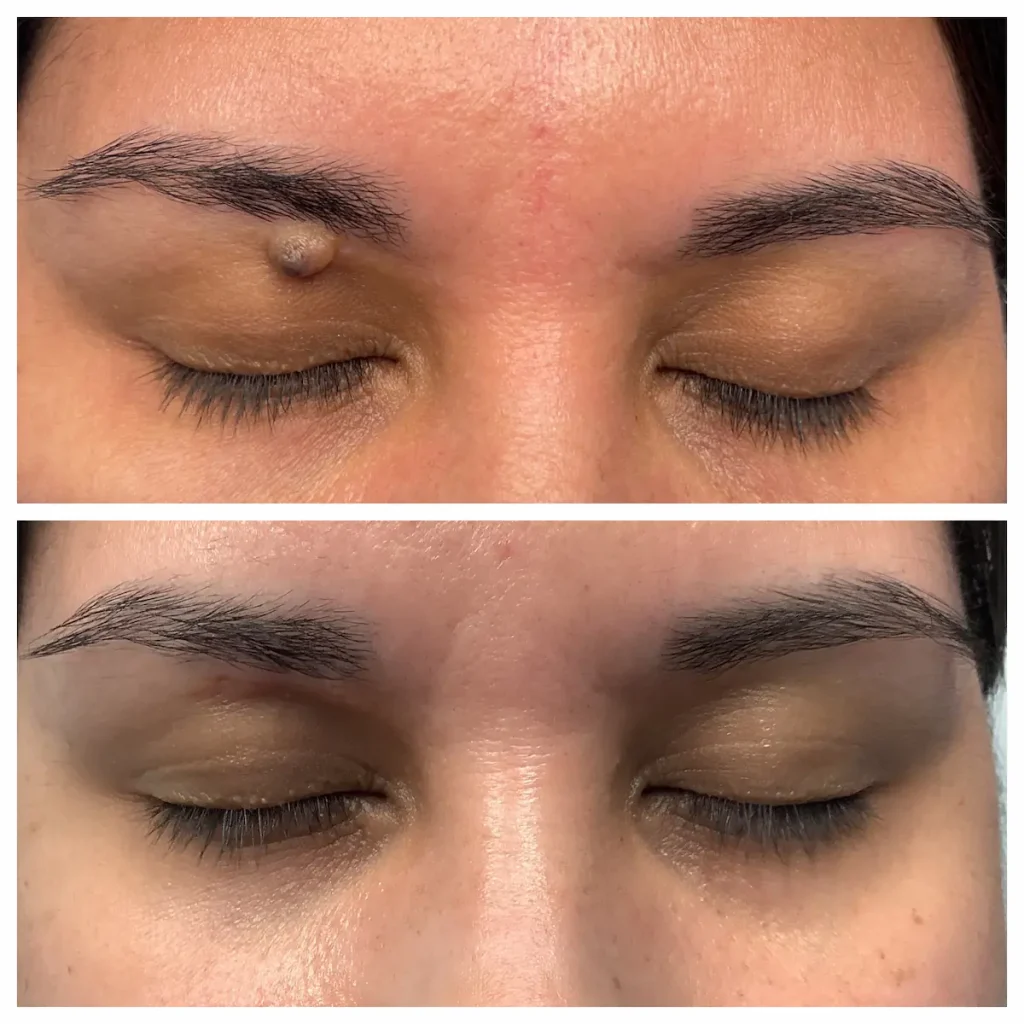
Skin tags are small, soft growths that hang from the skin by a thin stalk. They are usually skin-colored or slightly darker and often form in areas where skin rubs against skin or clothing, such as the neck, armpits, eyelids, under the breasts, and in the groin.
Skin tags become more common with age and are also seen more often during pregnancy and in people with certain conditions, such as insulin resistance. They are not cancerous and do not need to be removed, but many people choose removal when a tag catches on jewelry or clothing, becomes irritated, or is in a visible spot. A dermatologist can remove skin tags quickly in the office by snipping, freezing, or using a gentle electrical current. Avoid cutting or tying off skin tags at home, since this can lead to bleeding or infection.
Moles
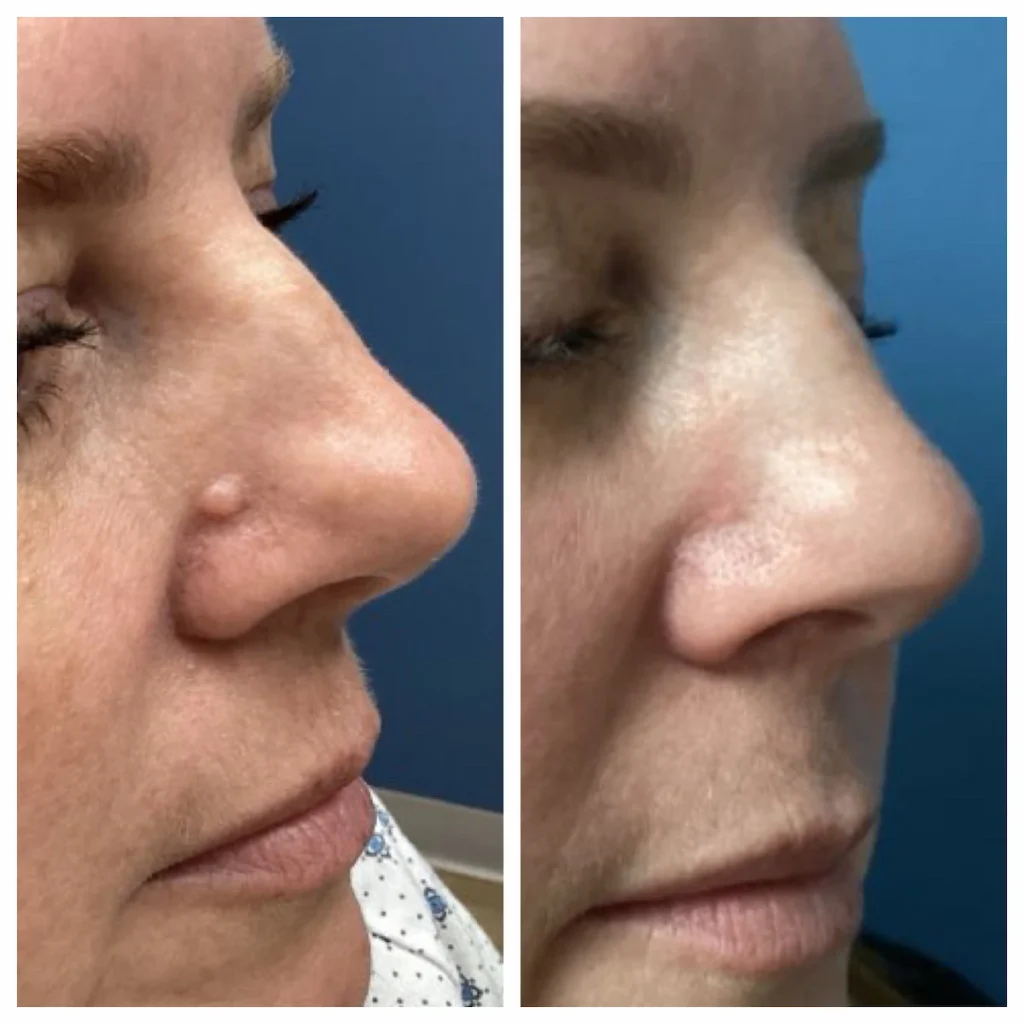
Moles (also called nevi) are clusters of pigment-producing cells. They can be flat or raised, tan, brown, or black, and most adults have 10 to 40. Most moles appear during childhood and early adulthood, and the large majority are benign. Because melanoma can begin in or near a mole, it helps to monitor your moles over time. Dermatologists often recommend the ABCDE guide:
- Asymmetry: one half does not match the other
- Border: edges are irregular, ragged, or blurred
- Color: uneven color or several shades in one spot
- Diameter: larger than about 6 millimeters (the size of a pencil eraser), though melanomas can be smaller
- Evolving: any change in size, shape, color, or symptoms
Another helpful sign is the “ugly duckling,” a mole that looks different from your others. Moles can be removed for medical or cosmetic reasons, and removed tissue can be examined under a microscope when needed. Learn more about mole removal and evaluation.
Cherry Angiomas
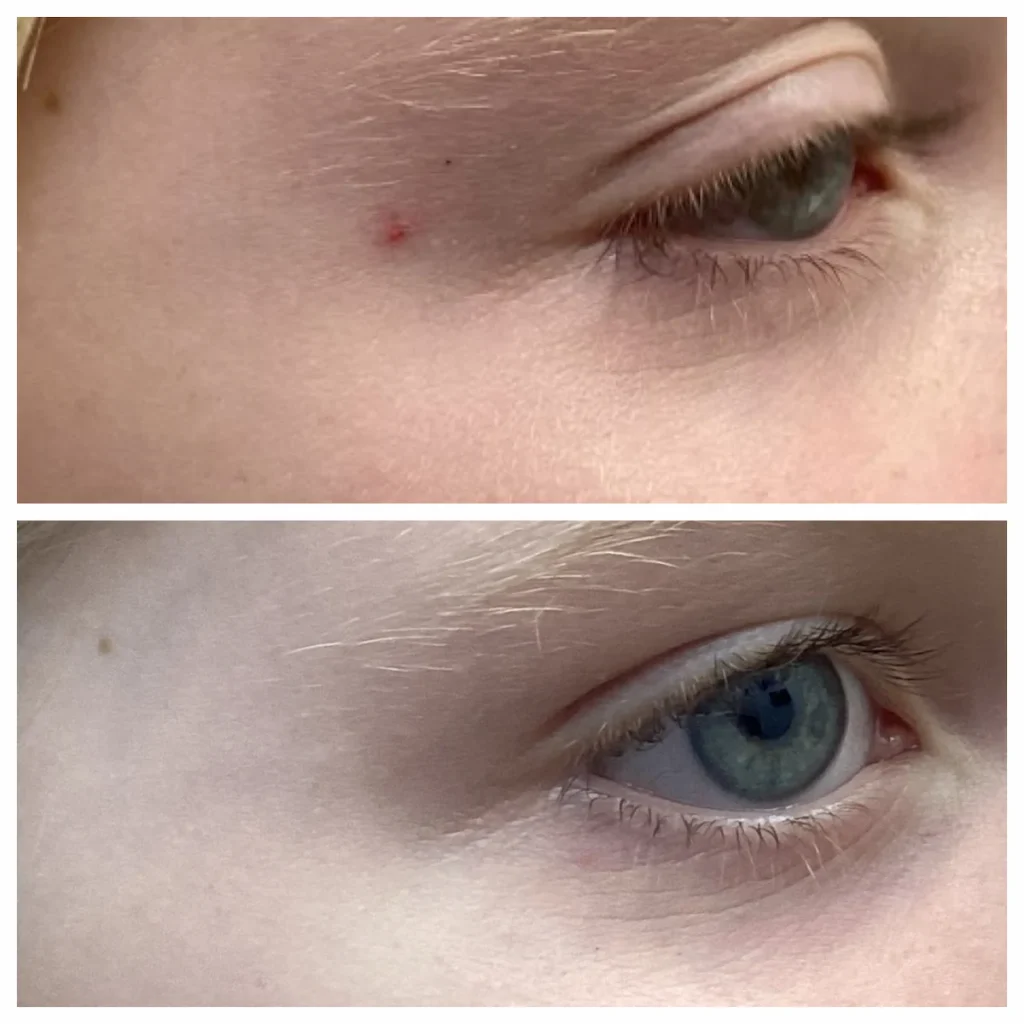
Cherry angiomas are small, bright red bumps made up of tiny blood vessels. They are very common, especially after age 30, and many people notice more of them over time. They range from pinpoint dots to a few millimeters across and most often appear on the chest, back, and arms.
Cherry angiomas are benign and do not turn into cancer. Because they are made of blood vessels, they may bleed if scratched or bumped. Removal is optional and is often done for cosmetic reasons or when a spot is frequently irritated. Options may include laser treatment, electrocautery, or shave removal, depending on the size and location. You can see examples of cherry angioma removal before and after.
Seborrheic Keratoses
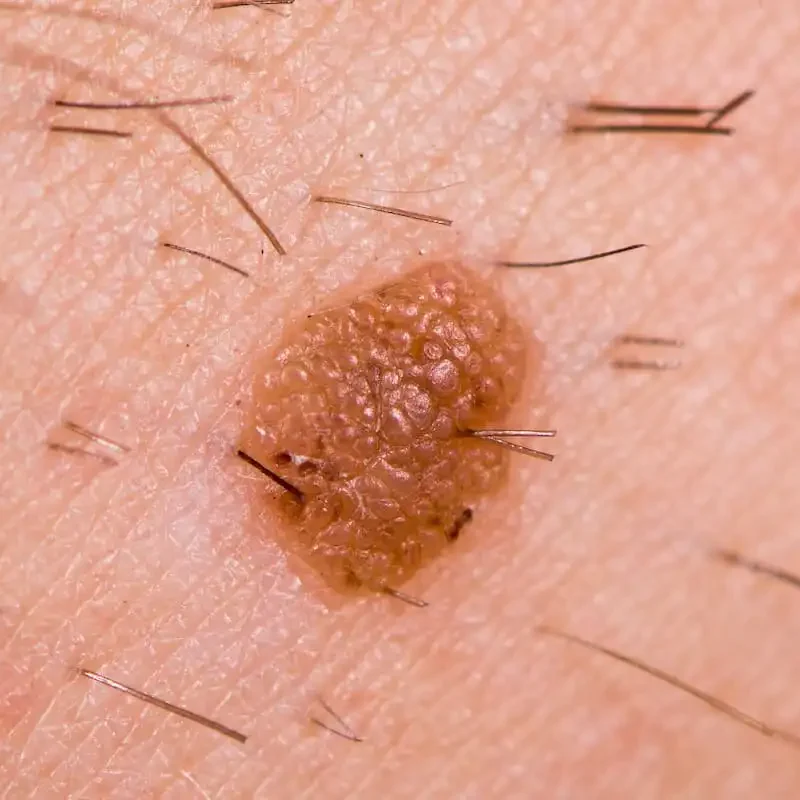
Seborrheic keratoses are waxy, slightly raised growths that can look as if they have been “stuck on” the skin. They are often tan, brown, or black and become more common after age 40. Many people develop several over time, especially on the chest, back, face, and scalp.
These growths are noncancerous, but they can itch, catch on clothing, or become irritated. Because some can resemble other skin conditions, a dermatologist should confirm the diagnosis before any removal. Common removal options include freezing, gentle scraping, and shave removal. See examples of seborrheic keratosis removal before and after.
When to See a Dermatologist
Most common skin growths are harmless, but it is a good idea to schedule an evaluation if a spot:
- Is new and looks different from your other spots
- Changes in size, shape, or color
- Bleeds, crusts, or itches without an obvious cause
- Becomes painful or tender
- Does not heal
A dermatologist can often identify a growth with a visual exam, sometimes using a magnifying tool called a dermatoscope. If anything looks unusual, a quick biopsy can provide clear answers. Regular skin cancer screenings also help track changes over time, especially if you have many moles or a history of sun exposure.
St. Louis Dermatology & Cosmetic Surgery cares for patients in Troy and nearby communities like Lake St. Louis and St. Charles. Our practice is led by Dr. Brandon T. Beal, who is double board-certified and fellowship-trained, with advanced training in dermatologic surgery.
Schedule a Skin Growth Evaluation
If you have a spot you would like checked or removed, our team can help you understand what it is and which options may be appropriate.
Call our Troy, MO office at (314) 834-1400 or request an appointment online. A consultation is required to determine the right approach for you. Results vary.