
IPL or laser for redness and sun spots? How each works, recovery, sessions, and skin tone, from Dr. Brandon Beal’s dermatology practice in Troy, MO.
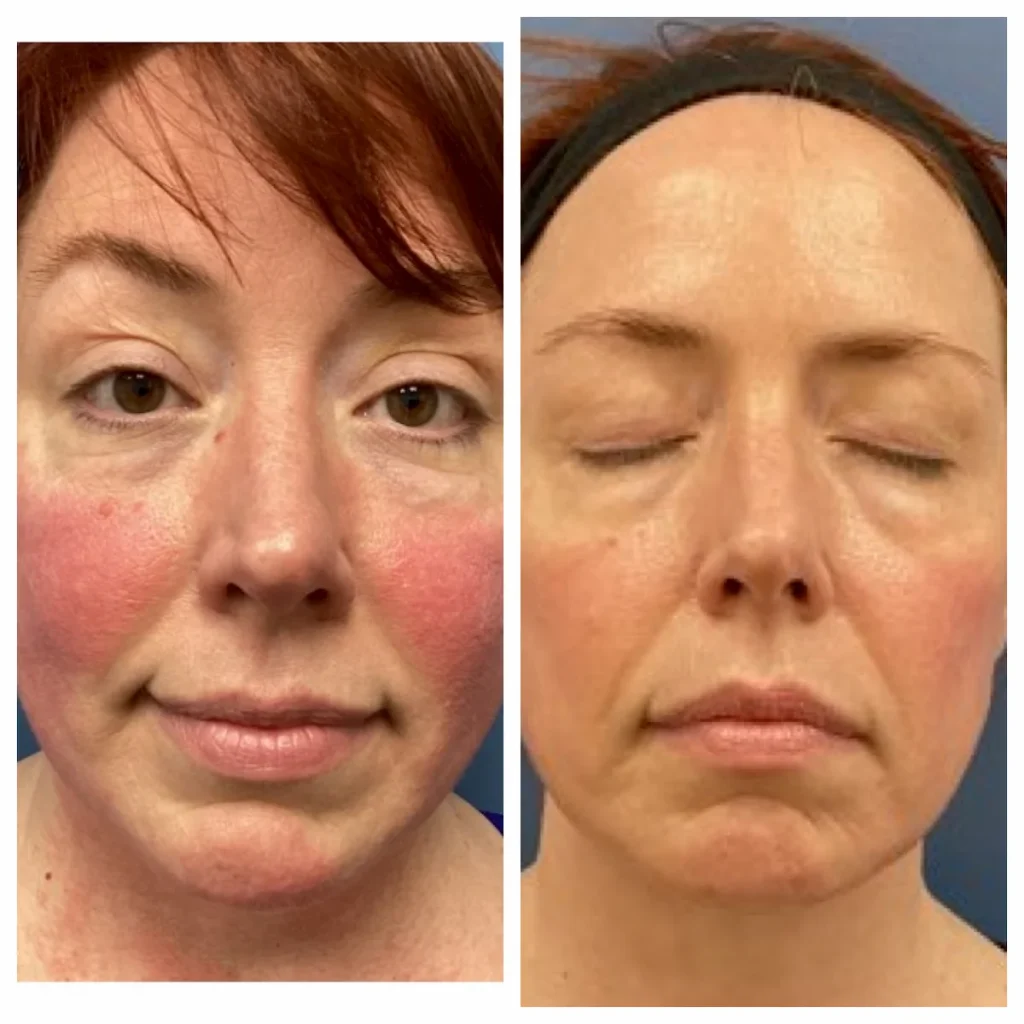
If you are dealing with facial redness, broken capillaries, or brown sun spots, you have probably seen both IPL and laser treatments recommended. They are related but not interchangeable. IPL uses broad-spectrum light to treat red and brown discoloration across a wide area, while lasers use a single, focused wavelength and, in the case of resurfacing, also renew the skin’s surface and texture.
For many people whose main concerns are redness and scattered sun spots, M22 IPL is often the first option to consider. When sun damage includes wrinkles, rough texture, or more significant changes, laser resurfacing may be a better fit.
IPL or Laser: Short Answer
The right choice depends mostly on whether your concern is color, texture, or both. Here is how the decision often breaks down, though your own plan should always come from an in-person evaluation.
- Mostly redness, flushing, or broken capillaries: IPL is often a good starting point, sometimes paired with medical therapy when rosacea is involved.
- Scattered sun spots and uneven tone: IPL often fits well, particularly for lighter skin tones.
- Sun damage plus fine lines, wrinkles, or rough texture: laser resurfacing, such as CoolPeel or CO2 resurfacing, may address more of these concerns at once.
- Texture, scars, or crepey skin without much color concern: a non-ablative laser such as ResurFx may be more appropriate.
- For melasma, or a spot that is new or changing, start with an evaluation, not a light or laser treatment.
What is the Difference Between IPL and a Laser?
A laser emits a single, focused wavelength of light aimed at a specific target in the skin. IPL, short for intense pulsed light, is not technically a laser. It releases a broad spectrum of wavelengths in each pulse, filtered to target brown pigment and small blood vessels at the same time.
Both rely on the same basic principle: light is absorbed by a target, converted to heat, and that heat affects the target while sparing the surrounding skin as much as possible. With IPL, the main targets are melanin (the pigment in sun spots and freckles) and hemoglobin (the red pigment in blood vessels). That is why a single IPL session can address redness and brown spots at the same time.
Resurfacing lasers work differently. Instead of mainly targeting color, they treat tiny columns of skin (fractional treatment) or remove thin outer layers of damaged skin (ablative treatment). The skin then renews itself, which can improve texture, fine lines, scarring, and some signs of sun damage.
How Does IPL Treat Redness and Sun Spots?
IPL light is absorbed by the melanin in brown spots and by the hemoglobin in small visible vessels. That energy becomes heat, which can break up excess pigment, reduce the appearance of unwanted vessels, and allow the body to gradually clear the treated areas.
After a session, sun spots often darken for a few days before flaking off, which is expected. Redness and broken capillaries tend to fade more gradually over a treatment series. Our practice uses the M22 IPL platform, which we can adjust for different concerns and treatment areas, including the face, neck, chest, and hands. Visits typically take about 20 to 30 minutes, depending on the area treated.
IPL can help with:
- Sun spots and age spots
- Freckles and uneven, blotchy skin tone
- Facial redness and flushing
- Broken capillaries
- Rosacea-related redness, when appropriate
How Do Lasers Treat Sun Damage?
Laser resurfacing treats sun damage by renewing the skin rather than targeting color alone. Ablative CO2 lasers remove thin outer layers of damaged skin, while non-ablative lasers heat tissue beneath an intact surface to stimulate collagen. Both can improve how sun-damaged skin looks and feels, especially when texture and fine lines are part of the picture.
Our practice offers several laser resurfacing options, each suited to a different depth of concern and amount of downtime:
- CO2 laser resurfacing: the most powerful resurfacing option, used for deeper wrinkles, scarring, and significant sun damage. It involves about one to two weeks of visible healing and, depending on the depth used, may reach its goal in a single treatment.
- CoolPeel: the lighter end of CO2 resurfacing, used for sun damage, dullness, uneven tone and texture, and fine lines, with only a few days of downtime.
- ResurFx: a non-ablative fractional laser focused on texture, fine lines, scars, and crepey or thinning skin. It is usually done as a series, with modest downtime.
Resurfacing lasers are not primarily designed to treat redness or broken capillaries. For those concerns, and for brown spots alone, our providers may recommend M22 IPL instead.
Is IPL or Laser Better for Facial Redness and Rosacea?
For persistent facial redness, flushing, and broken capillaries, IPL is often a strong first option because it targets the blood vessels behind the color. Resurfacing lasers target texture rather than redness, and the procedure itself can cause temporary redness as the skin heals.
Some dermatology practices also use single-wavelength vascular lasers for redness. At our practice, we use M22 IPL as the in-office light treatment for redness and visible vessels, delivered over a series of sessions.
If your redness comes from rosacea, IPL is usually one part of a broader plan rather than a stand-alone fix. Because rosacea is a long-term condition, IPL is often combined with prescription topical or oral medications, trigger identification, and gentle sun protection for sensitive skin. IPL may reduce visible vessels and persistent redness and can improve overall tone, but flares can still happen, and maintenance sessions may help hold results. When rosacea has thickened the nose (rhinophyma), resurfacing procedures may be a better option.
Is IPL or Laser Better for Sun Spots?
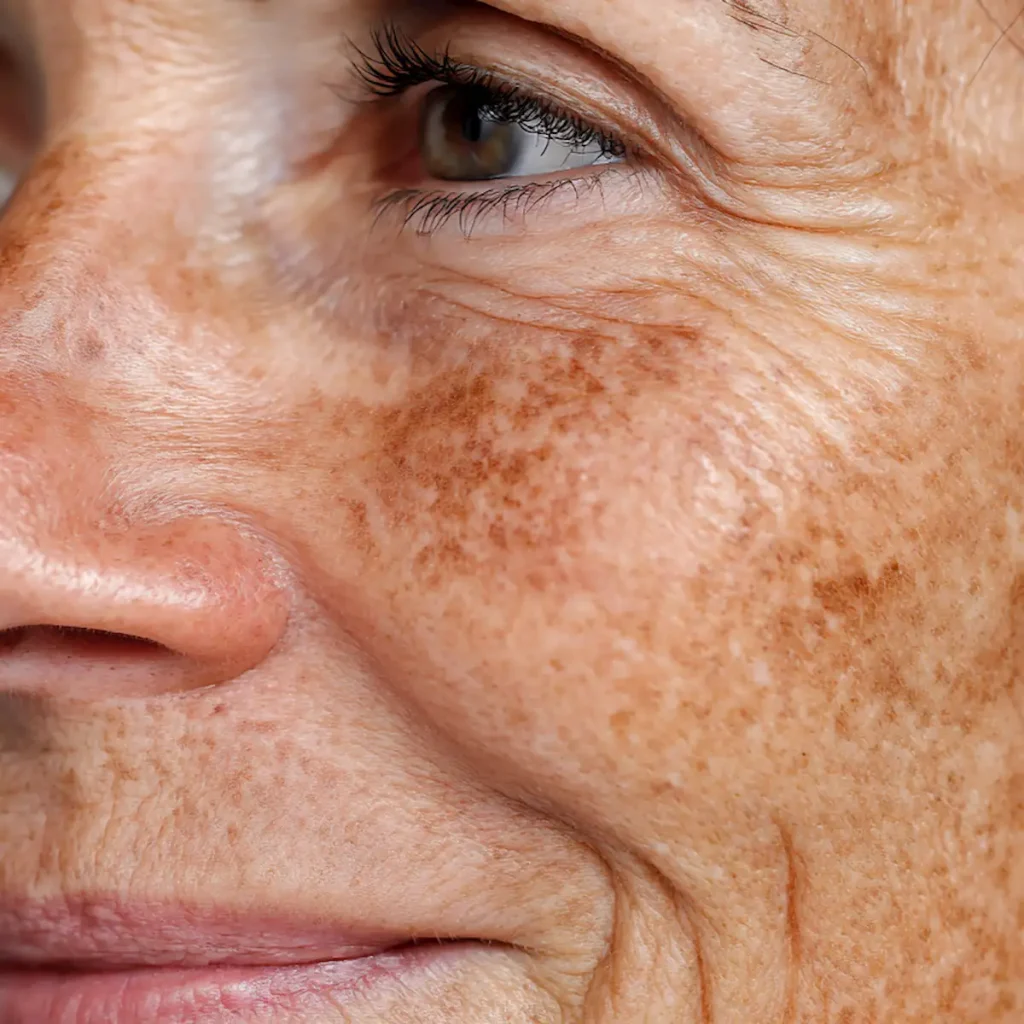
For flat brown sun spots scattered across the face, chest, or hands, IPL is often a good fit, and it can treat many spots and background redness in the same session. If your sun spots come with fine lines, rough texture, or more advanced sun damage, laser resurfacing may address more of those concerns at once.
Sun spots, also called solar lentigines, develop after years of UV exposure and usually do not fade on their own once they form. For milder spots, chemical peels are another in-office option, and prescription or over-the-counter topicals can support any plan over several months. If you are curious about what fades and what doesn’t, our article on whether sun spots go away on their own goes deeper.
How Many Sessions Are Needed?
IPL is usually done as a series of sessions spaced several weeks apart, with occasional maintenance sessions to help hold results over time. Laser resurfacing varies by type: non-ablative treatments such as ResurFx are often done as a series, while a CO2 treatment may reach its goal in a single session, depending on the depth used.
Non-ablative resurfacing often involves 3 to 6 sessions. For any of these treatments, the exact number depends on your concern, how advanced it is, your skin type, and how your skin responds. Because new sun spots can still form with future sun exposure, daily sun protection and occasional maintenance help maintain results.
What is Recovery Like After IPL Compared With Laser?
IPL typically involves minimal downtime: mild redness or warmth is common, brown spots may darken before flaking off, and you can often wear makeup the next day. Laser recovery depends on the type, ranging from several days of redness and light flaking to about one to two weeks of visible healing after deeper CO2 resurfacing.
- M22 IPL: minimal downtime for most patients; brief redness or warmth; treated spots darken, then flake away over several days.
- ResurFx: redness and swelling are common at first, and skin may feel tight, dry, or rough with light flaking for several days.
- CoolPeel: often a few days of redness and light flaking, which many patients compare to a mild sunburn; skin often looks fresher within a week or so.
- CO2 laser resurfacing: about one to two weeks of visible healing, with red, tender skin during that time.
With every option, you will receive aftercare instructions specific to your treatment. Protecting treated skin from the sun is part of recovery, including a broad-spectrum sunscreen of SPF 30 or higher every day.
Can IPL and Laser Treatments be Combined?
Sometimes. Because IPL targets color and resurfacing lasers target texture and renewal, some patients benefit from a plan that uses both, staged over time rather than on the same day.
For example, a plan might address redness and sun spots with IPL first, then refine fine lines and texture with resurfacing later. You may also pair light and laser treatments with medical therapy for rosacea or topical products for pigment. The order and spacing depend on your skin and goals, and we decide them at your consultation.
Does Insurance Cover IPL or Laser for Redness or Sun Spots?
Some insurance plans may consider light and laser treatments for redness or sun spots cosmetic, so don’t assume coverage. Our team can review costs and options with you at your consultation.
Medical care for an underlying skin condition, such as evaluating a changing spot or treating precancerous growths, is handled differently than cosmetic treatment. Learn more on our insurance and billing page.
How Do I Know Whether IPL or Laser is Right for My Skin?
The most reliable way to decide is an in-person evaluation of your skin type, the kind of redness or pigment you have, and your goals and tolerance for downtime. We require a consultation before any IPL or laser treatment, and we tailor each treatment plan to you.
At St. Louis Dermatology & Cosmetic Surgery, Dr. Brandon T. Beal, a double board-certified, fellowship-trained dermatologist, performs light and laser treatments. With offices in Troy and Chesterfield, Missouri, our practice serves communities such as Moscow Mills and Lake St. Louis. During your visit, our providers will examine any spots of concern, explain what IPL and laser can and cannot do for your skin, and recommend a plan that fits your schedule. Results vary.

Consider Contacting Us Today
Whether your main concern is redness, sun spots, or both, a consultation is the clearest way to know if IPL, laser, or a combination makes sense for you.
Schedule an appointment online or call (314) 834-1400 to speak with our team.