
Not every bump is a pimple. It could be a cyst. This is when you should visit a dermatologist to treat your cyst safely.
It’s a familiar situation: a sore, swollen bump develops under your skin that looks and feels like a pimple, but it never comes to a head. It lingers for weeks — sometimes even months — and may become tender, red, or painful to touch.
While it may seem like a stubborn breakout, that “pimple” could actually be a cyst — a deeper, more complex skin condition that requires medical attention rather than at-home treatment.
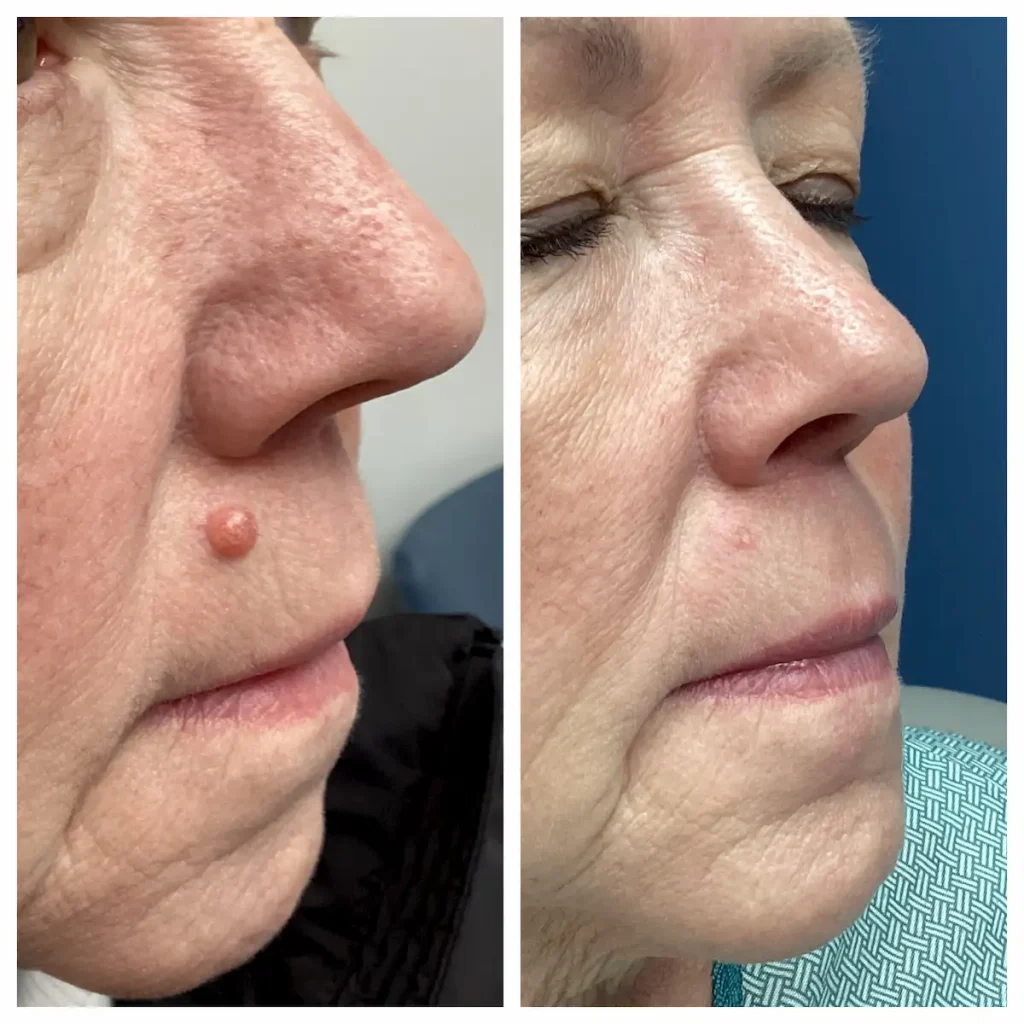
What’s the Difference Between a Pimple and a Cyst?
While both pimples and cysts can appear as bumps on the skin, they differ in how they form, how deep they go, and how they should be treated.
| Feature | Pimple (Acne Lesion) | Cyst (Cystic Lesion) |
|---|---|---|
| Depth | Superficial (near the skin surface) | Deep beneath the skin |
| Appearance | Red or white bump, often with a visible head | Firm, round, sometimes skin-colored bump without a head |
| Pain Level | Mild to moderate tenderness | Often painful or sore |
| Duration | Clears in days to a week | Persists for weeks or longer |
| Treatment | Topical acne products often help | Requires medical evaluation and treatment |
⚕️ Common Types of Skin Cysts
Several types of cysts can appear on the face, back, chest, scalp, or other areas of the body. While most are benign (non-cancerous), they can become irritated, inflamed, or infected if untreated.
1. Epidermoid Cysts
- When skin cells become trapped beneath the surface.
- Appear as smooth, firm bumps that may contain a thick, yellowish material.
- Common on the face, neck, and trunk.
2. Sebaceous Cysts
- Develop from blocked sebaceous (oil) glands.
- Typically appear on the face, scalp, or upper body.
- It can become inflamed or infected if the contents leak into surrounding tissue.
3. Pilar (Trichilemmal) Cysts
- Usually found on the scalp.
- Arise from hair follicle cells and tend to be firm and mobile under the skin.
4. Acne Cysts (Cystic Acne)
- Deep, inflamed nodules develop when pores become severely clogged.
- May cause pain and scarring if not treated promptly.
- Often seen on the face, back, and shoulders.
⚠️ Why You Shouldn’t Try to Pop or Squeeze a Cyst
It can be tempting to try to “pop” a deep bump under the skin, especially if it feels full or swollen. However, attempting to drain a cyst at home can worsen the situation.
Reasons to Avoid Popping a Cyst:
- Increases infection risk: Pressure can push bacteria deeper into the skin.
- Causes inflammation and scarring: Damaging the surrounding tissue may lead to permanent marks.
- Delays proper treatment: Cysts rarely resolve on their own without professional care.
- May spread infection: Fluid released from a ruptured cyst can cause new breakouts or inflammation nearby.
🚨 When to See a Dermatologist
You should seek evaluation if:
- The bump is painful, swollen, or growing.
- There is redness, drainage, or warmth.
- The lesion keeps coming back after it seems to heal.
- You are unsure whether it’s acne, a cyst, or another type of growth.
🩺 Safe and Effective Treatment Options
At St. Louis Dermatology & Cosmetic Surgery, we offer several medical treatments to remove or reduce cysts and restore healthy skin safely. The right approach depends on the cyst’s type, size, and location.
- 1. Corticosteroid Injections
- These injections quickly reduce inflammation and swelling, especially for painful acne cysts. They help the bump flatten and heal faster without scarring.
- 2. Incision and Drainage
- For large or infected cysts, a dermatologist can make a small incision under sterile conditions to safely drain the contents and relieve pressure.
- 3. Surgical Excision
- If a cyst recurs, complete removal of the cyst wall or sac is often recommended to prevent recurrence.
- 4. Oral or Topical Medications
- For cystic acne, oral antibiotics, hormonal therapy, or isotretinoin may be prescribed to target inflammation and reduce breakouts.
- 5. Laser or Light-Based Therapies
- These treatments can help reduce inflammation, minimize scarring, and improve skin tone after cyst removal.
Schedule a Consultation
If you have a bump that won’t go away, or you’re unsure whether it’s a pimple or a cyst, our experienced dermatology team can help.
Schedule an appointment at our Troy, Missouri, office today to receive a professional diagnosis and treatment plan designed to restore your skin’s health and comfort.
GET IN TOUCH