
Zits and cysts aren’t the same; treating them as such can lead to scarring and frustration. Learn the difference and schedule today.
If you have ever stared at a bump in the mirror trying to decide whether to leave it alone or do something about it, you are not alone. Most people use the words “zit” and “cyst” interchangeably, but they are not the same thing — not in how they form, not in how they behave, and not in how they should be treated. Understanding the difference is not just a matter of terminology. It directly affects what happens to your skin.
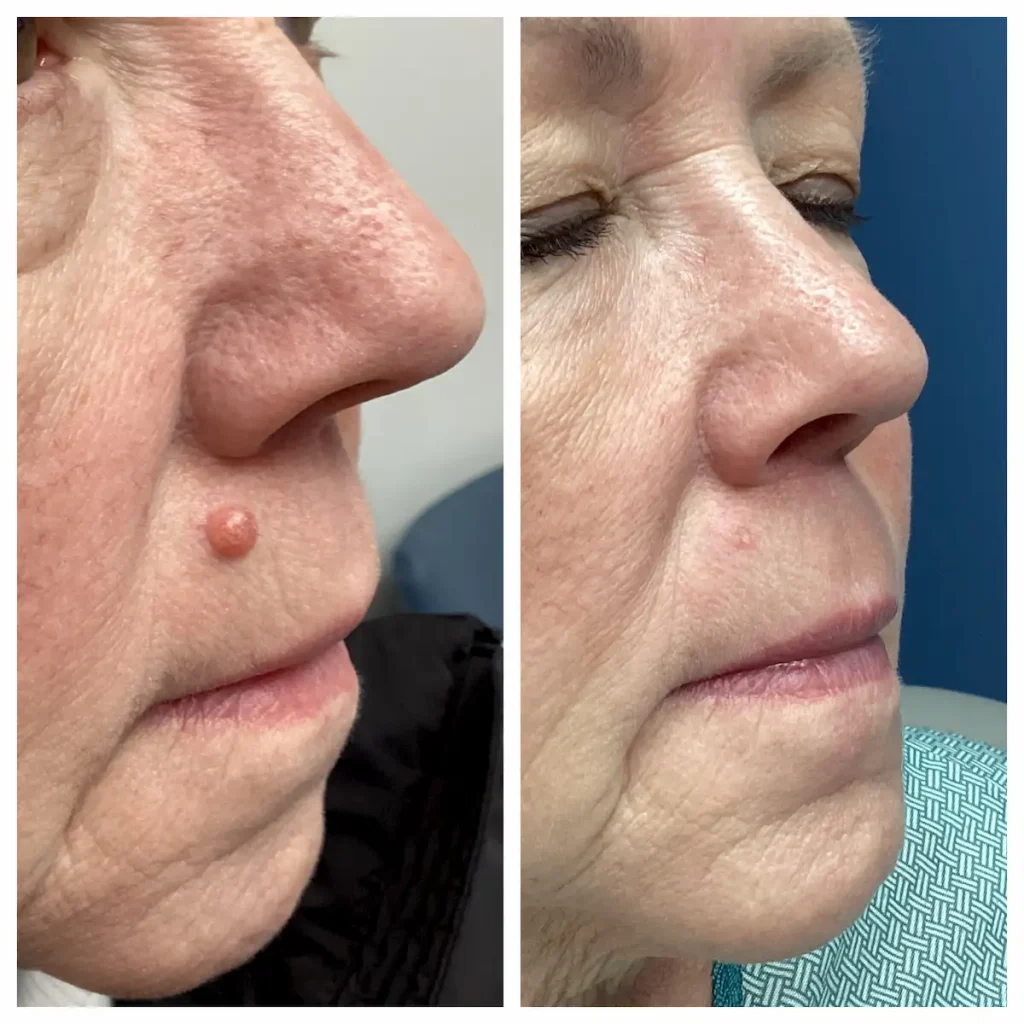


How a Zit Forms
A zit — or pimple — is a surface-level event. It begins when a hair follicle becomes clogged with a combination of excess oil (sebum) and dead skin cells. Bacteria that naturally live on the skin, particularly Cutibacterium acnes, can enter a clogged pore and trigger an immune response. The result is the red, inflamed, sometimes pus-filled bump most people recognize immediately.
Zits are common, temporary, and typically resolve within a few days to two weeks. They respond reasonably well to over-the-counter treatments containing benzoyl peroxide or salicylic acid, and they are generally a surface-level concern — meaning the inflammation stays close to the skin’s surface.
How a Cyst Is Different
A cyst is a fundamentally different structure. Rather than forming at a clogged pore near the surface, a cyst develops deeper in the skin when cells that should shed normally instead multiply and form a closed sac beneath the surface. That sac fills over time with keratin — a soft, sometimes odorous material — and continues to grow slowly. Unlike a pimple, a cyst:
- Does not come to a head
- Does not resolve on its own
- Sits deeper and feels firmer or more movable under the skin
- Can persist for months or years without changing
- Will typically return after being drained unless the entire sac is removed
Cysts are benign and not dangerous on their own, but they can become inflamed or infected — at which point they can become painful, red, and swollen, looking deceptively similar to a severe pimple.
Why Treating Them the Same Way Causes Problems
This is where the distinction becomes practically important. Many people approach a cyst the same way they would a pimple — applying spot treatments, attempting to pop it, or waiting for it to resolve. None of these approaches works on a cyst, and some actively make things worse.
Spot treatments designed for acne target surface-level bacteria and oil production. They have no effect on the sac of a cyst sitting beneath the skin. Attempting to pop or squeeze a cyst does not empty the sac — it pushes the contents into surrounding tissue, increases inflammation, introduces bacteria, and significantly raises the risk of scarring. And waiting it out rarely works; cysts do not have a natural resolution pathway the way a pimple does.
The standard treatment for a cyst is in-office excision — a straightforward procedure in which a dermatologist removes the sac in its entirety under local anesthesia. When the full sac is removed, recurrence is unlikely. When it is only drained, the sac remains, and the cyst almost always returns.
Cystic Acne: When the Lines Blur
There is one point of genuine overlap worth addressing: cystic acne. This is a severe form of acne in which the inflammatory response occurs deep within the follicle, producing large, painful nodules and cysts that do not surface. Cystic acne involves the immune system more aggressively than typical acne and leads to a higher risk of permanent scarring when left untreated.
Cystic acne is not the same as an epidermoid cyst, but it does share some surface characteristics — deep placement, no visible head, tenderness, and resistance to over-the-counter treatment. It requires prescription intervention, which may include topical retinoids, oral antibiotics, hormonal therapy, or isotretinoin, depending on severity.
If you have recurring deep breakouts that leave marks or scars, that is cystic acne — and it warrants a dermatology evaluation, not another round of drugstore products.
Scarring: The Long-Term Cost of Misidentification
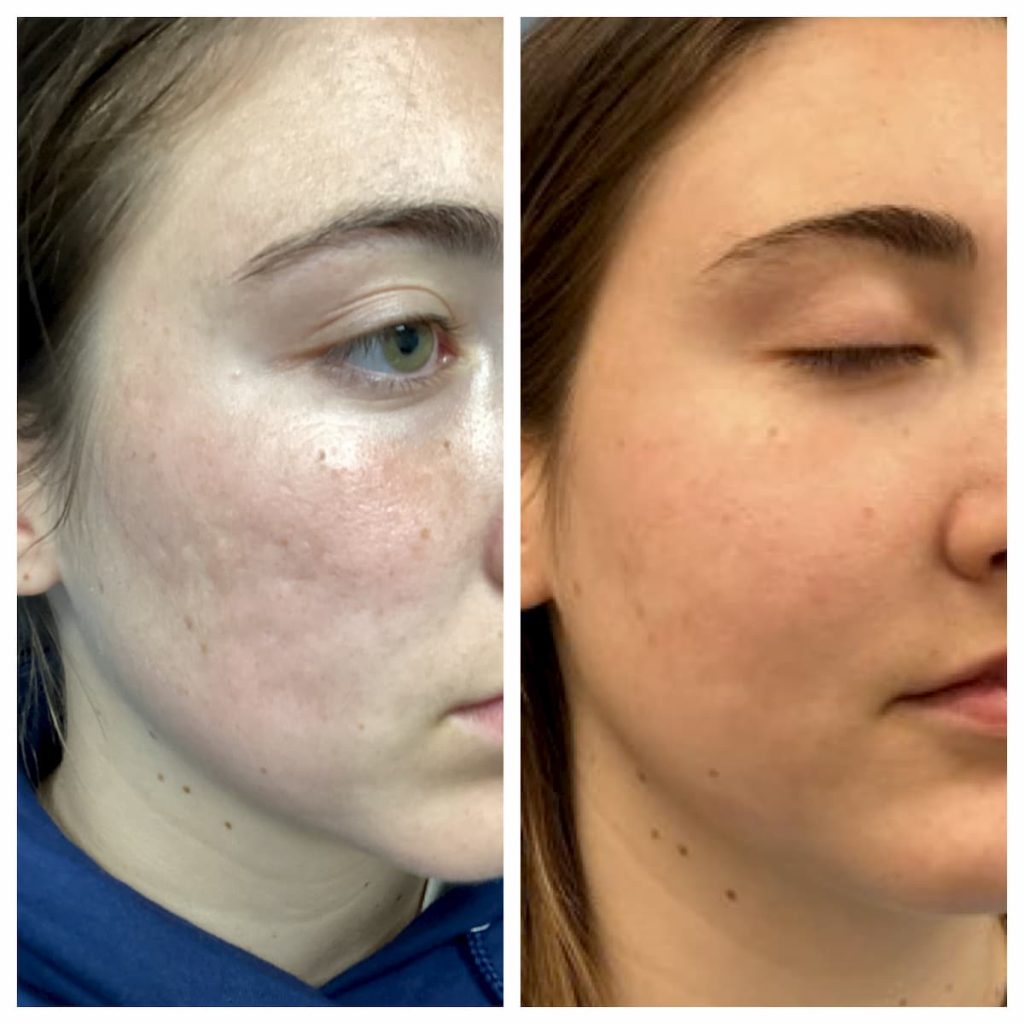
One of the most significant reasons the zit-vs-cyst distinction matters is scarring. Surface pimples, when left alone or treated appropriately, rarely cause permanent scarring. Deep lesions — whether cystic acne or epidermoid cysts that have been repeatedly manipulated — are a different story.
Picking, squeezing, or lancing a deep lesion without proper technique causes trauma to the surrounding dermis. The skin’s repair response produces collagen, but not always smoothly — the result can be atrophic (pitted) scars, raised hypertrophic scars, or post-inflammatory hyperpigmentation that lingers for months. Acne scar treatment is available and effective, but prevention is always preferable.
When to See a Dermatologist
You do not need a professional opinion for every surface pimple. But a dermatology visit is the right call when:
- A bump has been present for more than three to four weeks without resolving
- It is firm, deep, and does not come to a head
- It has become infected, red, warm, swollen, or draining on its own
- You are experiencing frequent deep breakouts that are leaving marks
- You have already tried treating it at home without success
The earlier a cyst is addressed, the more straightforward the procedure. Waiting until a cyst becomes infected or significantly enlarged makes treatment more involved.
Ready to Stop Guessing?
If you have a bump that has overstayed its welcome — or recurring deep breakouts that are leaving their mark — St. Louis Dermatology & Cosmetic Surgery can help you get a clear answer and a clear plan. Dr. Brandon T. Beal is double board-certified and fellowship-trained in procedural dermatology, serving patients in Troy, MO, and surrounding communities, including Winfield, Wright City, and Lake St. Louis.
Call our office at (314) 834-1400 or request a consultation online. Treatment plans are individualized, and a consultation is required prior to any procedure.
Frequently Asked Questions
A zit typically sits close to the surface, may have a visible whitehead or blackhead, and often resolves within one to two weeks. A cyst sits deeper, feels more like a firm or rubbery ball under the skin, does not come to a head, and persists well beyond a normal breakout timeline. When in doubt, a dermatologist can confirm in a single visit.
Epidermoid cysts are benign and do not become cancerous in the vast majority of cases. However, any lesion that grows rapidly, changes in character, feels unusually hard, or does not fit the typical presentation of a benign cyst should be evaluated to rule out other diagnoses.
The area is numbed with a local anesthetic before the procedure, so discomfort during the excision is minimal for most patients. Some soreness in the days following is normal and manageable.
Yes. Depending on the type of scar, options may include microneedling, subcision, laser resurfacing, or a combination of these. Results vary by individual, and a consultation is required to determine what is appropriate for your skin.
GET IN TOUCH