
Actinic keratosis is a common sun-related skin condition. Learn when treatment is indicated and why monitoring is important.
Actinic keratosis is a common skin condition caused by long-term sun exposure. It often appears as rough, scaly patches on sun-exposed areas of skin, such as the face, scalp, ears, hands, and forearms.
While actinic keratosis is not skin cancer, it is considered precancerous, meaning it has the potential to develop into a type of skin cancer if left untreated. Because of this, understanding what actinic keratosis is — and when it should be treated — is an important part of protecting long-term skin health.
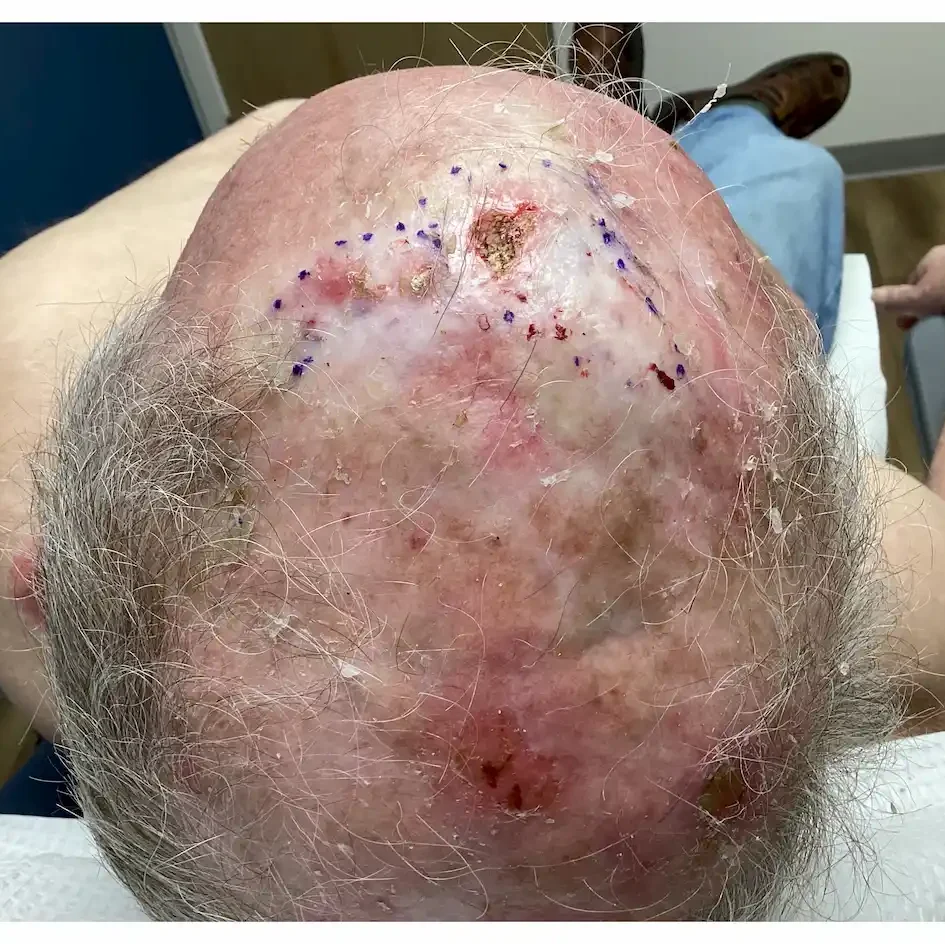


What Is Actinic Keratosis?
Actinic keratosis is a growth caused by cumulative ultraviolet (UV) damage to the skin over time. UV exposure from sunlight or tanning beds damages skin cells, leading to abnormal growth patterns. It commonly develops in:
- Adults over age 40
- Individuals with fair skin
- People with a history of significant sun exposure
- Those who work or spend time outdoors
What Does Actinic Keratosis Look and Feel Like?
Actinic keratoses vary in appearance and texture. Common features include:
- Rough, sandpaper-like patches
- Red, pink, tan, or skin-colored areas
- Scaly or crusted surface
- Mild itching, burning, or tenderness
Where Do Actinic Keratoses Commonly Occur?
Actinic keratosis typically appear on sun-exposed areas, including:
- Face and lips
- Scalp (especially in areas of hair thinning)
- Ears
- Neck
- Forearms
- Hands
Is Actinic Keratosis Skin Cancer?
Actinic keratosis is not skin cancer, but it is considered a precancerous lesion. A small percentage of actinic keratosis may progress to squamous cell carcinoma (SCC), a common type of skin cancer. It is not possible to predict which actinic keratosis’s will progress; therefore, evaluation and monitoring are important.
When Should Actinic Keratosis Be Treated?
In general, most actinic keratoses should be treated, especially when they:
- Persist over time
- Become thicker or tender
- Bleed or ulcerate
- Increase in number
Early treatment helps reduce the risk of progression and may improve overall skin health.
Can Actinic Keratosis Be Prevented?
While not all actinic keratoses can be prevented, risk may be reduced by:
- Using broad-spectrum sunscreen daily
- Wearing protective clothing and hats
- Avoiding tanning beds
- Scheduling regular skin exams
When to See a Dermatologist in Troy, Missouri
If you notice rough, scaly patches or changes in sun-exposed areas of your skin, evaluation by a dermatologist is recommended. At St. Louis Dermatology & Cosmetic Surgery, actinic keratoses are evaluated and treated using evidence-based, patient-centered care.
Contact us by calling (314) 834-1400 or via our online contact form.
GET IN TOUCH