
Home / Medical Dermatology / Cyst Removal
Cyst Removal St. Louis
Our board-certified, fellowship-trained team removes cysts and lipomas in our outpatient surgical suite — removing the entire cyst and its sac to minimize the chance it comes back.

Double board-certified
Dermatology and Mohs micrographic surgery
Residency & Fellowship
Cleveland Clinic · Zitelli & Brodland
Physician-owned
Independent practice — never corporate
Established 2020
Serving Troy, Lincoln County, and beyond
What is a Cyst?
Cysts are typically benign (noncancerous) sacs filled with skin cells. They can form anywhere on the body. Common types include epidermal cysts, pilar cysts, sebaceous cysts, and dermoid cysts.
Common Types of Cysts
- Epidermal cysts — the most common type. These typically have a punctum, or dilated pore, and occur most often on the chest, back, arms, and legs.
- Pilar cysts — the most common type of scalp cyst. They can be isolated lesions, though some patients form numerous pilar cysts on the scalp.
- Sebaceous cysts — while many cysts are casually called sebaceous cysts, true sebaceous cysts are rarer. They form from sebaceous glands and typically occur in areas with a high density of those glands, such as the face.
- Dermoid cysts — these typically appear in early childhood and can increase in size. The most common location is along the temple.
Lipomas — soft, movable growths of fatty tissue beneath the skin — are not cysts, but they are removed with a similar outpatient excision and are one of the most common growths we remove alongside cysts.
When Should You Consider Removing a Cyst?
When cysts grow or enlarge, they can cause pain and discomfort, and they can become inflamed. Common reasons for cyst removal include:
- An enlarging or growing cyst
- The large size of the cyst
- Pain or inflammation
- A sensitive cosmetic location, such as the face
- A cyst that has ruptured or is draining
How is a Cyst Removed?
To remove a cyst completely and minimize the chance it comes back, surgical excision is typically recommended. It is a minor outpatient procedure performed in our surgical suite using local anesthesia.
1
Evaluation & Planning
Your provider examines the cyst to confirm the diagnosis and plan the removal — its type, size, depth, and location all shape the approach. If the cyst is currently inflamed or infected, your provider may recommend calming it first so the excision can heal as cleanly as possible.
2
Anesthesia & Excision
The site is sterilized and numbed with local anesthesia. An incision is made through the skin to expose the cyst, and meticulous dissection separates the cyst and its sac from your normal tissue. Removing the entire sac is the key step — it is what minimizes the chance of recurrence.
3
Closure & Dressing
Once the cyst and sac are removed, the skin is sutured together with attention to how the closure will heal cosmetically. A pressure dressing is left in place over the incision site for 24–48 hours, and you’ll go home with simple wound-care instructions.
4
Recovery
Keep the surgical site dry for the first 24 hours; you can shower after that. Most patients return to non-physical work the next day. Take it easy and limit physical activity for the first week — no heavy lifting or vigorous exercise while the site heals.
Individualized careTreatment plans are individualized, and results vary. A consultation is required to determine the right approach for your cyst.
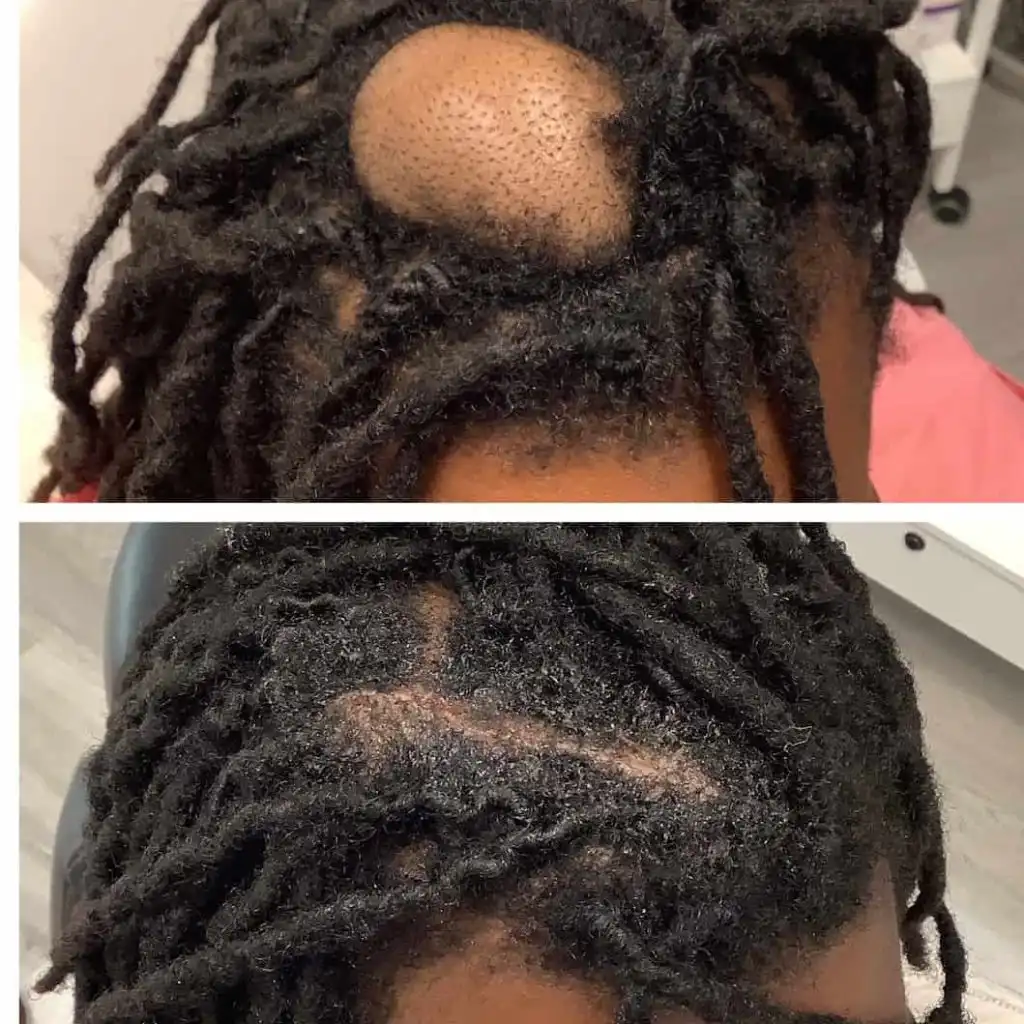
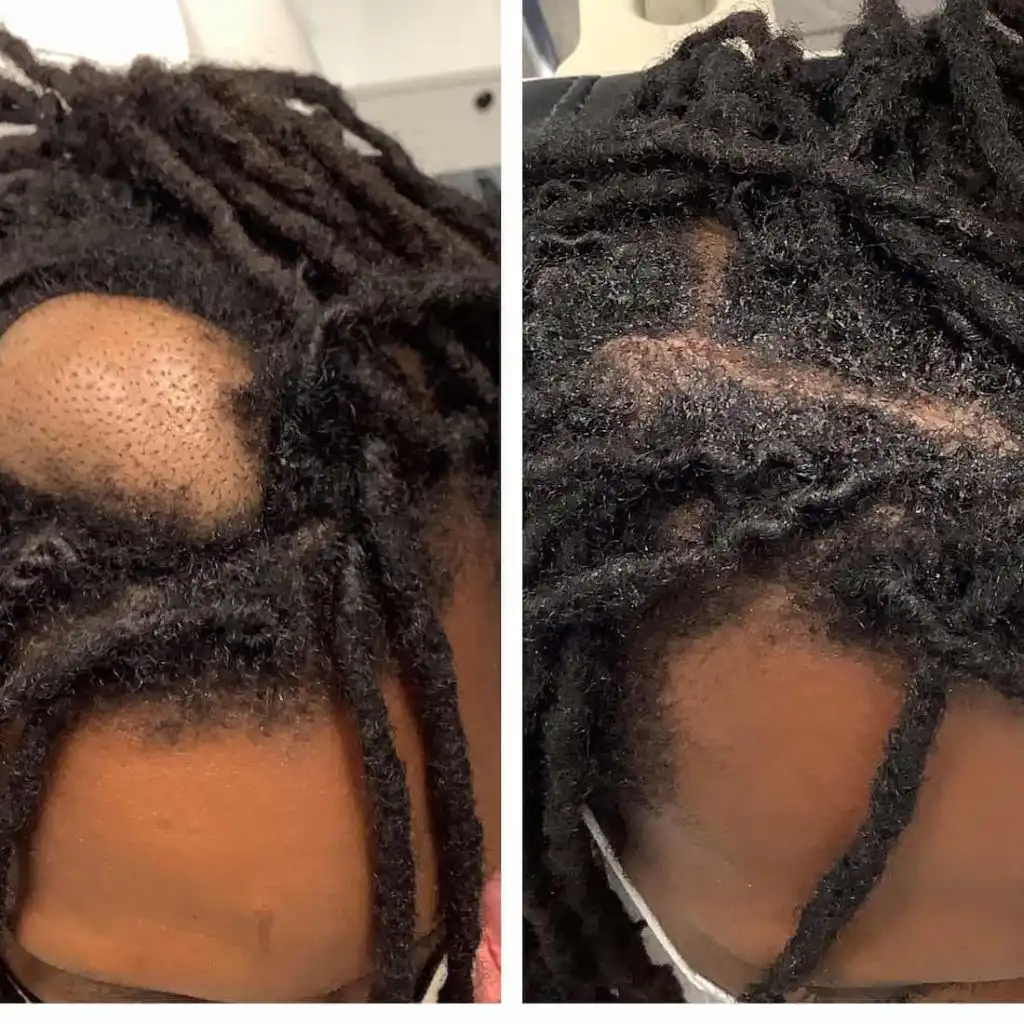
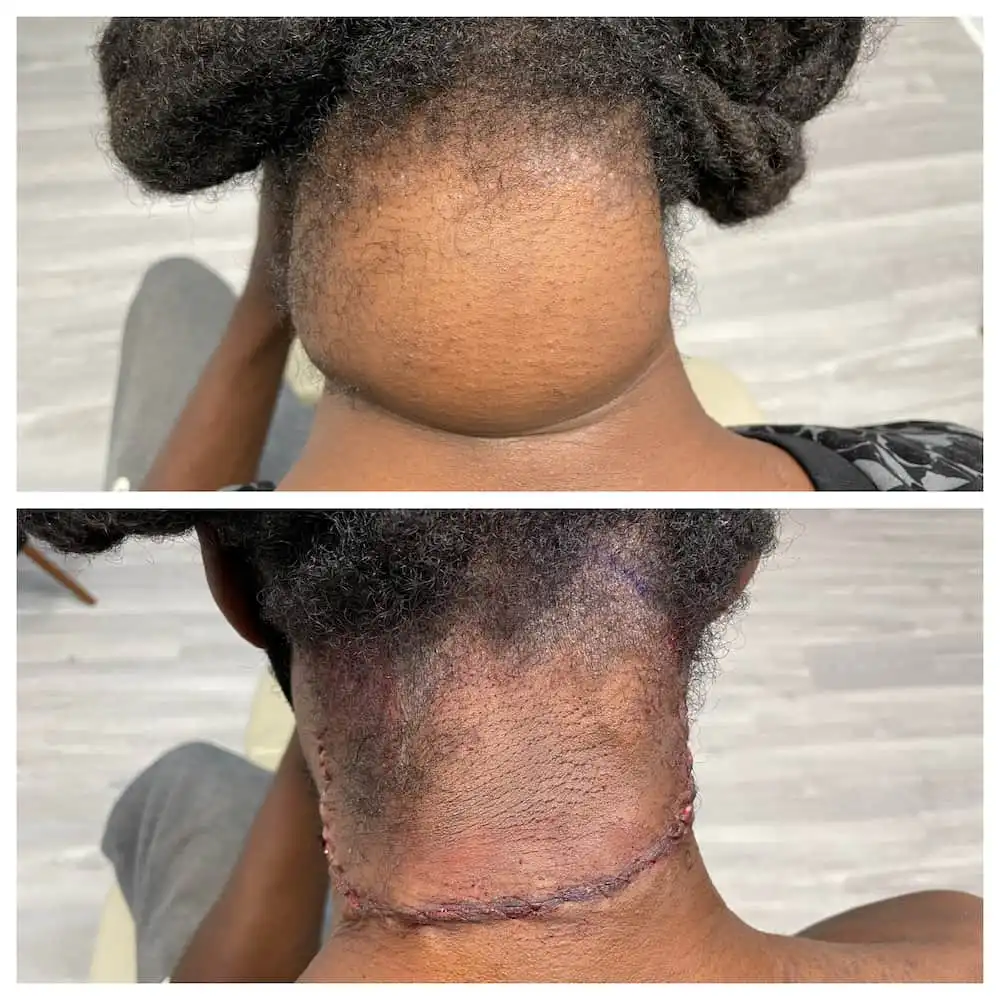
Cyst Removal Before and After Photos
Every photo is from a patient of this practice.
What Can You Expect?
You will consult with our board-certified dermatology team. The physician will listen to you, examine the cyst, and recommend an individualized treatment plan — including whether removal makes sense now and what the procedure and recovery will look like for you.
Choose St. Louis Dermatology & Cosmetic Surgery
Cyst removal is minor surgery, and the closure determines how the spot heals. Dr. Brandon T. Beal is double board-certified in dermatology and Mohs micrographic surgery and fellowship-trained in facial plastic and reconstructive surgery — every excision is planned and closed with the cosmetic outcome in mind.
Schedule a Cyst Removal Consultation in Troy, MO
From our office in Troy, we provide cyst and lipoma removal for patients across Lincoln County and the surrounding area, including Moscow Mills and O’Fallon — and our second location in Chesterfield. Call (314) 834-1400 or request an appointment online to get started.
Common questions
Cyst removal FAQs.
Does insurance cover cyst removal? How much does it cost?
Insurance typically covers cyst removal because it is a medical procedure. We accept Medicare and most major private insurance plans. Your exact cost depends on your insurance and whether you have met your deductible — if you have not, you may have out-of-pocket expenses. Contact your insurance carrier to determine your costs, or call our Troy office at (314) 834-1400 with questions.
Will the cyst come back after removal?
Recurrence is uncommon when the entire cyst sac is removed — that is why surgical excision, rather than draining, is typically recommended. Removing the complete sac is the central goal of the procedure. No procedure can guarantee a cyst will never return, but complete excision minimizes the chance.
Does cyst removal hurt?
The procedure is performed under local anesthesia, so the area is numb during the excision — most patients feel pressure rather than pain. Some soreness afterward is normal and typically manageable as the site heals over the first week.
Will cyst removal leave a scar?
Any incision leaves some mark, but the excision is planned and sutured with the cosmetic result in mind — including orienting the incision with your skin’s natural lines where possible. Most scars fade considerably as they mature, and protecting the site from the sun helps. Results vary by location, skin type, and cyst size.
Can I just squeeze or drain the cyst myself?
We recommend against it. Squeezing or draining a cyst at home leaves the sac behind, so the cyst typically refills — and it can introduce infection and inflammation that make the eventual removal harder and the healing less clean. If a cyst is bothering you, an evaluation is the better first step.
Ready to be done with that cyst?
Same-week appointments. Medicare accepted. Troy, MO — and Chesterfield now open.