
Actinic keratosis (AK) is one of the most common skin conditions in adults over 40 who’ve had intense sun exposure. Early detection is key; schedule today.
Actinic keratosis (AK) is one of the most common skin conditions seen by dermatologists, particularly among adults over 40 who’ve had significant sun exposure. While these lesions may seem harmless at first, they carry the potential to develop into skin cancer, making early detection and treatment essential.
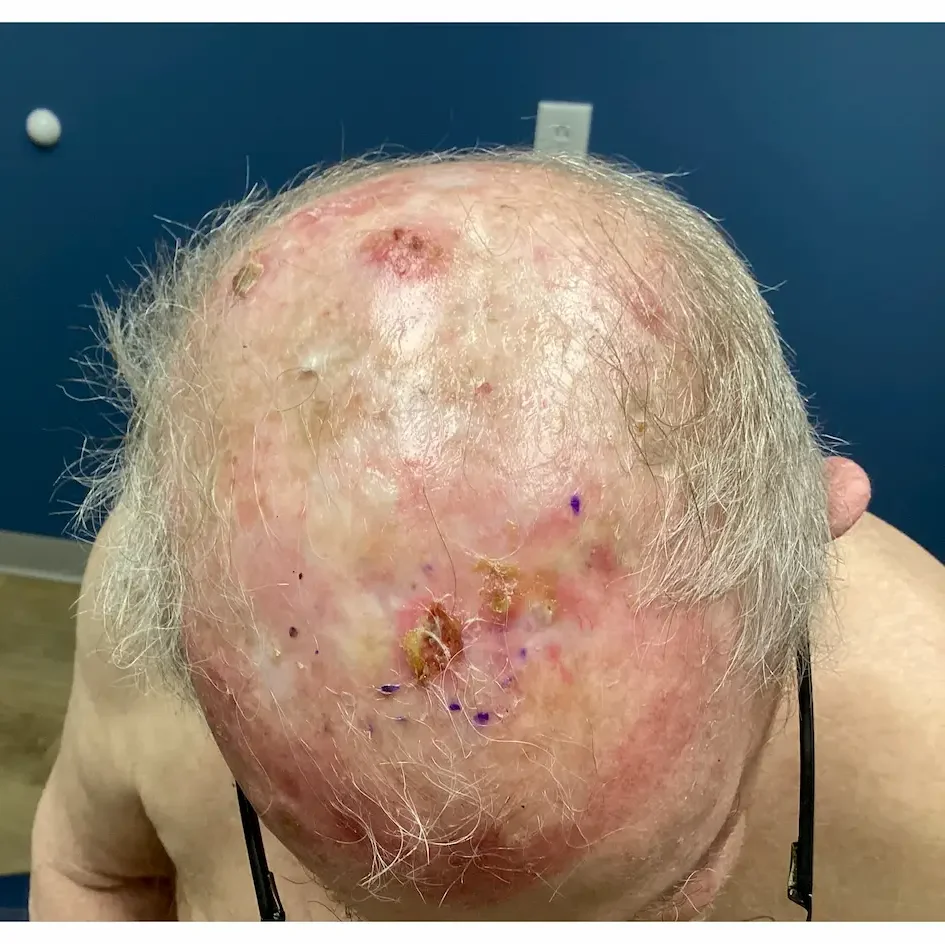
What Is Actinic Keratosis?
Actinic keratosis (also known as solar keratosis) is a precancerous skin lesion caused by cumulative damage from ultraviolet (UV) radiation, primarily from the sun. These lesions typically appear as rough, scaly patches on sun-exposed areas like the face, scalp, ears, neck, forearms, and hands.
Fast Facts:
- Precancerous: Can turn into squamous cell carcinoma (SCC)
- Common in adults 40+
- More frequent in fair-skinned individuals
- It can be a sign of chronic sun damage
What Does Actinic Keratosis Look Like?
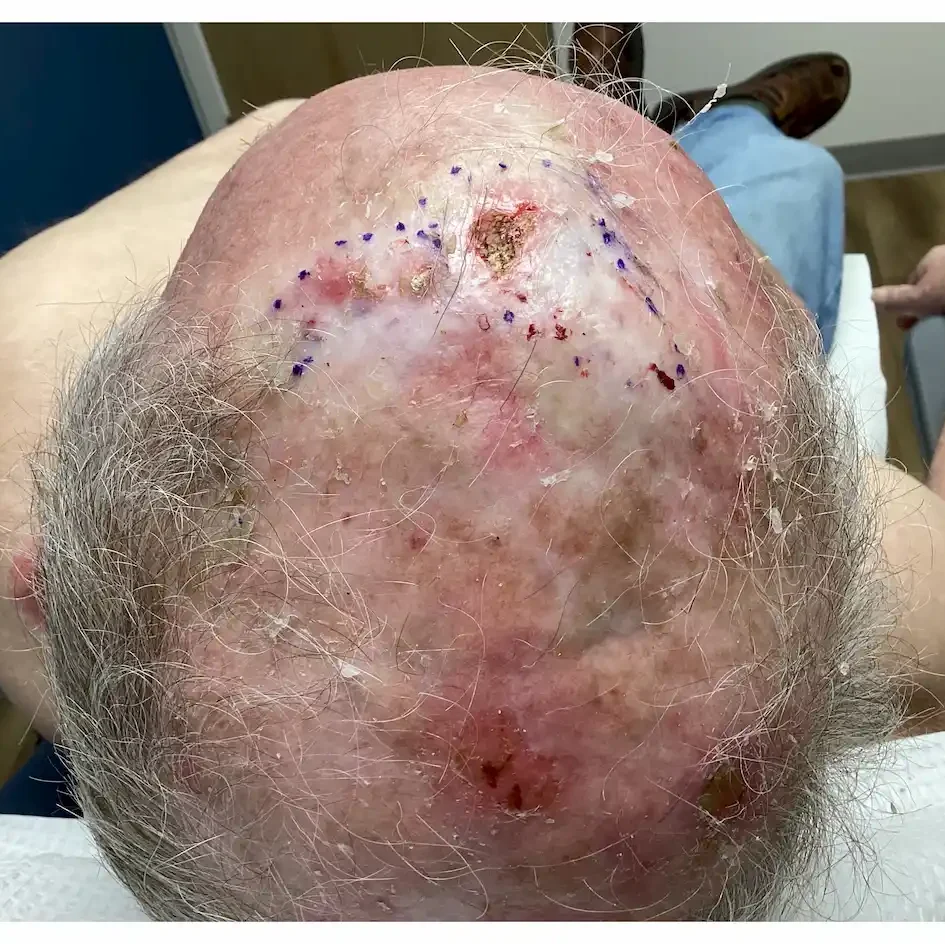
Because AKs can vary in appearance, they’re often mistaken for dry skin, eczema, or age spots. However, there are key characteristics that set them apart:
Common Signs:
- Rough, sandpaper-like texture
- Flat or slightly raised patch or bump
- Color: red, pink, or brown; sometimes skin-colored
- Size: ranges from a pinpoint to over an inch wide
- Itching, burning, or tenderness in the lesion
What Causes Actinic Keratosis?
The primary cause of actinic keratosis is long-term exposure to UV radiation. This includes both sunlight and indoor tanning beds.
High-Risk Factors:
- Living in sunny or high-altitude regions
- Frequent sun exposure without sunscreen
- Fair skin, light eyes, and blonde/red hair
- History of sunburns, especially in childhood
- Outdoor jobs or hobbies (farming, golfing, landscaping, etc.)
Is Actinic Keratosis Dangerous?
While not every AK turns into cancer, studies suggest that up to 10% of untreated AKs can progress into squamous cell carcinoma (SCC). The more AKs you have, the higher your overall risk.
That’s why dermatologists treat every AK seriously—even the small ones.
How Is Actinic Keratosis Diagnosed?
At St. Louis Dermatology & Cosmetic Surgery in Troy, MO, our board-certified dermatologists can diagnose actinic keratosis through:
- Visual skin exam
- Dermatoscopy (for magnification and accuracy)
- Biopsy, if there’s concern, it may be progressing to cancer
Treatment Options for Actinic Keratosis
There are several effective treatments for AK, depending on the number, size, and location of the lesions:
1. Cryotherapy (Freezing)
- Most common treatment
- Liquid nitrogen freezes the lesion, which peels off within days
- Minimal downtime
2. Topical Medications
- Used for widespread or recurrent AKs
- May cause redness or flaking during use
3. Photodynamic Therapy (PDT)
- A light-based treatment using a photosensitizing agent
- Effective for multiple or difficult-to-reach areas
- Minimally invasive with targeted action
4. Curettage and Electrosurgery
- Scraping the lesion followed by cauterization
- Often used for thicker or suspicious lesions
5. Laser Resurfacing
- CO2 laser or fractional laser can remove AKs and improve skin texture
- Added cosmetic benefits (wrinkle reduction, sun damage repair)
Why Choose St. Louis Dermatology & Cosmetic Surgery in Troy, MO?
We combine medical expertise with personalized care to detect and treat actinic keratosis early—often before it turns into something more serious.
- Board-certified dermatologists
- On-site procedures with minimal downtime
- Advanced diagnostic tools
- Serving Lincoln, St. Charles, and St. Louis counties
We offer same-week appointments for skin checks and lesion concerns.
When Should You See a Dermatologist?
You should schedule an evaluation if you notice:
- A rough patch that doesn’t go away
- A lesion that bleeds, itches, or changes in appearance
- Multiple scaly areas on sun-exposed skin
- A personal or family history of skin cancer
📞 Act Fast: Book a Skin Exam Today
Early detection of actinic keratosis can prevent skin cancer. If you’re in Troy, Wentzville, Lake St. Louis, O’Fallon, or surrounding areas, our dermatology team is here to help.
Call us today or book online to schedule a complete skin exam.
GET IN TOUCH