
See what actinic keratosis looks like before and after treatment. Contact St. Louis Dermatology & Cosmetic Surgery today to learn more.
Years of sun exposure can leave their mark on our skin — sometimes in ways we can see, and sometimes in ways we can’t. One of the most common consequences of chronic sun damage is actinic keratosis (AK). This precancerous skin lesion typically appears as a rough, scaly patch on sun-exposed areas, such as the face, scalp, or arms.

🔍 What Is Actinic Keratosis?
Actinic keratosis (AK) — sometimes called a “solar keratosis” — is a precancerous lesion caused by long-term sun exposure or tanning bed use.
AKs develop when UV light damages the DNA in skin cells, causing them to grow abnormally. Over time, these damaged cells can multiply, leading to a patch that’s:
- Rough or sandpapery in texture
- Pink, red, or brown in color
- Flat or slightly raised, sometimes crusty or scaly
- Often tender or sensitive to touch
You might first notice them in areas that get the most sun, such as:
☀️ Forehead, scalp, face, ears, lips, neck, forearms, and hands.
While not every AK turns into cancer, a small percentage can progress into squamous cell carcinoma (SCC) — a type of skin cancer that can grow and spread if left untreated. That’s why dermatologists recommend early detection and removal of actinic keratoses as part of proactive skin health care.
🩺 Common Treatment Options for Actinic Keratosis
At St. Louis Dermatology & Cosmetic Surgery, we offer several proven, medically directed treatments for AKs. The right approach depends on the number of lesions you have, their location, and your skin type.
1. Cryotherapy (Freezing Treatment)
- What it is: A quick, in-office treatment where liquid nitrogen is applied to the lesion to destroy abnormal cells.
- What to expect: The area may blister or crust for a few days, then peel away to reveal healthy skin underneath.
- Best for: Isolated or small AKs.
2. Topical Medications
- Examples: 5-fluorouracil (Efudex®), imiquimod (Aldara®), diclofenac, or tirbanibulin (Klisyri®).
- How it works: Applied over several weeks to treat visible and invisible precancerous cells.
- What to expect: Temporary redness, peeling, and crusting during healing — often followed by smoother, healthier-looking skin.
- Best for: Multiple or widespread AKs.
3. Chemical Peels or Laser Resurfacing
- What it does: Removes damaged outer layers of skin and stimulates new cell growth.
- Added benefit: Improves skin tone, texture, and appearance while reducing the formation of future lesions.
Each of these treatments is designed to target sun-damaged skin cells while promoting regeneration of healthy tissue underneath.
📸 Actinic Keratosis: Before Treatment
Before treatment, actinic keratoses often appear as small, rough patches that feel dry or gritty. They may:
- Flake or peel slightly
- Become red or inflamed after sun exposure
- Appear in clusters (“field of damage”) rather than as a single spot
Many patients notice that AKs come and go — fading for a while, then returning — which can lead to underestimating their seriousness. Before photos (typically taken in the clinic for tracking) may show:
- Uneven skin tone
- Slight discoloration
- Patches that blend into sun-damaged areas
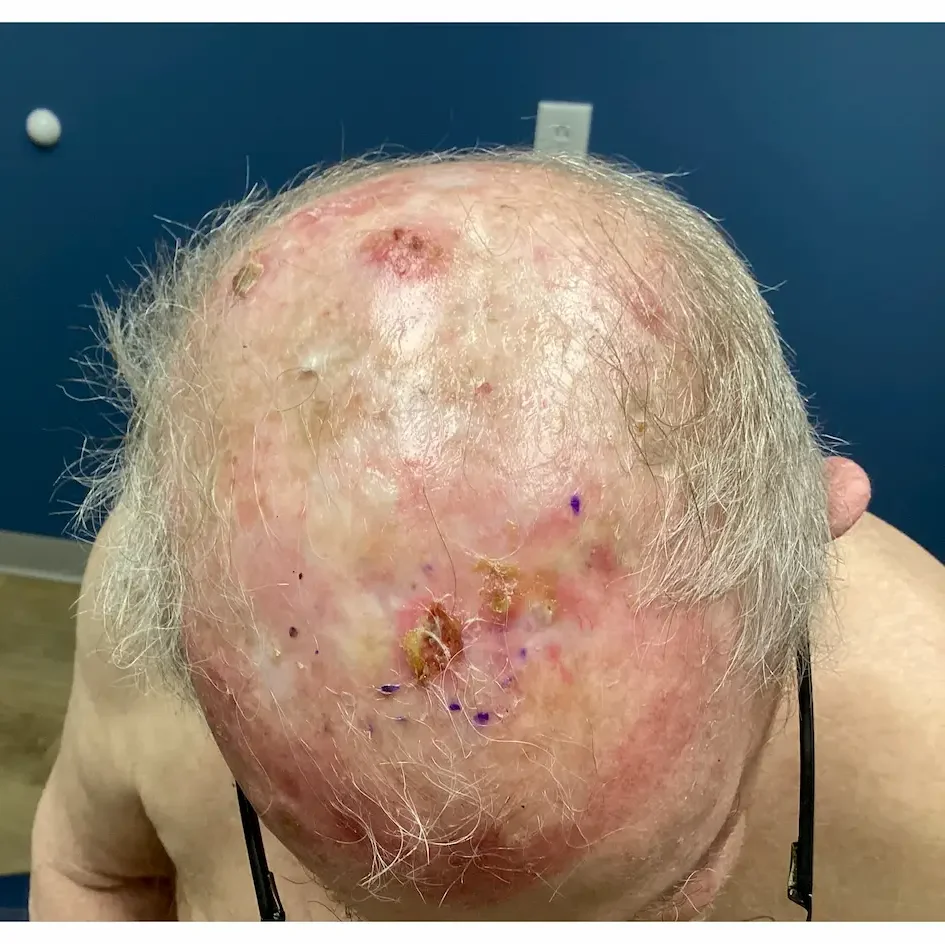
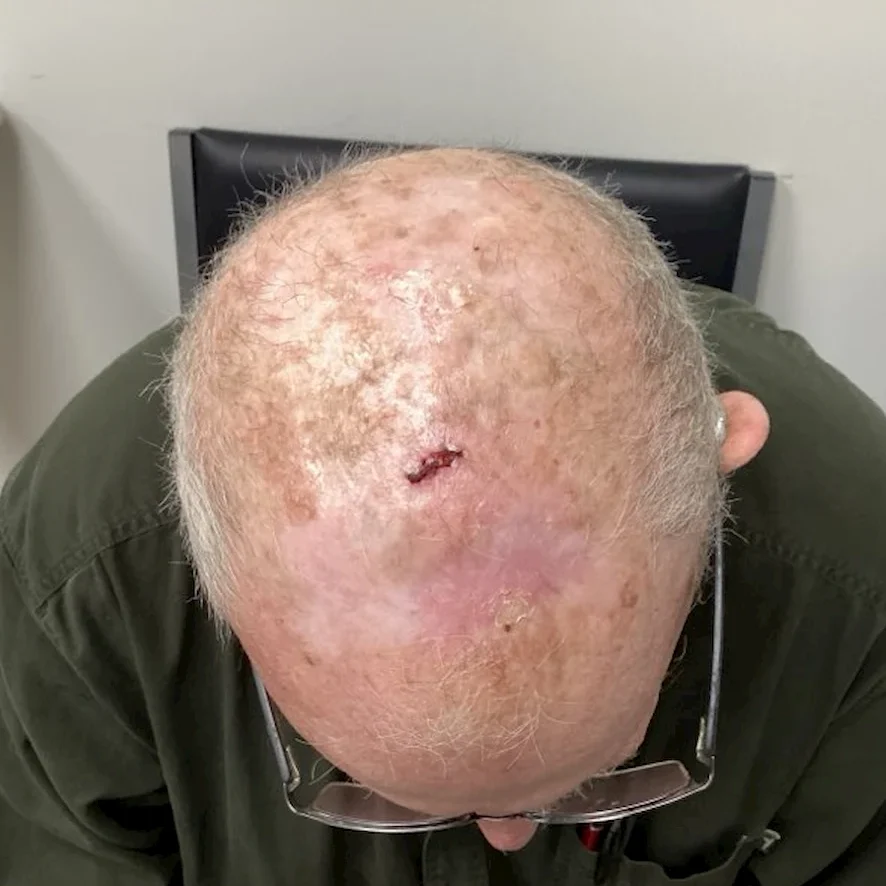
🌤 What Actinic Keratosis Looks Like After Treatment
The “after” stage varies depending on which treatment you receive — but the healing process typically follows this timeline:
- Days 1–3:
- Treated areas may appear red, swollen, or mildly irritated
- Some scabbing or crusting may develop (especially after cryotherapy or topical treatment)
- Days 4–7:
- Skin begins to peel or flake as damaged cells slough off
- New pink skin appears underneath — smoother and more even in texture
- Weeks 2–4:
- Redness fades
- The area continues to heal and gradually blends with the surrounding skin
- Long-Term:
- Fewer rough spots or discolorations
- Noticeably clearer, healthier-looking skin
- Reduced risk of developing squamous cell carcinoma
🧴 Preventing Future Actinic Keratoses
Once you’ve treated AKs, ongoing sun protection and regular skin surveillance are essential to maintain your skin’s health.
Our dermatologists recommend:
- Wearing broad-spectrum sunscreen daily, even on cloudy days
- Using wide-brimmed hats and UV-protective clothing outdoors
- Avoiding tanning beds entirely
- Scheduling annual skin checks (or more frequent visits if you’ve had AKs before)
Because actinic keratosis can recur, consistent follow-up helps ensure new lesions are caught and treated early.
💠 Why Choose St. Louis Dermatology & Cosmetic Surgery
At St. Louis Dermatology & Cosmetic Surgery, our team takes a preventive, patient-centered approach to sun-related skin conditions.
We offer:
- Board-certified dermatology care for early detection and treatment
- Advanced, in-office therapies for all skin types
- Personalized skincare plans to reduce recurrence and promote long-term health
- Local, community-based care — no corporate chain protocols, just trusted relationships built on experience and compassion
Whether you’re seeking treatment for actinic keratosis or want to stay ahead of sun damage, our goal is to help you maintain healthy, confident skin at every age.
✨ See the Difference: Healthy Skin Starts with Early Care
If you’ve noticed rough, scaly patches that don’t go away — or if you’re concerned about how your skin looks after years in the sun — now is the time to act. Schedule an evaluation with St. Louis Dermatology & Cosmetic Surgery to get a precise diagnosis and personalized treatment plan.
📞 Call our Troy office today or request your appointment online to take the next step toward clearer, healthier skin.
GET IN TOUCH