
Actinic keratosis is a precancerous sign of sun damage. Learn symptoms, treatment options, and when to schedule a skin exam in Troy, MO.
If you’ve noticed a rough, scaly patch on your skin that won’t go away, it could be more than just dry skin.
Actinic keratosis (AK) is a common precancerous skin condition caused by long-term sun exposure. It often appears subtle at first — but it can signal significant underlying sun damage.



What Is Actinic Keratosis?
Actinic keratosis (also called solar keratosis) is a rough, scaly lesion that develops after years of ultraviolet (UV) exposure. It is considered precancerous, meaning it has the potential to develop into a type of skin cancer called squamous cell carcinoma (SCC).
Not every actinic keratosis becomes cancer. However, because there is no reliable way to predict which ones may progress, dermatologic evaluation and treatment are recommended.
What Causes Actinic Keratosis?
The primary cause is cumulative sun damage over time.
Ultraviolet radiation from:
- Natural sunlight
- Tanning beds
- Chronic outdoor exposure
These will gradually damage skin cells. Over the years or decades, this damage can lead to abnormal cell growth. Actinic Keratosis is most common in adults over 40, but can appear earlier in individuals with significant sun exposure.
Where Does Actinic Keratosis Appear?
Actinic keratoses develop on areas that receive the most sun exposure:
- Face
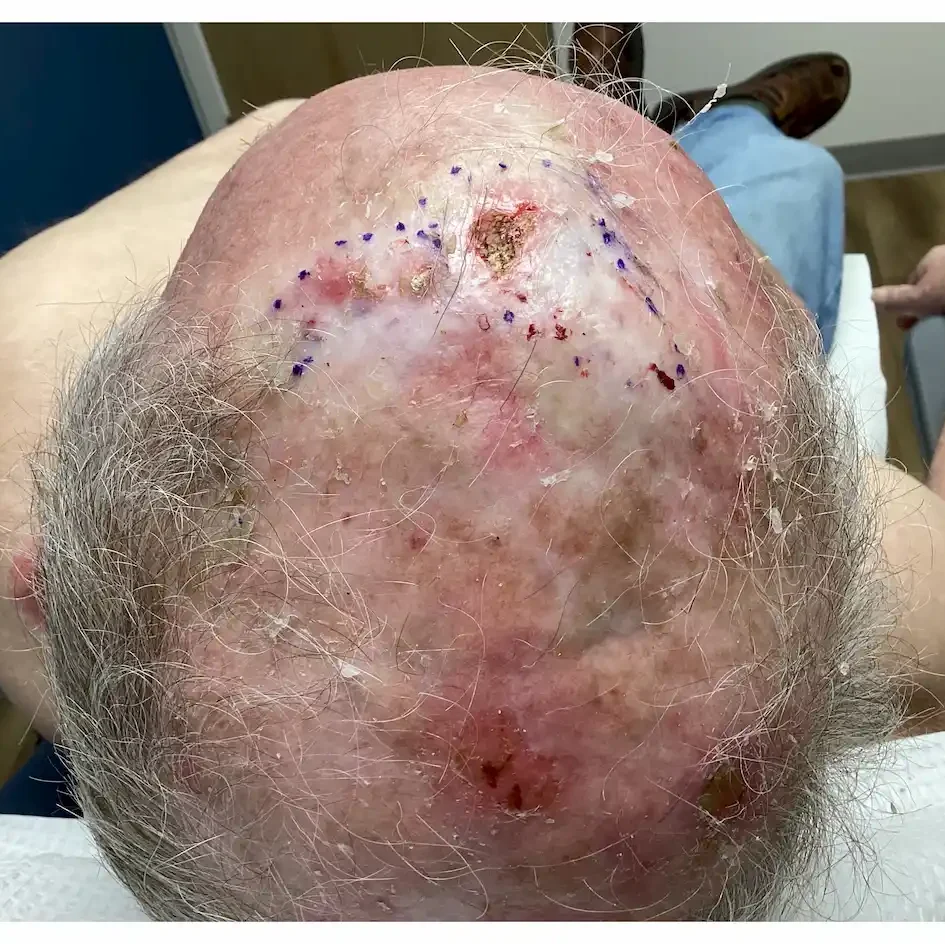
- Scalp (especially in thinning hair or bald areas)
- Ears
- Neck
- Upper chest
- Forearms
- Hands
Men often develop Actinic Keratosis on the scalp and ears. Women commonly see them on the chest and forearms.
What Does Actinic Keratosis Look and Feel Like?
AKs can vary in appearance, which is why professional evaluation is important.
They may look like:
- Rough, dry, or scaly patches
- Red, pink, or flesh-colored spots
- Crusty or sandpaper-like areas
- Flat or slightly raised lesions
- Persistent spots that don’t heal
Some patients report feeling the lesion before they see it, describing it as a rough patch that catches on washing the face.
Is Actinic Keratosis Skin Cancer?
Actinic keratosis is not skin cancer, but it is considered an early warning sign.
A small percentage of actinic keratosis may progress to squamous cell carcinoma, a common type of skin cancer. When detected early, squamous cell carcinoma is highly treatable. Because progression risk cannot be predicted for any individual lesion, treatment is generally advised.
Treatment Options for Actinic Keratosis
1. Cryotherapy (Freezing)
A quick in-office treatment that uses liquid nitrogen to destroy abnormal cells. The treated area may blister and heal over 1–2 weeks.
This is commonly used for isolated lesions.
2. Topical Prescription Medications
For patients with multiple actinic keratoses in a sun-damaged area (sometimes called “field cancerization”), prescription creams may be recommended. These medications work by targeting abnormal precancerous cells across a broader region of skin. Treatment courses vary depending on the medication selected.
3. Light-Based Therapies
Certain light-based treatments may be used in select cases to address widespread sun damage and multiple actinic keratoses.
4. Biopsy and Surgical Management
If a lesion shows signs of progression toward squamous cell carcinoma, biopsy and potentially surgical removal may be recommended. If skin cancer is confirmed and located in a cosmetically sensitive area (face, ears, scalp), Mohs micrographic surgery may be considered.
When Should You Schedule a Skin Exam?
You should consider an appointment if you notice:
- A rough patch that won’t go away
- A lesion that bleeds or crusts
- A spot that grows or changes
- Multiple scaly areas on sun-exposed skin
Routine skin exams are especially important for patients with a history of actinic keratosis or skin cancer.
Contact Us Today to Schedule
Actinic keratosis is more than dry skin — it is a visible sign of accumulated sun damage and a potential precursor to skin cancer. Early evaluation and treatment can reduce future risk and simplify care. Contact us today by calling (314) 834-1400 or by filling out our online contact form.
GET IN TOUCH