
Skin Rashes
A rash can appear suddenly or develop over time and may cause redness, itching, irritation, scaling, bumps, or discomfort.
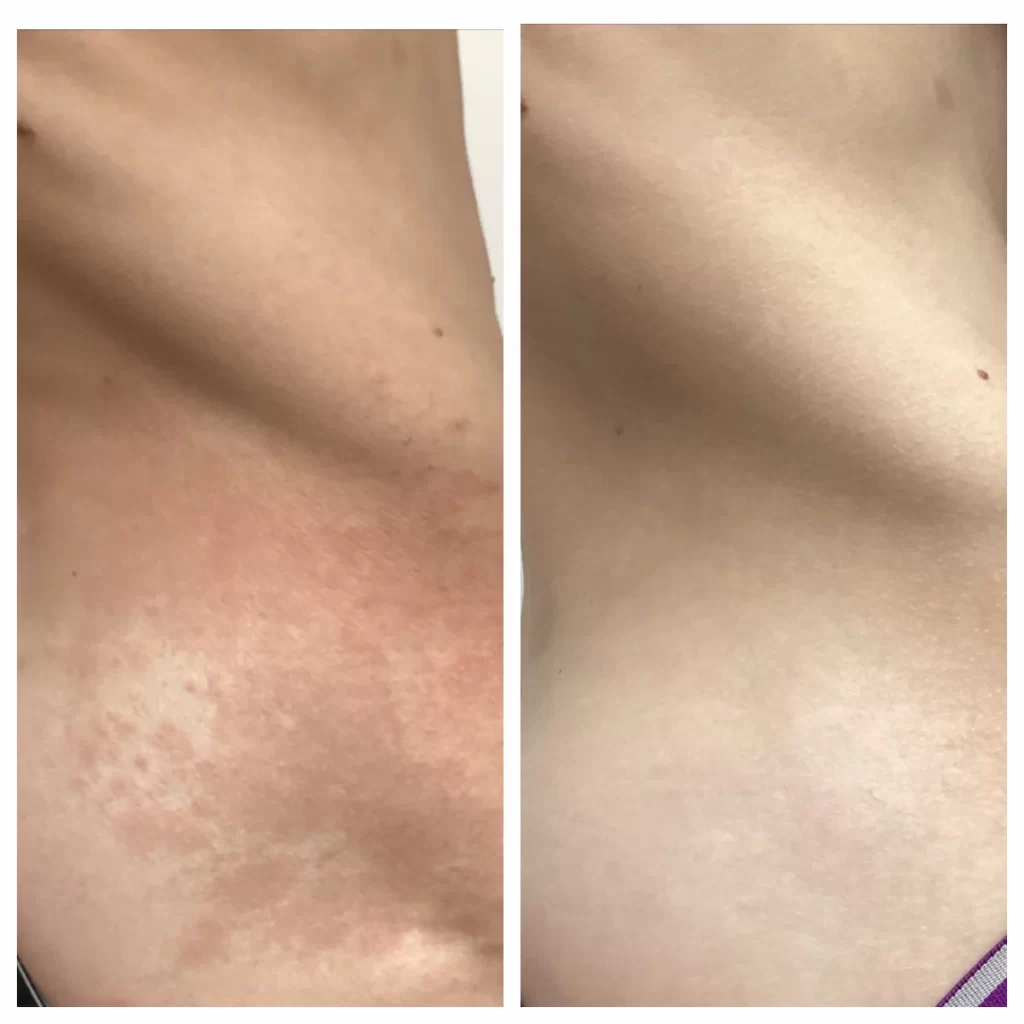
What Is a Skin Rash?
A skin rash is a visible change in the color, texture, or appearance of the skin. Rashes can affect a small, localized area or large portions of the body. They may be associated with itching, pain, burning, or tenderness, though some rashes cause little to no discomfort.
Because many different conditions can cause similar-looking rashes, proper diagnosis is essential for effective treatment.
Common Symptoms of Skin Rashes
Skin rashes may present with one or more of the following symptoms:
- Redness or discoloration
- Itching or irritation
- Raised bumps or welts
- Scaling or flaking skin
- Blistering or oozing
- Dry, cracked, or thickened skin
- Swelling or warmth
- Burning or stinging sensations
Common Causes of Skin Rashes
Skin rashes can result from a wide range of triggers and conditions, including:
- Allergic reactions
- Irritants (chemicals, soaps, detergents)
- Infections (fungal, bacterial, viral)
- Inflammatory skin conditions
- Autoimmune disorders
- Environmental exposures
- Medications
- Stress or illness
Common Types of Skin Rashes
Contact Dermatitis
Occurs when the skin reacts to an irritant or allergen.
Triggers may include:
- Soaps and detergents
- Fragrances
- Nickel or metals
- Plants (such as poison ivy)
- Cleaning products
Symptoms often include redness, itching, and sometimes blistering.

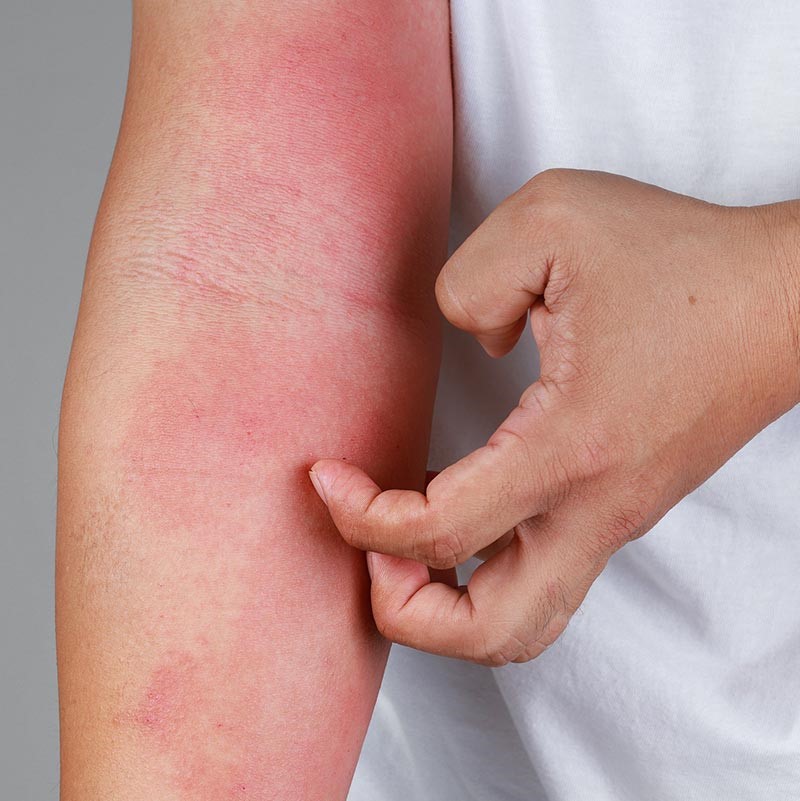
Eczema (Atopic Dermatitis)
A chronic inflammatory skin condition commonly associated with dry, itchy, sensitive skin.
- Often begins in childhood but may persist into adulthood
- May flare periodically
- Can affect the face, hands, arms, and legs
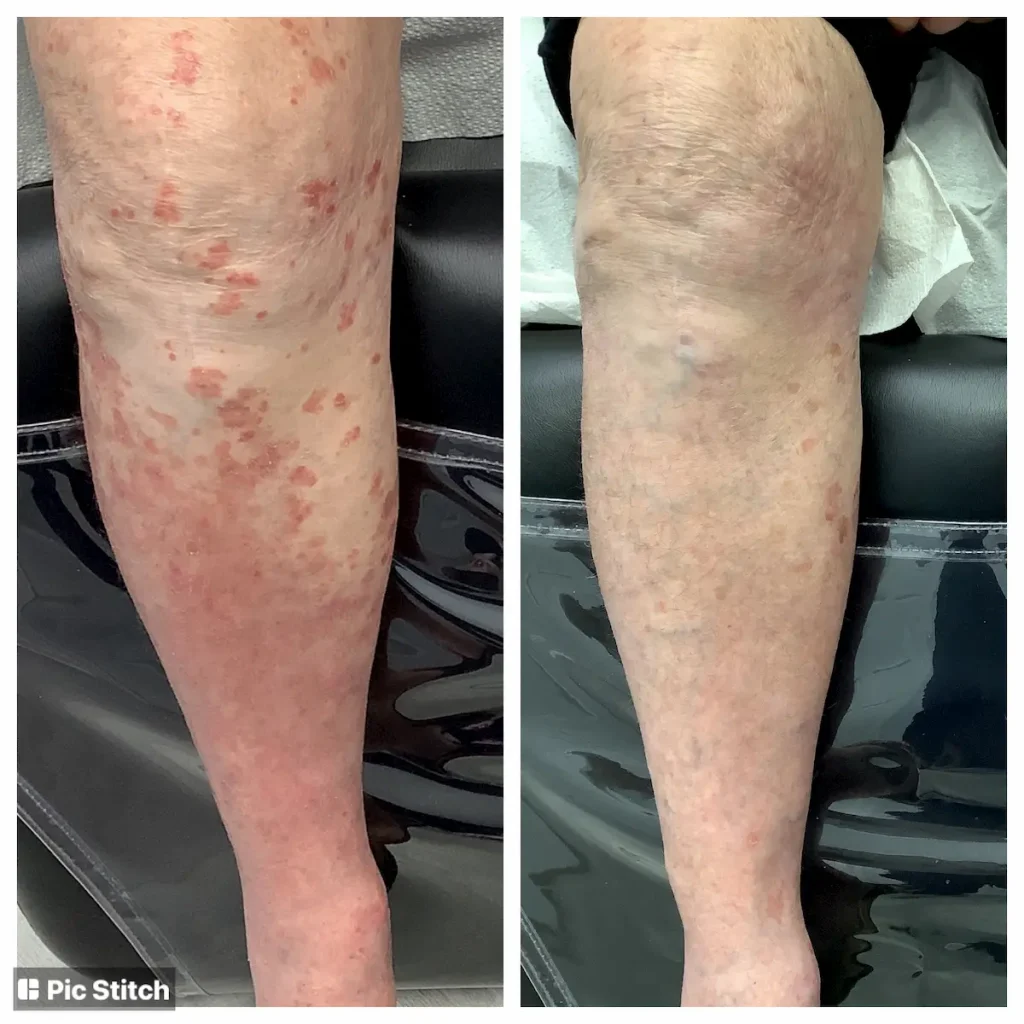
Psoriasis
A chronic autoimmune condition that causes rapid skin cell turnover.
- Thick, scaly plaques
- Often affects the elbows, knees, scalp, and lower back
- May be associated with joint symptoms
Treatment Options for Skin Rashes
Treatment depends on the underlying cause, severity, and duration of the rash.
Topical Treatments
- Anti-inflammatory creams or ointments
- Antifungal or antibacterial medications
- Barrier repair moisturizers
Oral Medications
- Antihistamines for itching
- Anti-inflammatory medications
- Antibiotics or antifungals when indicated
Lifestyle and Skincare Adjustments
- Avoiding known triggers
- Using gentle, fragrance-free products
- Improving moisture control or hydration
Your provider will discuss appropriate treatment options, expected response, and prevention strategies.
Schedule an Appointment for a Skin Rash
If you’re experiencing a persistent or unexplained skin rash, professional dermatologic care may help identify the cause and guide treatment. Call or request an appointment with St. Louis Dermatology & Cosmetic Surgery to have your rash evaluated and receive personalized care.
GET IN TOUCH