
Home / Medical Dermatology / Rosacea
Rosacea Treatment St. Louis
Rosacea is a chronic inflammatory skin condition that causes persistent facial redness, flushing, visible blood vessels, and acne-like bumps. It can’t be cured — but with medical therapy and laser treatment, it can be well controlled.
Double board-certified
Dermatology and Mohs micrographic surgery
Residency & Fellowship
Cleveland Clinic · Zitelli & Brodland
Physician-owned
Independent practice — never corporate
Established 2020
Serving Troy, Lincoln County, and beyond
What is Rosacea?
Rosacea is a chronic inflammatory skin condition that most commonly affects the central face — the cheeks, nose, chin, and forehead. Symptoms tend to flare and subside over time. While rosacea is not dangerous, it can be progressive if left untreated and may significantly affect comfort and confidence. It is most commonly diagnosed in adults over 30, but can affect people of many ages and skin types, and tends to run in families.
Common Signs & Symptoms
- Persistent facial redness, especially across the central face
- Frequent flushing or blushing
- Visible blood vessels (telangiectasias)
- Red or pus-filled bumps that resemble acne
- Burning, stinging, or sensitive skin
- Dry, rough, or scaly skin
- Thickened skin, most commonly on the nose (rhinophyma)
- Eye irritation, redness, or dryness (ocular rosacea)
What Causes Rosacea — and What Triggers It?
The exact cause of rosacea is not fully understood. Research suggests it may involve a combination of abnormal blood vessel response, chronic inflammation, immune system dysfunction, genetic predisposition, skin mites (Demodex), and environmental factors. It is more common in individuals with lighter skin, though it can affect all skin tones.
Many people also notice flare-ups tied to specific triggers: sun exposure, heat or cold, hot beverages, spicy foods, alcohol (especially red wine), emotional stress, exercise, harsh skincare products, and wind. Identifying your personal triggers is part of treatment — avoiding them can meaningfully reduce flares.
How is Rosacea Treated?
While rosacea has no cure, effective treatment may significantly reduce symptoms and help prevent progression. Your plan is personalized to the type, severity, and sensitivity of your rosacea — often combining several of these approaches:
1
Topical Medications
Prescription creams and gels applied directly to affected areas reduce redness and inflammation and help control the bumps and pustules of rosacea. For many patients, topicals are the foundation of day-to-day control.
2
Oral Medications
For moderate to severe rosacea, oral medications help control inflammation and calm flare-ups from the inside. They are often used for a period of time to gain control, then tapered as topicals and trigger management maintain it.
3
Laser & Light Treatments
Medications control the inflammation — but the background redness and visible vessels often respond best to light. M22 IPL (intense pulsed light) targets visible blood vessels and persistent redness and may improve overall tone and texture, typically over a series of in-office sessions alongside medical therapy.
4
Skincare & Trigger Management
Gentle cleansers and moisturizers, barrier-repair products, and sun protection designed for sensitive skin — paired with identifying and avoiding your personal triggers. The right routine makes every other treatment work better.
Rhinophyma: Thickened Skin on the Nose
In some people with longstanding rosacea — more often men — the skin of the nose gradually thickens and enlarges, a change called rhinophyma. Rhinophyma is treatable: medical therapy helps control the underlying rosacea, and resurfacing procedures can refine and reshape the thickened tissue. Earlier evaluation generally means simpler treatment.
Individualized careTreatment plans are individualized, and results vary. A consultation is required to determine the right combination of treatments for your skin.
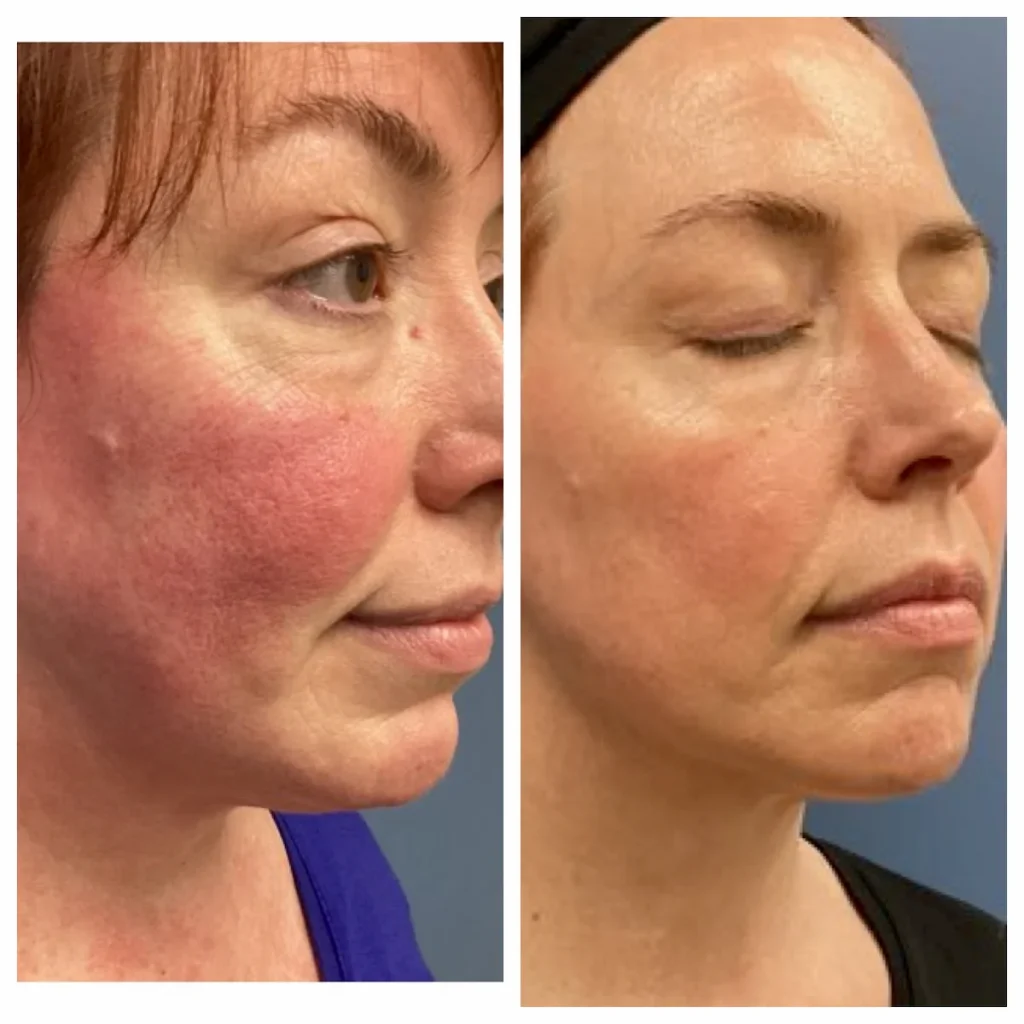
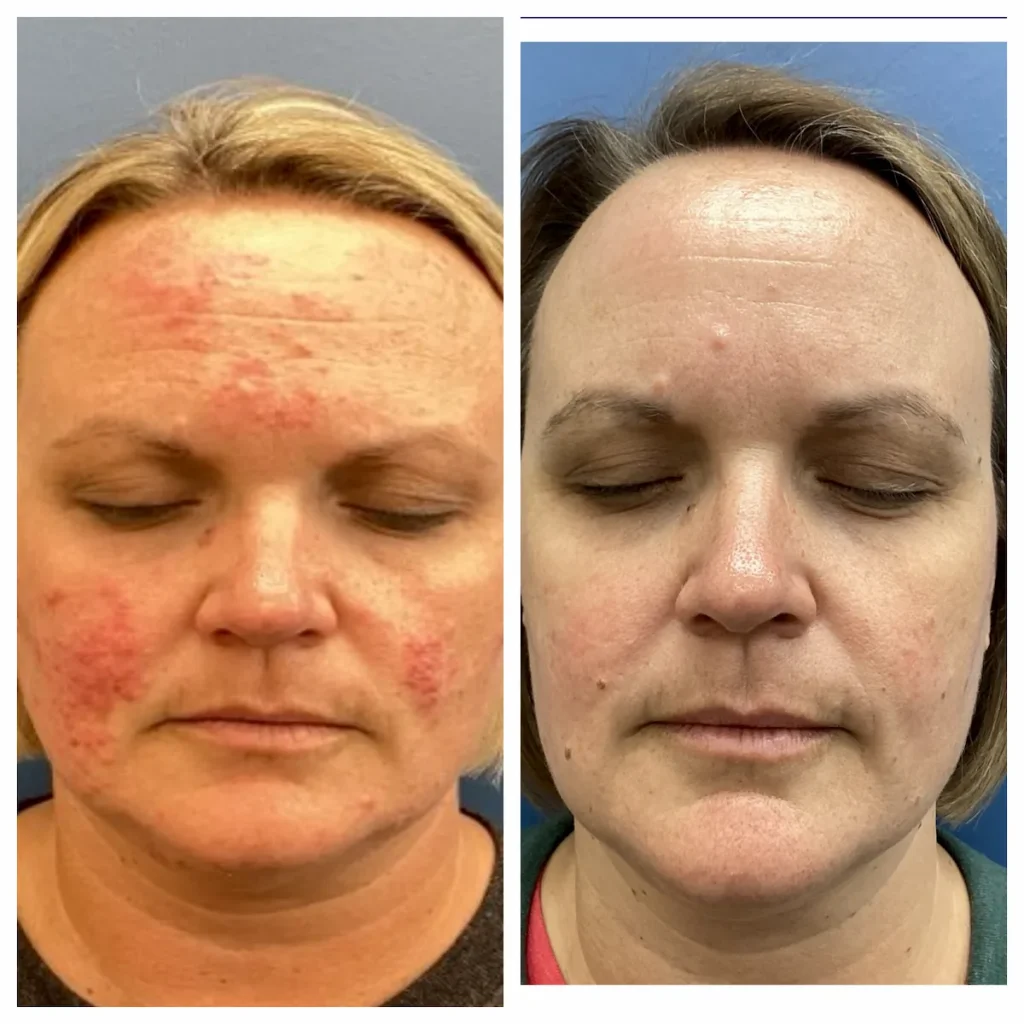
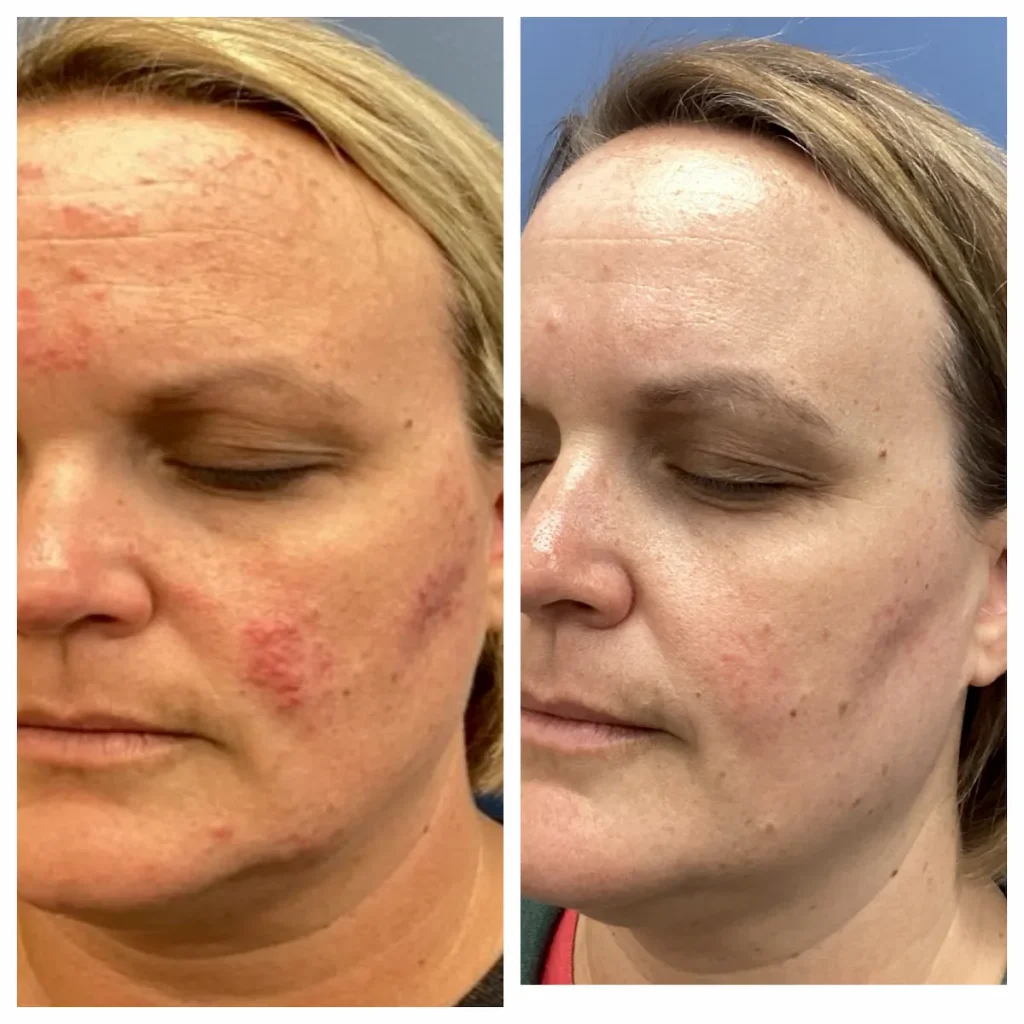
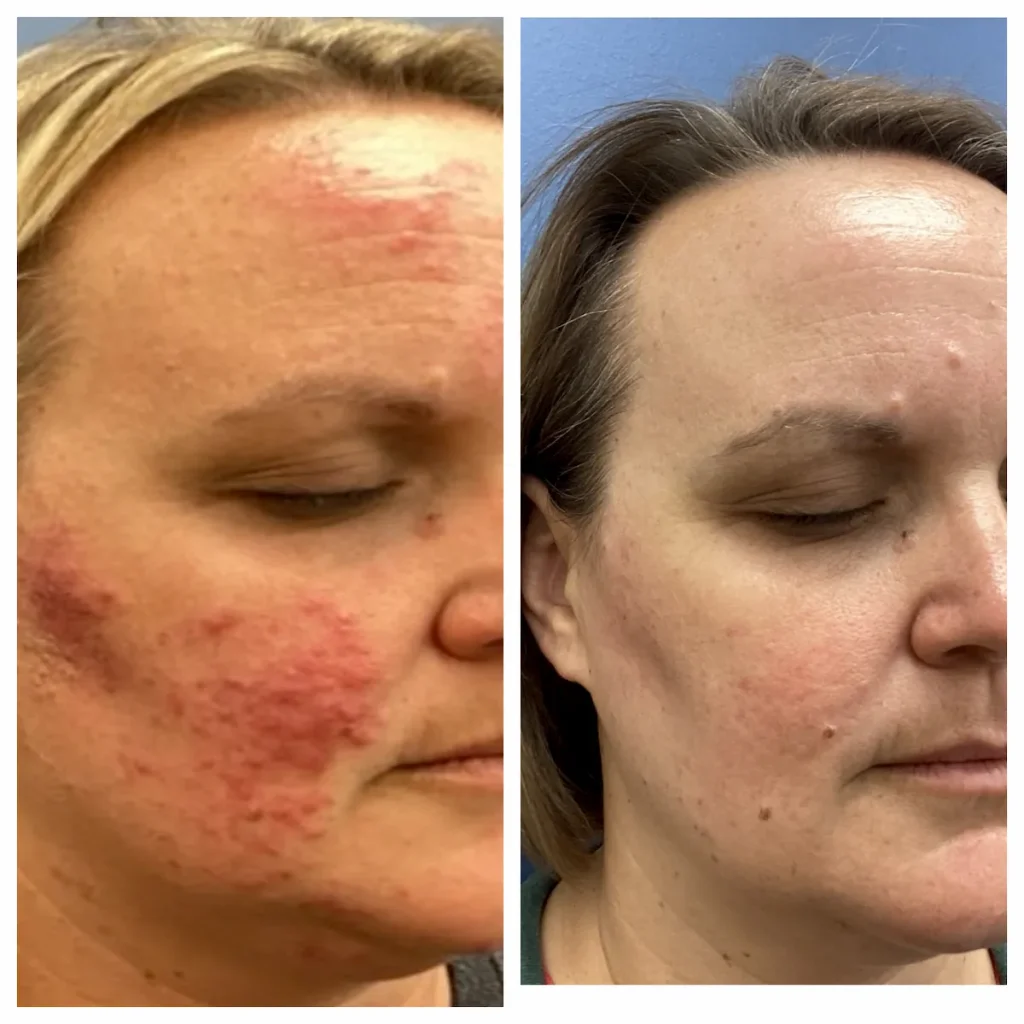
Rosacea Treatment Before and After Photos
Every photo is from a patient treated at our practice.
When to See a Dermatologist
Consider a professional evaluation if you experience persistent facial redness, acne-like breakouts that don’t respond to acne treatments, burning or stinging sensations, eye irritation or redness, or thickening of facial skin. Early care may help prevent progression and long-term skin changes.
Choose St. Louis Dermatology & Cosmetic Surgery
Rosacea care here means one team for the whole plan — medical therapy from a board-certified dermatology practice, and in-office M22 IPL for the redness and vessels medication can’t reach. As a locally owned, physician-led practice, we build a routine around your skin and your triggers, then adjust it with you over time.
Schedule a Rosacea Consultation in Troy, MO
If you’re struggling with persistent facial redness or symptoms of rosacea, an evaluation is a simple first step. From our office in Troy, we care for patients across Lincoln County and the surrounding area, including Warrenton and Wright City — and our second location in Chesterfield. Call (314) 834-1400 or request an appointment online.
Common questions
Rosacea FAQs.
Can rosacea be cured?
There is no cure for rosacea, but it can typically be well controlled. The right combination of medications, laser or light treatment, skincare, and trigger management may significantly reduce redness and flares — and treatment can help prevent the condition from progressing. Results vary by individual.
How do I know if it’s rosacea or acne?
They can look similar, but they behave differently. Rosacea breakouts come with flushing and background redness, lack blackheads, and typically don’t respond to acne treatments — in fact, some acne products make rosacea worse. If your “acne” stings, flushes, and won’t improve, an evaluation can sort out which condition you’re dealing with.
What is IPL treatment for rosacea like?
M22 IPL is an in-office light treatment that targets the visible blood vessels and persistent redness of rosacea. Most patients tolerate it well, sessions are relatively quick, and downtime is typically minimal. Improvement usually builds over a series of treatments, and your provider will map out the plan — number of sessions, timing, and cost — at your consultation.
What about my eyes?
Eye irritation, redness, dryness, or a gritty feeling can be ocular rosacea — and it’s worth mentioning at your visit even if it seems unrelated to your skin. Ocular rosacea can be managed, and in some cases it benefits from coordination with an eye care provider.
Is rosacea treatment covered by insurance?
Medical evaluation and prescription treatment for rosacea are typically covered, and we accept Medicare and most major private insurance plans. Laser and light treatments for redness may be considered cosmetic by some plans — we’ll review what your plan covers and what costs to expect before any treatment begins. Call our Troy office at (314) 834-1400 with specific questions.
Ready to calm the redness?
Medical rosacea care and M22 IPL, in one practice. Same-week appointments. Troy, MO — and Chesterfield now open.