
Nail and Fungal Infections
Nail and fungal infections are common dermatologic conditions that can affect the fingernails, toenails, and surrounding skin.
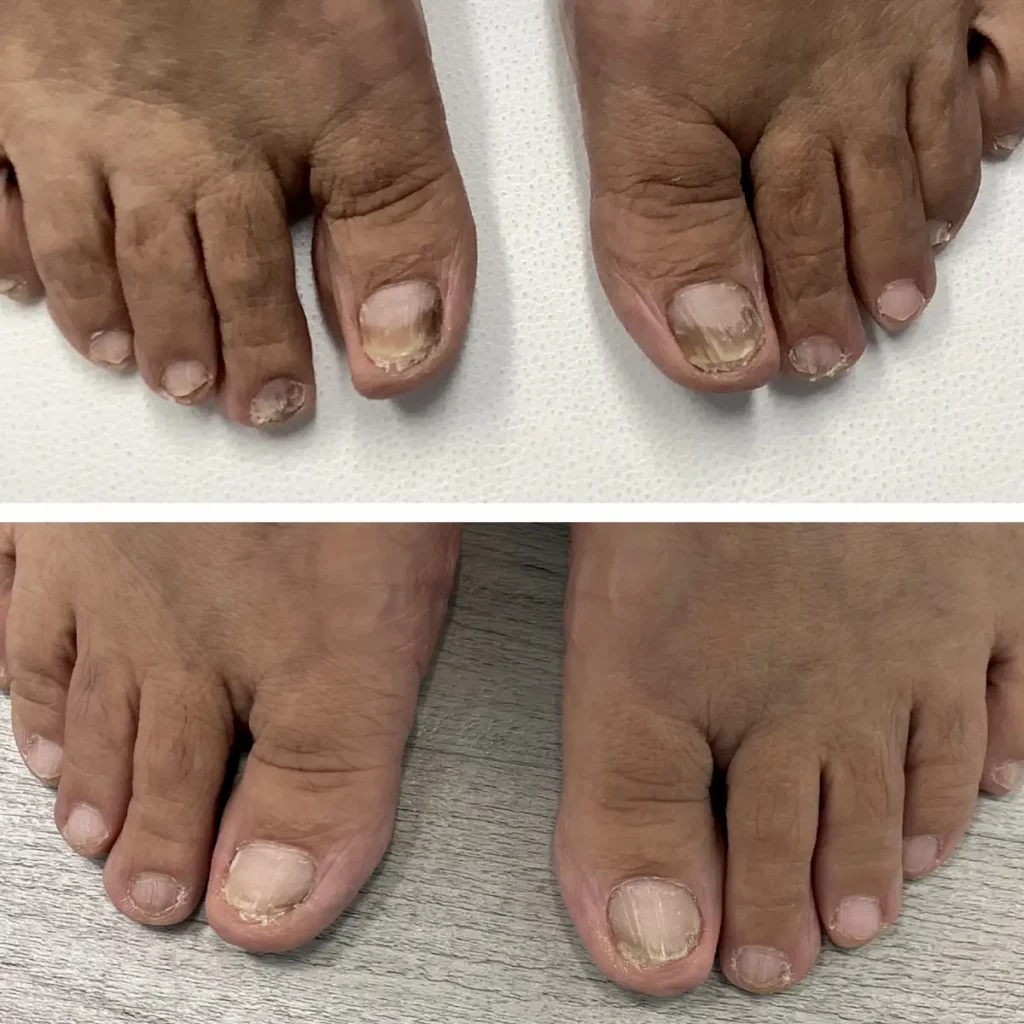
What Are Nail and Fungal Infections?
Fungal infections occur when fungi (such as dermatophytes, yeasts, or molds) invade the skin or nails. The most common nail-related fungal condition is onychomycosis, which affects the nail plate and nail bed. Fungal infections thrive in warm, moist environments and may spread through direct contact or contaminated surfaces.
Common Signs and Symptoms
Symptoms vary depending on the type and severity of infection, but may include:
Nail Changes
- Yellow, white, or brown discoloration
- Thickened or distorted nails
- Brittle, crumbly, or splitting nails
- Lifting or separation from the nail bed
- Debris under the nail
- Nail discomfort or pressure
Skin Symptoms
- Itching or burning
- Redness or scaling
- Cracking or peeling skin
- Moist or macerated areas between toes
What Causes Nail and Fungal Infections?
Several factors increase the likelihood of developing fungal infections, including:
- Prolonged moisture exposure
- Wearing tight or non-breathable footwear
- Walking barefoot in communal areas (gyms, pools, locker rooms)
- Nail trauma
- Poor circulation
- Diabetes
- Weakened immune system
- Increasing age
Treatment Options for Nail and Fungal Infections
Treatment depends on the type, severity, and location of the infection, as well as patient-specific factors.
Topical Antifungal Medications
- Applied directly to the skin or nails
- May be effective for mild infections
- Require consistent, long-term use
Oral Antifungal Medications
- Often recommended for moderate to severe nail infections
- May provide higher cure rates than topical treatments alone
- Require monitoring and medical supervision
Combination Therapy
- Topical and oral treatments are used together
- May improve outcomes in some instances
Nail Care and Debridement
- Trimming and thinning thickened nails
- May improve medication penetration and comfort
How Long Does Treatment Take?
Nail infections improve slowly because nails grow gradually.
- Fingernails may take 4–6 months to grow out
- Toenails may take 9–12 months or longer
When to See a Dermatologist
You should seek professional care if:
- Nail changes persist or worsen
- Over-the-counter treatments fail
- Nails become painful or infected
- You have diabetes or circulation issues
- Multiple nails are involved
Early evaluation may prevent progression and complications.

Schedule an Evaluation for Nail or Fungal Infections
If you’re experiencing nail discoloration, thickening, or persistent skin symptoms, a professional dermatologic evaluation may help clarify the cause and guide treatment. Call or request an appointment with St. Louis Dermatology & Cosmetic Surgery to discuss diagnosis and treatment options tailored to your needs.
GET IN TOUCH